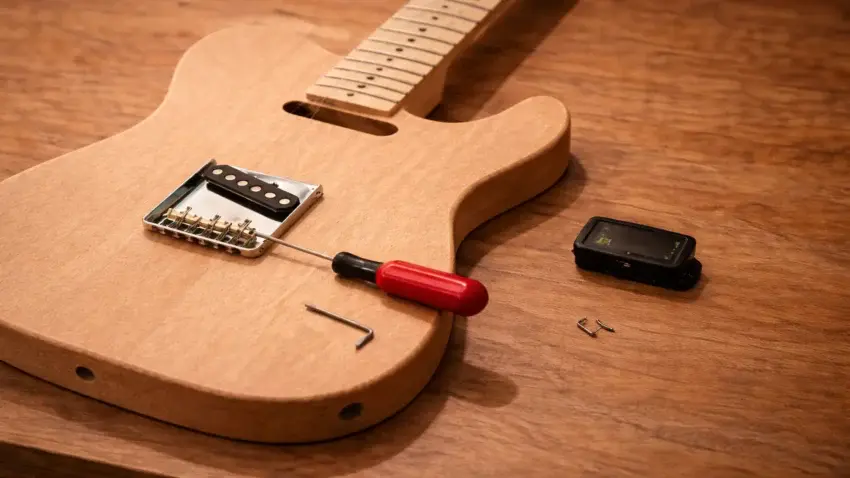
If you’re building a Strat-style guitar kit, you’re not just assembling parts — you’re building feel. A Stratocaster setup can intimidate beginners. The tremolo system adds moving parts. Six saddles mean six adjustments. Buzzing strings and high action can make you question your build. But here’s the truth: A Strat setup isn’t complicated. It just…
Category: Neck & Setup
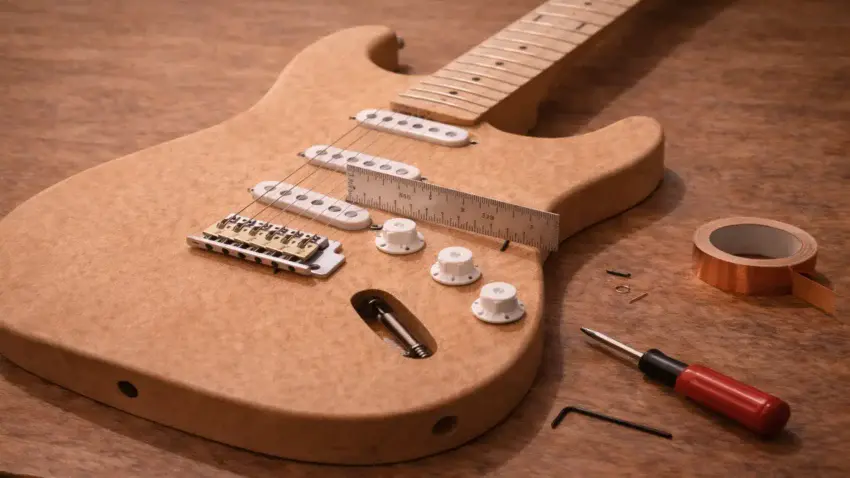
How To Set Up a Telecaster Guitar Kit (Bridge, Action & Intonation)
Telecaster guitar kits are known for being beginner-friendly — especially when it comes to setup. Unlike tremolo-equipped guitars, a Tele’s hardtail bridge keeps things mechanically simple. That means fewer variables, fewer frustrations, and faster results. But “simple” doesn’t mean “automatic.” Even a well-built Tele kit can feel stiff, buzz, or play out of tune if…
Fixing Buzzing Strings & Dead Frets
Buzzing strings and dead frets are some of the most frustrating problems guitar players run into — especially after a setup that seemed correct. The mistake most people make is assuming buzz always means something is wrong or broken. In reality, buzzing and dead notes usually point to tolerance limits, setup order issues, or structural…
Guitar Setup Tools Explained (What You Actually Use)
Guitar setup doesn’t require a wall of specialized tools. Most electric guitar setup work relies on a small, basic set of tools, used carefully and intentionally. Problems usually come from misunderstanding what to adjust — not from lacking equipment. This guide explains which setup tools are commonly used, what each one actually does, and why…
Why Guitars Go Out of Tune Up the Neck
If you’ve ever tuned your guitar perfectly at the open strings only to hear chords sound off higher up the fretboard, you’re not imagining it. This is one of the most common — and most frustrating — experiences for guitar players. The good news is that it’s normal, explainable, and manageable. This guide explains why…
What Guitar Intonation Means in Real Playing
Guitar intonation describes how accurately a guitar plays in tune across the fretboard, not just at the open strings. A guitar can be perfectly tuned at the nut and still sound slightly sharp or flat as you move higher up the neck. When that happens, the issue usually isn’t your tuner or your ears —…
Low Action vs Fret Buzz: Finding the Balance
Lowering guitar action can make an electric guitar feel faster and easier to play — but push it too far and fret buzz, choking notes, and uneven response can show up quickly. The goal of action setup isn’t to eliminate every sound or chase the lowest possible string height. It’s to find a usable balance…
What Guitar Action Is (And Why It Matters)
Guitar action refers to the height of the strings above the frets.It’s one of the biggest factors in how an electric guitar feels to play. Action doesn’t change pickups, wiring, or tone controls — but it directly affects comfort, speed, accuracy, and fatigue. Two guitars with the same hardware can feel completely different purely because…
How to Check Neck Relief Safely
Before making any truss rod adjustments, it’s important to check neck relief correctly. Many setup problems come from skipping this step or checking relief inconsistently. The goal here isn’t to chase numbers or force changes — it’s to observe how the neck is behaving under string tension, so you know whether an adjustment is even…
What Is Guitar Neck Relief?
Neck relief is one of the most misunderstood parts of guitar setup — especially for beginners. Many players assume a guitar neck should be perfectly straight. In reality, a small amount of forward curve is intentional and necessary for clean tone and comfortable playability. This guide explains what guitar neck relief actually is, why it…