
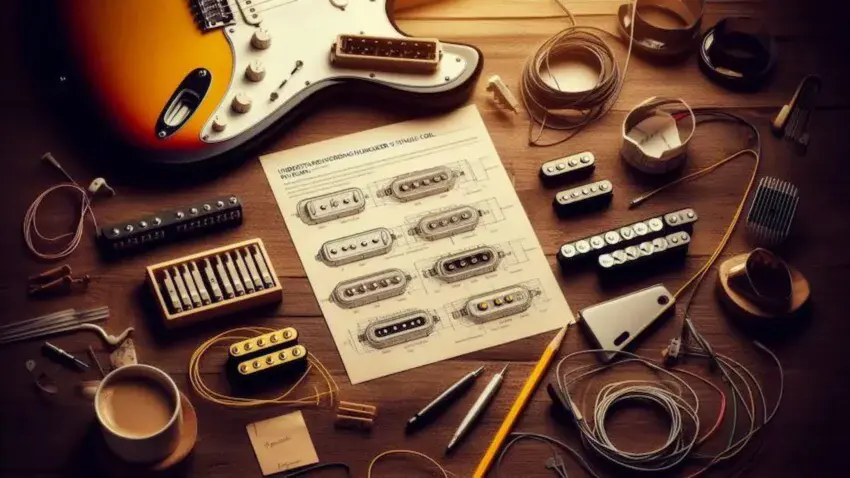
Upgrading Pickups & Electronics in Guitar Kits (Ultimate Guide) is your roadmap to transforming an
ordinary DIY kit into a guitar that feels premium, sounds professional, and responds exactly
the way you want it to.
Whether you’re swapping out muddy stock pickups, dialing in smoother tone control, or installing
components that finally match your playing style, upgrading the electronics is one of the fastest ways
to level up the tone of any kit build.
In this guide, I’ll walk you through the essential parts, proven upgrades, and step-by-step techniques
I use in my own builds so you can get cleaner highs, tighter lows, and a more musical tone from
your guitar.
👉 This guide is part of my Electric Guitar Pickups & Wiring Guide, which explains
how pickups, wiring, and electronics shape your guitar’s tone and performance.

🔥 Electronics Upgrades That Make a Real Difference
If your guitar doesn’t feel or sound quite right, the electronics are usually the reason.
These simple upgrades can dramatically improve tone, control, and overall performance.
Orange Drop .047uF 716P Capacitor
If your tone controls feel weak or unpredictable, your caps are likely holding you back.
These are a simple, low-cost upgrade that instantly gives your tone knob real control.
 Amazon Product Suggestion:
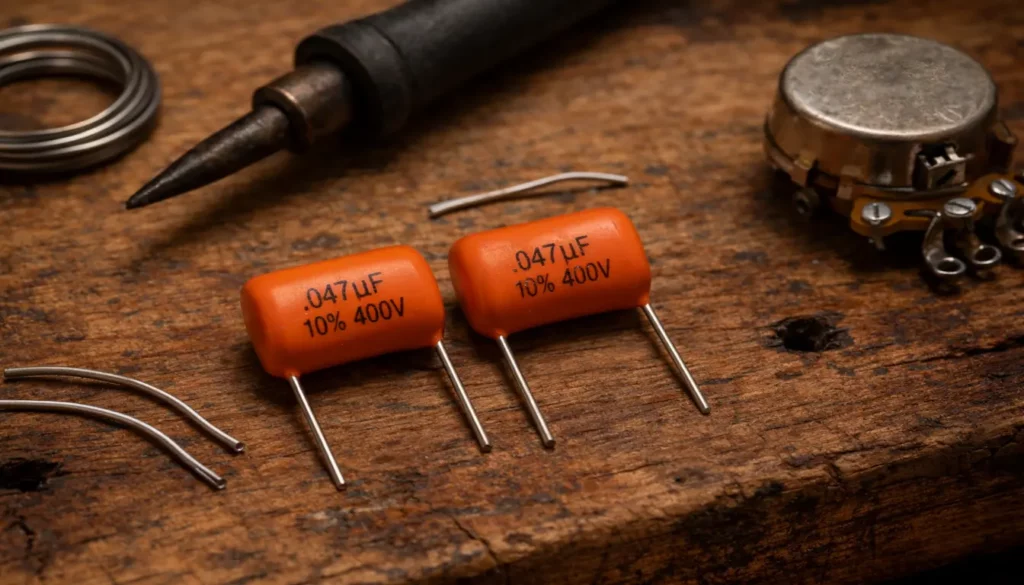
 Orange Drop Capacitors
(.047uF / 400V, 716P Series — Pack of 2)
Orange Drop .047uF caps are a simple,
high-impact upgrade that smooth
harsh highs and improve tone control.
Known for accuracy and durability,
they deliver a more musical,
consistent sweep.
Why It’s Great:
Smooth tone — Musical high-end roll-off
Reliable — Accurate & durable
Easy upgrade — Better than stock caps
Easy to solder — Durable leads
Bourns 250K Short Shaft Audio Pots
Cheap pots can make your guitar feel inconsistent and lifeless.
Upgrading to quality pots gives you smoother control and a more responsive feel.
Amazon Product Suggestion:
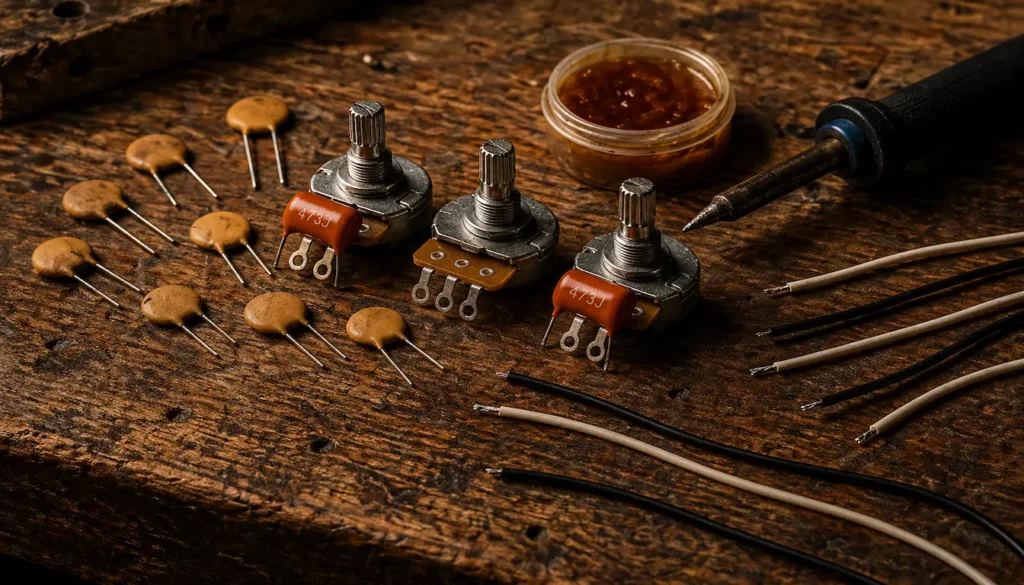
Bourns 250K Short Shaft Audio Potentiometers
Set of Three (3X)
Bourns 250K pots deliver smooth, noise-free
control with a solid, professional feel.
With tight tolerances and consistent rotation,
they give you clean, predictable tone
and volume sweeps.
Why It’s Great:
Smooth rotation — No scratchiness
Tight tolerances — Accurate control
Better sweep — Clean, predictable response
Built to last — Durable construction
Seymour Duncan SH-4 JB Model (Bridge Humbucker)
If your bridge pickup sounds flat or lacks power, it’s time for a serious upgrade.
This one delivers the punch, clarity, and output most kit pickups can’t match.
Amazon Product Suggestion:
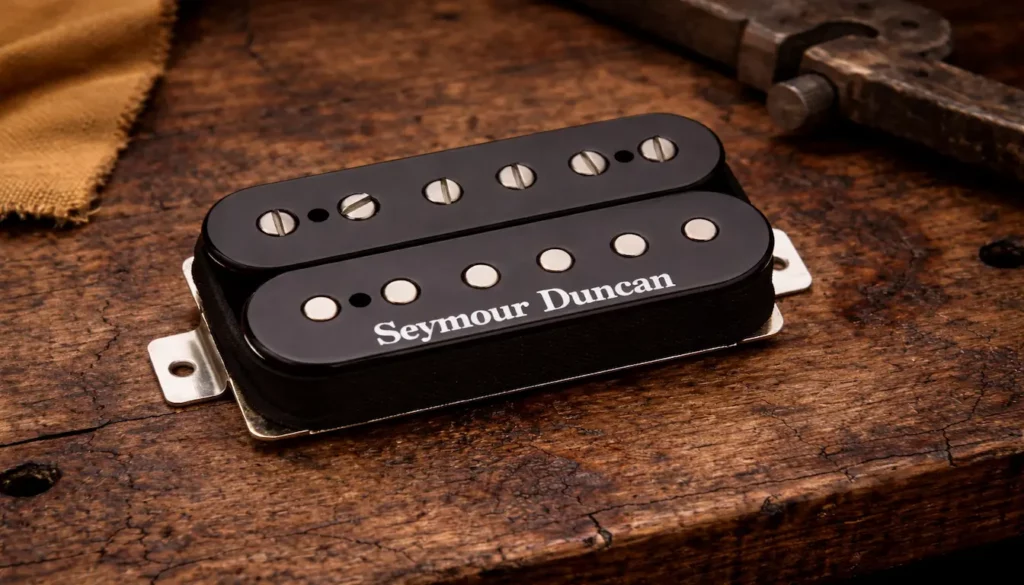
Seymour Duncan SH-4 JB
Model Bridge Humbucker
The Seymour Duncan JB delivers
powerful lows, strong mids, and clear highs
that cut through any mix.
It’s a versatile, high-output upgrade that
takes your tone to a pro-level feel.
Why It’s Great:
Big tone — Punchy lows, clear highs
Cuts through — Strong mid presence
Versatile — Clean to high-gain
Proven upgrade — Huge step up from stock
Fender Vintage Noiseless Strat Pickups
These pickups give you that classic Strat sparkle without the annoying single-coil hum.
Bright, expressive, and incredibly clean, they’re ideal for upgrading any Strat-style kit
where you want vintage tone but modern noise reduction.
Amazon Product Suggestion:
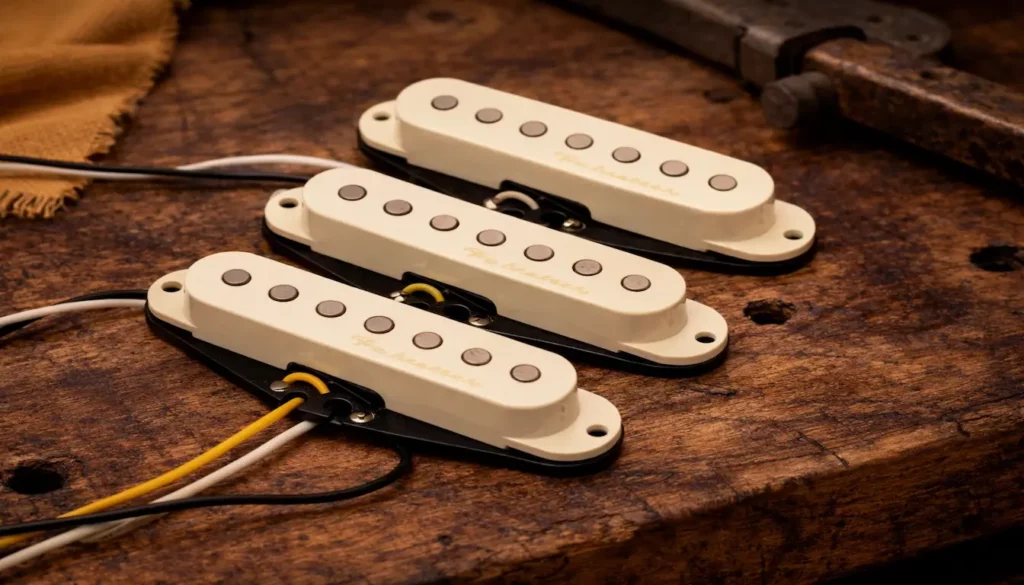
Fender Vintage Noiseless
Stratocaster Pickup Set
Aged White (3 Pickups)
Fender Vintage Noiseless pickups
deliver classic Strat tone
without the hum.
You get clear highs, tight bass,
and smooth response with
modern noise control.
Why They’re Great:
Noiseless — Classic Strat tone, zero hum
Balanced sound — Clear highs, tight lows
Versatile — Clean to edge-of-breakup
Great upgrade — Perfect for Strat-style builds
🔧 10 Steps to Upgrade Pickups & Electronics
in Your Guitar Kit
1. Open the Control Cavity & Inspect the Stock Wiring
Start by removing the pickguard or control plate to see what you’re working with.
Take note of wire colors, grounds, and any cheap factory solder points that need to go.
2. De-solder the Old Connections Carefully
Heat each joint just long enough to free the wire — don’t roast the pots or switch.
A clean removal makes installation way easier.
3. Remove the Stock Pots, Caps & Pickups
Unscrew and lift everything out.
This is your chance to ditch the low-grade electronics that normally come in budget kits.
4. Prep Your New Components
Lay out the Orange Drop cap, Bourns pots, and pickups in the same arrangement as the originals.
This keeps wiring consistent and avoids confusion.
5. Install the New Bourns Pots
Mount your volume and tone pots in place.
Bourns pots feel smoother, last longer, and give you a more predictable sweep.
6. Add the Orange Drop Capacitor
Solder the .047uF cap between the tone pot lugs for a clearer, more musical tone roll-off —
Way better than the tiny ceramic caps kits usually includes.
7. Drop in Your New Pickups
Mount the Seymour Duncan SH-4 at the bridge and set the height roughly level with the pickup ring.
If you’re building a Strat-style kit, the Vintage Noiseless set goes straight into the pickguard.
8. Wire Everything According to the Diagram
Follow the schematic for your pickup configuration.
Keep wires neat, make smooth bends, and avoid unnecessary slack.
9. Test the Circuit Before Closing It Up
Plug into an amp and tap each pickup with a screwdriver.
Check volume/tone sweep, selector switch positions, and grounding.
10. Clean Up & Set Pickup Height for Tone
Tidy the cavity, tuck wires, close the guitar up, and dial in the pickup height.
Small adjustments make a huge difference in clarity and output.
⚡Pro Tips: Things to Remember
👉Use alligator clip heat sinks when soldering to pots.
They pull heat away from the casing so you don’t cook the internals or loosen the
resistance track.
👉Pre-tin every wire AND every lug before making your final connections.
Tinning both sides makes the final solder joint faster, cleaner, and way more reliable.
👉 Keep your grounds tight and grouped.
Messy ground placement is one of the top causes of noise in budget kits.
Star grounding is always cleaner.
👉 Twist your pickup leads on single-coils to reduce hum.
It’s a tiny step that adds noticeable noise reduction in Strat-style builds.
👉 Use shielded wire for your output jack if your kit didn’t include any.
It instantly cuts down on hiss and background hum.
👉 Don’t overtighten your pots or switches.
Snug is enough — cranking them down too hard cracks pickguards and
control plates.
👉 Save your old parts in a small bag.
You might repurpose them in a future project or keep them for
testing circuits.
👉 Set pickup height only after you plug into an amp.
Your ear, not a measuring tool, gives you the real sweet spot.
👉 Do a full continuity test before closing the cavity.
One quick check with a multimeter can save you a full tear-down later.
👉 Run a final hum test with your hands off the guitar.
If the noise increases, you still have a grounding problem.
Track it down before reassembly.
🏁 Final Thoughts…
Upgrading the pickups and electronics in your guitar kit is one of the smartest moves you can make
if you want better tone, smoother control, and a more professional feel from your build.
A few strategic changes — like swapping in quality pots, a real tone cap, and reliable pickups —
instantly take your guitar from “DIY kit” to “legit instrument.”
With the right components and a careful step-by-step approach, you’ll end up with a guitar that
responds better, sounds richer, and gives you way more confidence every time you plug in.
Keep experimenting
Keep upgrading
Keep building guitars…
With a little experience, you will start building guitars that play and sound like something you
would proudly hang on your own wall.
 Ready to Start?
Here’s your next step —
pick one and go:
 New to guitar kits?
Start with
Step-by-Step Guide To Building
Your First Electric Guitar Kit
and
Essential Tools Every Electric Guitar Kit
Builder Should Have.
Already built a kit?
Jump into
How To Properly Set Up Your
Electric Guitar Kit For Intonation
or
Fixing Common Problems:
Buzzing And Dead Frets.
Chasing better tone?
Head to
Understanding Humbucker
Vs Single Coil Pickups In Kits
or
Playing With Tone Controls:
Tips For Electric Guitar Kits
and start experimenting.
 Your Guitar, Your Build,
Your Sound
You don’t need a custom shop or a tech on speed dial.
All you need is a little guidance, some patience,
and a place to go that shows you what to do next.
Come on man… You got this.
GuitarCrafts
is here to help you along the way.
Craft it. Play it. Own it!
I really enjoyed reading through this—your guide strikes a perfect balance between technical depth and friendly guidance. The way you walk readers through the essentials—understanding pickups and basic electronics, clarifying tools needed, and offering troubleshooting tips—is both thorough and approachable.
You’ve distilled complex ideas into clear, short steps, which is so useful for anyone tinkering with guitar kits for the first time. I especially appreciated how you emphasized asking the right questions before starting a project, and the helpful reminder to document wiring before rolling up your sleeves.
A couple of questions popped into my mind while reading: What’s the simplest mod you’ve tried that had an unexpectedly big impact on Tone? And do you have a favorite tool or tip that saved you from a frustrating wiring mistake early on?
Thanks so much for the kind words! I always try to keep things approachable without skipping over the details that actually make a difference, so I’m glad that balance came through for you.
Great questions—probably the simplest mod that surprised me most was swapping out the tone capacitor. It’s a tiny, inexpensive part, but choosing a different value (or upgrading to a higher quality cap) can completely change how smooth or sharp the tone roll-off feels. It’s one of those “small part, big result” upgrades that beginners often overlook.
As for a tool that’s saved me from wiring headaches—definitely an alligator clip test lead set. Being able to temporarily connect components before committing with solder has prevented more than a few mistakes. That, along with taking lots of reference photos as I go, has saved me hours of frustration.
Thanks again,
~Wayne
I appreciate the inclusion of “low-cost tweaks” like adjusting pickup height or upgrading capacitors. This demonstrates that significant improvements don’t always require a large financial investment.
It goes beyond just a basic how-to, covering the “why” behind the upgrades. Explaining the function of different components, like pickups and potentiometers, gives the reader a solid understanding of the electronics.
The guide focuses on electric guitars. How would the principles of upgrading pickups and electronics differ for an acoustic-electric guitar?
Thanks for the thoughtful feedback! I’m glad you picked up on the focus of keeping upgrades accessible while also explaining the “why” behind them.
When it comes to acoustic-electric guitars, the principles are similar in spirit but different in application. With an acoustic-electric, the “pickup” is usually a piezo element under the saddle or a soundboard transducer rather than magnetic pickups. That means upgrades often focus on the preamp and EQ system rather than swapping out pickups like you would on an electric. Things like higher-quality preamps, improved piezo elements, or even adding a microphone blend system can dramatically improve tone.
Capacitors and potentiometers don’t play the same central role in acoustic-electrics, but the wiring quality, shielding, and control layout can still affect noise levels and usability. So, while you’re not chasing the same tone-shaping options as with an electric guitar, the idea of improving components to get cleaner, more dynamic sound still applies.
Thanks again,
~Wayne