
Skip to content
Electric Guitar Kits Logo
Menu
  • Home
  • Customization & Mods
    • Adding A Tremolo System To Your Electric Guitar Kit
    • Best Upgrades for Budget Guitar Kits (What Actually Makes a Difference)
    • D.I.Y. Fretboard Customization (Inlays, Radius & Leveling)
    • D.I.Y. Fretboard Inlays For Guitar Kits (Creative Upgrade Guide)
    • DIY Semi-hollow Guitar Kit Internal Chambers
    • D.I.Y. Custom Guitar Inlays (Step-By-Step Guide)
    • Electric Guitar Customization & Mods Guide
    • Guitar Fretboard Inlays Explained
  • Neck & Setup
    • Adjust Guitar Neck Truss Rod
    • Adjusting Action On An Electric Guitar
    • Adjusting Action And Intonation On Your Newly Built Guitar Kit
    • Comparing Bolt-on Vs Set Neck Electric Guitar Kits For Tone
    • How To Adjust Truss Rod For Neck Relief In Guitar Kits
    • How To Choose Between Neck-Through And Bolt-On Necks In Kits
    • How To Choose The Perfect Nut Material For Your Electric Guitar
    • How To Properly Set Up Your Electric Guitar Kit For Intonation
    • Refretting Your Electric Guitar Kit: When And How To Do It
    • How To Fix Buzzing Frets And Dead Notes On Your DIY Guitar Kit
    • Setting Up The Bridge And Neck On Your Electric Guitar Kit
  • Pickups & Wiring
    • Best Pickups for Guitar Kits (Budget to Pro Tone Upgrades)
    • Choosing Capacitors And Pots For Your Electric Guitar Wiring
    • Common Wiring Mistakes And How To Fix Your Electric Guitar Kit
    • Custom Wiring Patterns For Unique Guitar Sounds
    • Guide To Wiring Your Electric Guitar Kit For Optimal Performance
    • Guitar Pickups Guide: Choosing the Right Tone
    • How To Adjust Pickup Height On Electric Guitar
    • How Pickup Position Affects Electric Guitar Tone In Kits
    • How To Shield Your Guitar’s Electronics For Noise Reduction
    • Installing Pickups In Your Electric Guitar Kit: A Complete Guide
    • How To Upgrade Your Guitar Kit With Seymour Duncan & Fender Pickups
    • Step-by-step Soldering Guide For Your DIY Electric Guitar Kit
    • Top Affordable Pickups To Upgrade Your Electric Guitar Kit Tone
    • Understanding Humbucker Vs Single Coil Pickups In Kits
    • Ultimate Guide To Upgrading Pickups And Electronics In Guitar Kits
    • Using Tone Pots And Capacitors To Sculpt Your Sound
  • Tone & Playability
    • Adjusting Pickup Height For Optimal Sound On Your Guitar
    • Best Bluetooth Speakers for Music Lovers Who Care About Sound Quality
    • Effects Of Different Wood Types On Electric Guitar Tone
    • How Pickup Height Affects Electric Guitar Tone
    • Mastering Tone Controls on Your Electric Guitar Kit (Beginner-Friendly Guide)
    • Top DIY Electric Guitar Kits For Custom Tone
    • Wood Choices For Electric Guitar Kits: Expert Recommendations
  • Build Guides
    • Best Pro-level Electric Guitar Kit Build Guide
    • Budget Vs Premium Electric Guitar Kits: Which One To Choose?
    • Essential Tools Every Electric Guitar Kit Builder Should Have
    • Tools Needed For Building An Electric Guitar Kit
    • Beginner’s Guide: Building Your First Electric Guitar Kit Step-by-Step
    • String Changing Techniques To Protect Your Guitar
    • Best DIY Electric Guitar Kits for Custom Tone (2025 Guide)
    • Top Customizable Electric Guitar Kits For Modern Tone
    • Troubleshooting Common Issues During Electric Guitar Kit Assembly
  • Make Money Online
  • Solo Guitar Kits
    • Best Solo Guitar Kits (Complete 2025 Buying Guide)
    • Best Solo Strat-Style DIY Guitar Kits (Buying Guide)
    • Best Solo Tele-Style DIY Guitar Kits (Buying Guide)
    • Best Solo LP-Style DIY Guitar Kits (Beginner-Friendly Guide)
    • Best Solo SG-Style DIY Guitar Kits (Beginner Guide)
    • Best Solo Hollow Body Guitar Kits (Buying Guide)
    • Solo Tele Semi-Hollow DIY Kits
    • Best Solo Offset-Style DIY Guitar Kits (Buying Guide)
    • Solo Explorer & Fire-Style Guitar Kits — EXK, FBK & FVK
Menu
Adjusting action on an electric guitar using setup tools to set proper string height and playability.

Adjusting Action On An Electric Guitar

Posted on December 29, 2025January 5, 2026 by Wayne

Adjusting action on an electric guitar is all about dialing in how high your strings sit above the frets — and it has a huge impact on how the guitar feels in your hands.
Think of it like walking barefoot across a freshly mowed lawn versus a jungle of tall grass —
that’s the difference between low and high action.

While action doesn’t dramatically change your tone, it directly affects playability, comfort, and control. Too high, and the guitar feels stiff and tiring.
Too low, and you’re fighting string buzz and dead notes.

Finding the right balance can be the difference between playing comfortably for hours
or constantly battling your instrument.
Some players prefer low, fast action for smooth riffs, while others like a little more height for
cleaner chords and aggressive playing.

If you’re dealing with string buzz, sore fingers, or a guitar that just feels unresponsive,
your action likely needs attention.
This guide focuses specifically on how to adjust action on an electric guitar —
keeping things practical, hands-on, and beginner friendly.


👉 This adjustment is part of my Electric Guitar Neck & Setup Guide,
which covers the core setup tasks that affect how a guitar feels and plays.


Affiliate disclosure box with rounded red border, small text explaining that some links are affiliate links including Solo Guitars, ending with the Solo Guitars logo at the bottom.


👉👉 Proper neck relief and truss rod adjustment should always be addressed before making changes to action or pickup height.


👉👉A proper pickup height setup ensures balanced output and clear string response across the fretboard.


🌟 Recommended Tools for Accurate Guitar Setup

These Solo Guitars–recommended tools are designed to take the guesswork out of guitar setup and neck adjustments. Each one plays a specific role — accurate measuring, checking neck straightness, dialing in tuning, and handling basic maintenance — so beginners can work with confidence instead of trial and error.


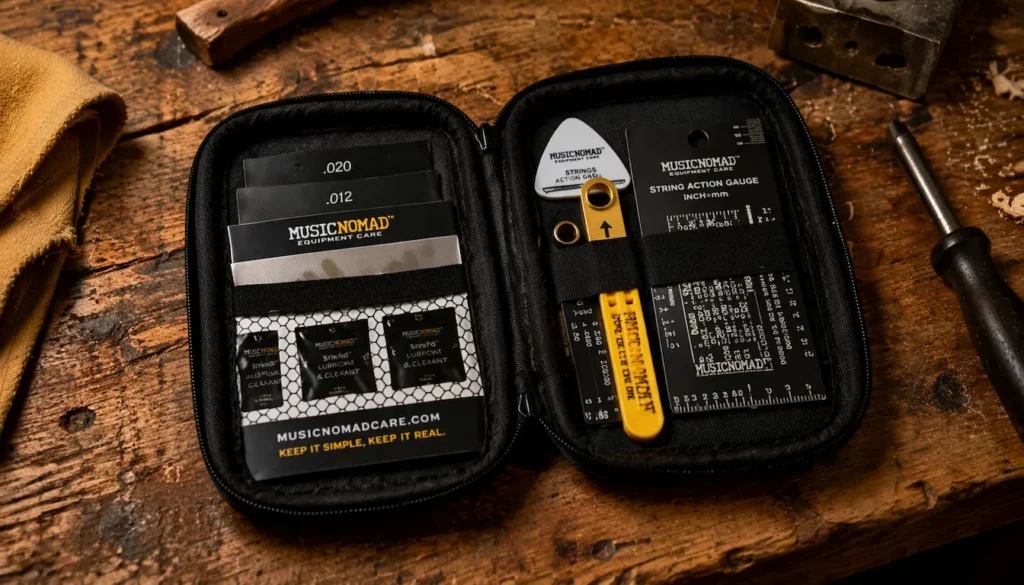
Music Nomad MN604 Precision Setup 6-Piece Gauge Set

The Music Nomad MN604 Precision Setup Gauge Set gives builders accurate measurements for
dialing in neck relief, action, and string height. It removes guesswork from setup work and helps beginners make confident, repeatable adjustments.


🌟Solo Guitars Product Suggestion:

Music Nomad MN604 precision guitar setup gauge set displayed in an open zippered case on a white background

Music Nomad MN604 Precision Setup 6-Piece Gauge Set

The Music Nomad MN604 Precision Setup Gauge Set is an all-in-one measurement kit designed to remove guesswork from guitar setup work. With clearly marked gauges for action, relief, nut height, and string spacing, it helps builders make accurate adjustments instead of relying on feel alone.

Why It’s Great:

✔ Complete 6-piece gauge kit for full guitar setups
✔ Makes measuring neck relief, action, and nut height simple and repeatable
✔ Clearly labeled tools are easy for first-time builders to understand
✔ Compact zippered case keeps everything organized and protected


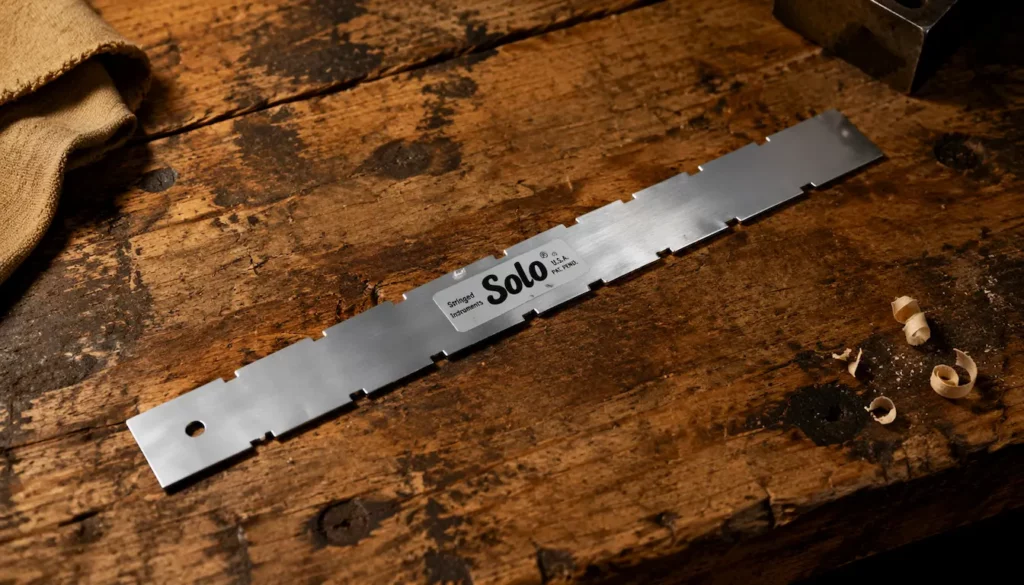
Solo Pro Fender/Gibson Guitar Notched Straight Edge

The Solo Pro Fender/Gibson Guitar Notched Straight Edge is a precision tool designed to accurately
check neck straightness before making adjustments.
By referencing the fretboard instead of the frets, it helps builders dial in proper neck relief with confidence and consistency.


🌟Solo Guitars Product Suggestion:

Solo Pro Fender/Gibson guitar notched straight edge tool on a white background

Solo Pro Fender/Gibson Guitar Notched Straight Edge

The Solo Pro Fender/Gibson Guitar Notched Straight Edge is an essential setup tool for accurately checking neck straightness without removing the strings. Its precision-cut notches sit directly over the frets, allowing builders to evaluate neck relief the right way before making truss rod adjustments.

Why It’s Great:

✔ Designed specifically for Fender and Gibson scale lengths
✔ Notched design reads the fretboard, not the frets
✔ Ideal for truss rod adjustments and neck diagnostics
✔ Precision-cut metal construction for consistent, reliable results


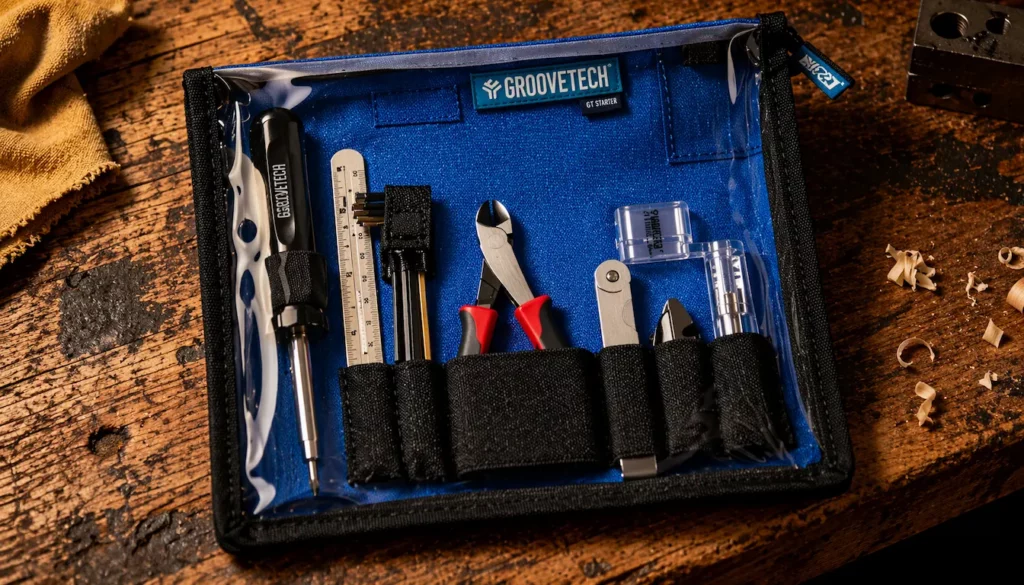
CruzTOOLS GTGTR1 GrooveTech Guitar Player Tech Kit

The CruzTOOLS GTGTR1 GrooveTech Guitar Player Tech Kit puts the most important setup and maintenance tools in one compact, travel-ready pouch. It’s designed for players who want to
handle basic adjustments, string changes, and quick fixes without hauling a full workbench.


🌟Solo Guitars Product Suggestion:

GrooveTech guitar setup tool kit in a blue zippered pouch with organized luthier tools on a white background

CruzTOOLS GTGTR1 GrooveTech Guitar Player Tech Kit

The CruzTOOLS GTGTR1 GrooveTech Guitar Player Tech Kit is a compact, all-in-one solution for basic guitar maintenance, adjustments, and emergency fixes. Designed for players who want professional-grade tools without carrying a full bench setup, this kit keeps everything organized and ready to go.
This kit includes feeler gauges along with other essential setup tools, making it a convenient all-in-one option for truss rod adjustments and basic guitar maintenance.

Why It’s Great:

✔ Complete player-focused setup kit for guitars and basses
✔ Includes essential tools for string changes, adjustments, and measurements
✔ Durable zippered pouch keeps tools secure and organized
✔ Ideal for home setups, gig bags, and travel use


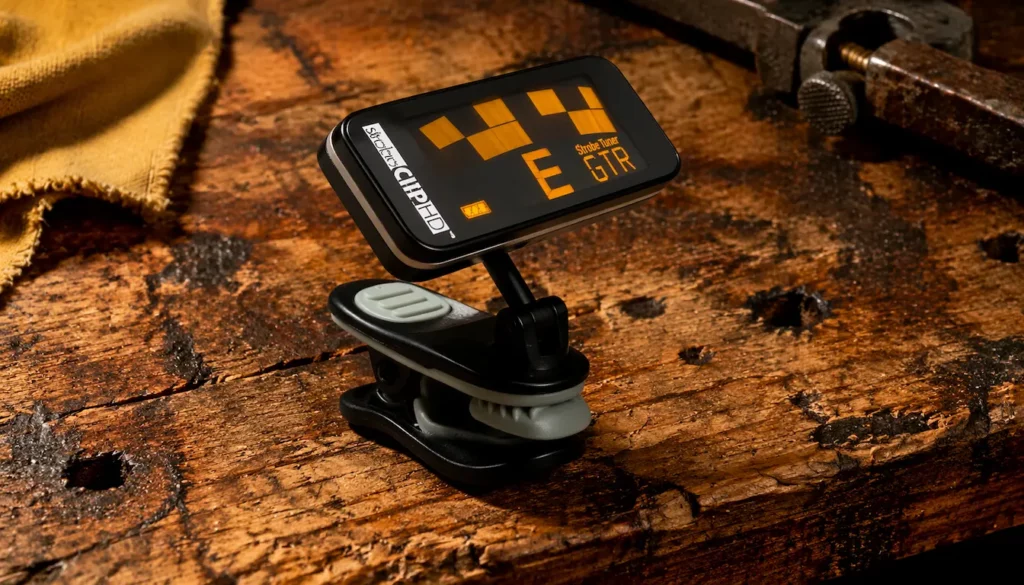
Peterson StroboClip HD High Definition Clip-on Strobe Tuner

The Peterson StroboClip HD offers professional-level tuning accuracy in a simple clip-on design
that’s easy for first-time builders to use. It’s a reliable step up from basic tuners, helping beginners
dial in their setup with confidence and precision.


🌟Solo Guitars Product Suggestion:

Peterson StroboClip HD clip-on strobe tuner with illuminated display on a white background

Peterson StroboClip HD High Definition Clip-on Strobe Tuner

The Peterson StroboClip HD is an excellent middle-of-the-road tuner for first-time guitar builders who want accuracy without complexity. It delivers true strobe precision in a simple clip-on design, making it far more reliable than basic tuners while remaining easy to use during your first setup.

*** Special Note ***
This tuner is frequently sold out due to demand.
If it’s unavailable, any Peterson StroboClip model provides the same strobe-level
tuning accuracy suitable for first-time builders.

Why It’s Great:

✔ True strobe accuracy helps prevent setup and intonation mistakes
✔ Clip-on design keeps things simple—no cables or bench gear required
✔ Stable, high-definition display makes pitch changes easy to see
✔ Accurate enough to grow with you as your skills improve


🤘🤘 Rock On — Let’s Put These Tools to Work

Now that you’ve got the right tools, let’s walk through the step-by-step process of
adjusting your action for comfortable, consistent playability.


Step-by-Step Guide: Adjusting Action for Optimal Playability

With neck relief already set within a reasonable range, action adjustment begins at the bridge.
This is where string height is raised or lowered by adjusting the bridge saddles.


Step 1: Start With Small Adjustments

Make changes in small increments rather than large jumps. A slight turn of the saddle screw is often enough to noticeably change how the guitar feels. Moving too quickly can throw the setup
out of balance and make it harder to tell what actually improved — or got worse.


Step 2: Adjust One String at a Time

Once the overall height feels close, fine-tune each string individually.
The goal is a consistent feel across all strings, not just one position or one string.


Step 3: Play-Test Across the Neck

Play notes and chords across the entire fretboard.
Pay attention to whether certain strings feel tighter, buzz more easily,
or feel harder to control than others.


Step 4: Re-Tune After Every Change

After each adjustment, re-tune the guitar before evaluating the results.
Staying in tune ensures your feedback is accurate and helps you catch issues
like buzzing or dead notes early.


Step 5: Work Slowly and Methodically

Take your time.
Slow, deliberate adjustments lead to better results and fewer mistakes —
and help you build confidence for future setups.


Ensuring Sound Integrity: Balancing Tone and Safety

Adjusting your guitar’s action isn’t just about comfort — it can subtly affect tone, sustain,
and overall response. Lowering the action changes how the strings interact with the instrument,
which is why it’s important to listen closely as you fine-tune the setup.


Prioritize Safety During Adjustments

Never force saddle or bridge screws under tension.
If something feels resistant, stop and reassess.
Action adjustments should feel controlled and deliberate, not rushed or forced.


Listen After Every Change

After each adjustment, re-tune the guitar and play for a moment.
Listen for buzzing, choking notes, or dead spots.
These are early warning signs that you’ve gone too far —
or that another part of the setup needs attention.


Aim for Balance, Not Perfection

The goal is a guitar that feels comfortable and sounds clean, not one that’s adjusted to the absolute limit. If the instrument plays well, stays in tune, and responds naturally, stop adjusting.
Over-tweaking often creates more problems than it solves.


Testing Playability After Adjusting Action

Once you’ve adjusted the action, it’s time to test it across the entire neck — not just the first few frets.
The goal is consistent playability everywhere, from open chords to higher-fret lead work.


Step 1: Play Across the Entire Fretboard

Start with open chords, then move up the neck playing single notes and chords.
Pay attention to whether the feel stays consistent as you move higher,
where problems often show up first.


Step 2: Vary Your Picking Attack

Play with both a light touch and a more aggressive attack.
Different playing styles can reveal issues that won’t show up with gentle picking alone.
The guitar should feel controlled and comfortable no matter how you play.


Step 3: Check Bends and Vibrato

Test string bends and vibrato, especially on the higher frets.
Notes should ring clearly without choking out or feeling strained.


Step 4: Test Pickup Positions

Switch between pickup positions while playing.
Some issues — like buzzing, dull response, or uneven volume —
may be more noticeable in one position than another.


Step 5: Make Final Micro-Adjustments

If small issues remain, minor tweaks may still be needed.
Guitar setup is an iterative process, and careful adjustments over time lead to the best results.


Common Action Adjustment Mistakes to Avoid

Mistake #1: Lowering the Action Too Far

Over-lowering the action is the most common mistake and often leads straight to buzzing,
fret noise, and loss of clarity.
While low action can feel appealing, pushing it too far usually creates more problems than it solves.


Mistake #2: Chasing Ultra-Low Action at All Costs

At a certain point, lowering the strings further won’t improve feel.
Instead, it makes fretting notes harder, reduces control, and can sacrifice tone.
Always balance comfort with a clean, responsive sound.


Mistake #3: Uneven Saddle Heights

Inconsistent saddle heights can cause volume, tension, and feel to vary from string to string.
This often results in uneven response and unwanted noise across the fretboard.


Mistake #4: Ignoring Neck Relief

Buzzing frequently occurs when action is adjusted without considering neck relief.
While this guide focuses on action, proper neck relief should already be set
within a reasonable range before making final height adjustments.


Mistake #5: Making Too Many Changes at Once

The best way to avoid problems is to work slowly and make one change at a time.
Small, deliberate adjustments make it easier to hear improvements and
prevent chasing issues in circles.


When Action Adjustment Isn’t Enough

Sometimes, even after careful action adjustments, a guitar still doesn’t play the way it should.
That usually means you’ve reached the practical limits of what action alone can fix,
and another factor is contributing to the problem.


Worn or Uneven Frets

Fret wear or uneven frets can cause persistent buzzing or inconsistent playability.
No amount of action adjustment can compensate for worn or uneven frets,
so, it’s worth inspecting them closely if problems remain.


Neck Relief Issues

Neck relief has a direct impact on action, especially when buzzing continues
despite reasonable saddle height.
If action changes don’t improve the situation,
the truss rod may need attention as a separate adjustment.


Nut Slot Depth Problems

If the action feels high near the nut but comfortable elsewhere on the neck,
shallow or uneven nut slots may be the real issue — not bridge height.
This is a common culprit that often gets overlooked.


Knowing When to Stop

When simple adjustments aren’t resolving the problem,
a professional setup can be the right next step.
That doesn’t mean you’ve failed at DIY — sometimes an experienced eye is needed to
identify issues that aren’t immediately obvious.


👉👉 Pickup height plays a major role in achieving overall tone balance across all
strings and pickup positions.


Final Thoughts on Action Adjustment…

Adjusting guitar action is a fundamental part of getting your instrument to feel right in your hands.
It’s a fine-tuning process guided more by feel than exact measurements,
and when done carefully, it can dramatically improve comfort and playability.

Approach action adjustments slowly and deliberately.
Take time to let each change settle in and listen to how it affects both feel and response.
The best setups aren’t rushed — they’re built through small, thoughtful adjustments.

There’s no single “perfect” action that works for everyone.
Your ideal setup depends on your playing style, touch, and comfort.
Whether you prefer low, fast action or something slightly higher for digging in,
what matters most is that it works for you.

Remember that action is just one part of a complete setup,
working alongside neck relief and pickup height.
When these elements are balanced, the guitar becomes easier to play,
more consistent, and more enjoyable overall.

Trust your ears, trust your hands, and don’t be afraid to make small refinements as your
playing evolves.

Thoughtful adjustments over time lead to a setup that truly feels like your own.


Ready to Start Adjusting Your Tone?

Check out our other guides:

👉 If you’re new to guitar kits:
Start with Step-by-Step Guide To Building Your First Electric Guitar Kit and Essential Tools Every Electric Guitar Kit Builder Should Have.

👉 If you already own a kit guitar:
Jump into How To Properly Set Up Your Electric Guitar Kit For Intonation or Fixing Common Problems: Buzzing And Dead Frets.

👉 If you’re chasing better tone:
Head to Understanding Humbucker Vs Single Coil Pickups In Kits or Playing With Tone Controls: Tips For Electric Guitar Kits and start experimenting.


Your Guitar, Your Build, Your Sound

You don’t need a custom shop or a tech on speed dial.
All you need is a little guidance, some patience, and a place to go that shows you what to do next.
Come on man… You got this.

GuitarCrafts is here to help you along the way.


🎸Craft it. Play it. Own it! 🎸


Ready to take your guitar passion beyond the workbench?

See how I built GuitarCrafts.com using the training at Wealthy Affiliate — you can do the same.
👉👉 Build Your First Website With Wealthy Affiliate (Free)

Wealthy Affiliate Internet Marketing University Banner


Leave a Reply Cancel reply

Your email address will not be published. Required fields are marked *

Learn to make money in the comfort of your own home!

  • Facebook
  • Pinterest
  • YouTube

Recent Posts

  • Fixing Buzzing Strings & Dead Frets
  • Guitar Setup Tools Explained (What You Actually Use)
  • Why Guitars Go Out of Tune Up the Neck
  • What Guitar Intonation Means in Real Playing
  • Low Action vs Fret Buzz: Finding the Balance
  • About Me...
  • Affiliate Disclosure
  • Best Solo Guitar Kits (Complete 2025 Buying Guide)
  • Best Solo Hollow Body Guitar Kits (Buying Guide)
  • Best Solo LP-Style DIY Guitar Kits (Beginner-Friendly Guide)
  • Best Solo Offset-Style DIY Guitar Kits (Buying Guide)
  • Best Solo SG-Style DIY Guitar Kits (Beginner Guide)
  • Best Solo Strat-Style DIY Guitar Kits (Buying Guide)
  • Best Solo Tele-Style DIY Guitar Kits (Buying Guide)
  • Build Your Own Dream Guitar Kit (Without Feeling Overwhelmed)
  • GuitarCrafts Homepage
  • How I Started Making Money Online With Wealthy Affiliate
  • Privacy Policy
  • Solo Explorer & Fire-Style Guitar Kits — EXK, FBK & FVK
  • Solo Guitars Review (2025): Are Their DIY Guitar Kits Worth It?
  • Solo Tele Semi-Hollow DIY Kits

Archives

  • January 2026
  • December 2025
  • November 2025
  • September 2025
  • August 2025
  • July 2025

Categories

  • Build Guides
  • Customization & Mods
  • Neck & Setup
  • Pickups & Wiring
  • Tone & Playability
  • Uncategorized
© 2026 My Electric Guitar Kits Site | Powered by Superbs Personal Blog theme