
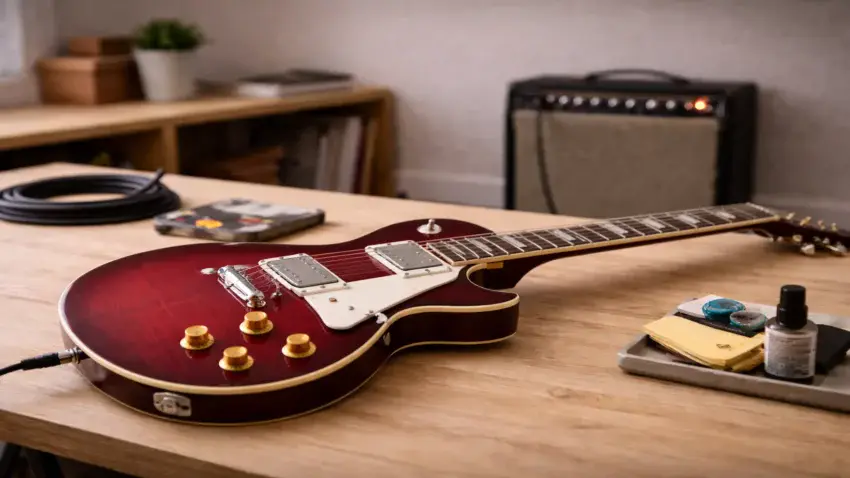
When players start learning about electric guitar tone, pickups usually get all the attention.
But once a pickup captures string vibration, everything that happens next matters just as much.
Volume controls, tone pots, switches, capacitors, and wiring paths all shape how your guitar responds before the signal ever reaches the amp.
These components influence clarity, warmth, dynamics, responsiveness, and overall feel more than many players realize.
The good news?
You don’t need advanced technical knowledge or soldering experience to understand what these parts actually do in real playing situations.
This guide focuses on awareness, not modification.
The goal is to help you understand how guitar electronics shape feel, response, and control — even with completely stock components.
👉 Want a complete breakdown of how guitar wiring works and how everything connects together?
Check out our full guide to wiring your electric guitar kit for optimal performance.
🎸 Great tone starts behind the control cavity.
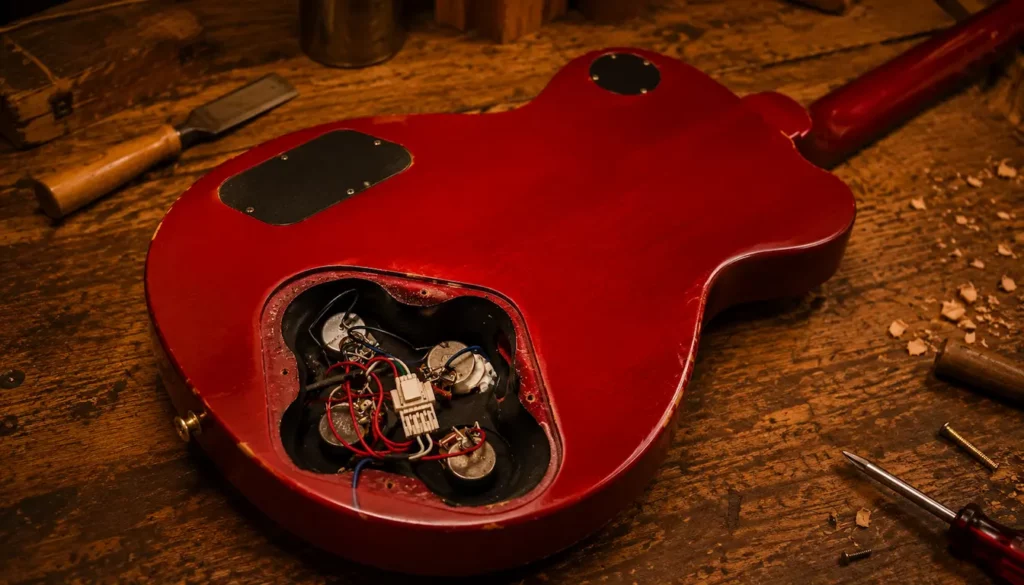
🎛️ Why Pickups Don’t Work Alone
A pickup produces a raw electrical signal.
That signal is then shaped, restricted, or redirected by the electronics it passes through.
This means two guitars with the same pickups can feel very different to play if:
-
Their controls interact differently
-
Their signal paths emphasize or soften certain frequencies
-
Their electronics respond differently to volume changes
That difference isn’t magic — it’s electronics doing their job.
Understanding this relationship helps explain why pickup discussions sometimes feel contradictory.
The pickup may be the same, but the system around it isn’t.
🔊 Volume Controls Are More Than Loudness
Many beginners think of volume knobs as simple on-off controls.
In practice, volume controls influence:
-
Signal strength
-
Dynamic response
-
How touch-sensitive the guitar feels
Some guitars clean up smoothly when the volume is lowered.
Others lose clarity or feel less responsive.
This isn’t about pickup quality — it’s about how the electronics manage the signal.
If your playing style relies on dynamics and touch, this interaction matters more than most players realize.
🎚️ Tone Controls Shape Feel, Not Just Sound
Tone controls are often misunderstood as simple “brightness reducers.”
In reality, they influence how the guitar responds under your fingers.
Depending on how they’re set, tone controls can:
-
Soften aggressive attack
-
Emphasize warmth
-
Reduce harshness without killing clarity
Many players leave tone knobs untouched because they don’t understand how subtle adjustments can improve control and comfort.
Learning what tone controls feel like in use is often more valuable than learning what they do on paper.

⚡ Switching Changes More Than Pickup Selection
Pickup selectors do more than choose which pickup is active.
They also change how signals combine and interact.
Different switch positions can:
-
Alter perceived output
-
Change string balance
-
Affect how chords and single notes respond
This is why some switch positions feel more usable for rhythm while others feel better for lead — even with the same pickups.
🔧 Electronics Shape Consistency and Control
One of the most overlooked roles of guitar electronics is consistency.
Good electronic interaction makes the guitar feel predictable and controllable across different playing intensities.
This is especially important for players who:
-
Move between clean and driven sounds
-
Rely on volume and tone adjustments while playing
-
Switch roles mid-song
Electronics don’t create tone on their own — they manage how usable that tone is.
🛠️ How Electronics and Pickup Placement Work Together
Electronics don’t exist independently from pickup placement.
Where a pickup sits on the guitar affects how its signal behaves before electronics shape it.
That relationship forms the foundation for understanding why electronics behave differently across pickup positions.
Pickup type is only part of the equation — where that pickup sits on the guitar also plays a major role in how it responds and feels, which is explained in detail in:
Understanding how electronics shape tone is only part of the picture — pickup setup and adjustment play a major role in how that system responds, which is covered in:
👉 Optimizing Pickup Performance Through Setup and Adjustment.
Before diving into electronics and controls, it helps to understand how pickup type relates to the way you play, which is outlined in:
🚫 It Isn’t About Modding or Upgrading
Nothing in this guide requires changing components.
Many players get more usable tone simply by understanding how their existing electronics interact with their playing style.
Awareness often solves problems that upgrades don’t.
🎸 Great tone comes from small adjustments.
🏁 Final Thoughts…
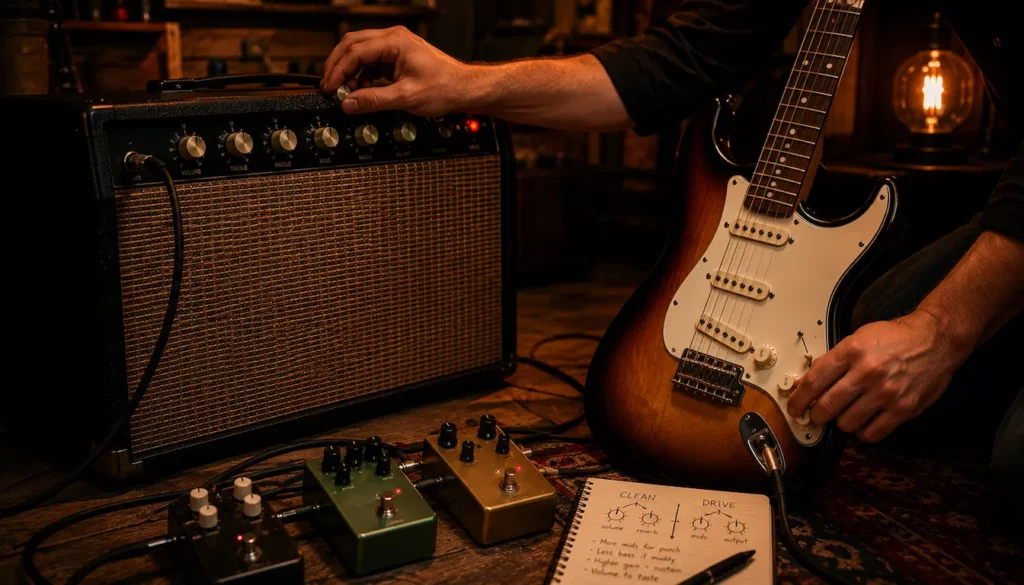
Pickups may start the signal, but electronics decide how that signal behaves in real use.
Volume controls, tone controls, and switching shape feel, consistency, and control in ways that specs alone can’t explain.
This page isn’t about telling you what to change — it’s about helping you understand what’s already happening inside your guitar.
Once you recognize how electronics influence response and usability, pickup conversations become clearer and less confusing.
Tone doesn’t come from one part.
It comes from how the system works together.
Ready to Start Adjusting Your Tone?
Check out our other guides:
 If you’re new to guitar kits:
Start with
Step-by-Step Guide To Building
Your First Electric Guitar Kit
and
Essential Tools Every Electric Guitar
Kit Builder Should Have.
If you already own a kit guitar:
Jump into
How To Properly Set Up Your
Electric Guitar Kit For Intonation
or
Fixing Common Problems:
Buzzing And Dead Frets.
If you’re chasing better tone:
Head to
Understanding Humbucker Vs
Single Coil Pickups In Kits
or
Playing With Tone Controls:
Tips For Electric Guitar Kits
and start experimenting.
Your Guitar, Your Build,
Your Sound
You don’t need a custom shop or a tech on speed dial.
All you need is a little guidance, some patience,
and a place to go that shows you what to do next.
Come on man… You got this.
 Craft it. Play it. Own it!