

When players talk about improving guitar tone, the conversation often jumps straight to swapping pickups.
But in many cases, the biggest improvements don’t come from replacing anything — they come from setting up what’s already there correctly.
Pickup performance is heavily influenced by setup and adjustment.
Height, balance, and alignment all affect how a pickup responds to your playing.
Understanding this helps you get more clarity, control, and consistency without changing components or chasing upgrades.
This guide focuses on optimization, not modification.
The goal is to help you understand how setup affects pickup behavior so, you can get the best performance from the guitar you already have.
🎸 Why Setup Matters More Than Most Players Realize
Pickups are sensitive devices.
Small changes in position can create noticeable differences in output, string balance, and feel.
When setup is off, players often describe pickups as:
-
Harsh
-
Weak
-
Muddy
-
Inconsistent across strings
In many cases, the pickup itself isn’t the problem.
The issue is that it isn’t positioned in a way that lets it work properly with your playing style.
🎸 Small Adjustments. Big Feel Difference.
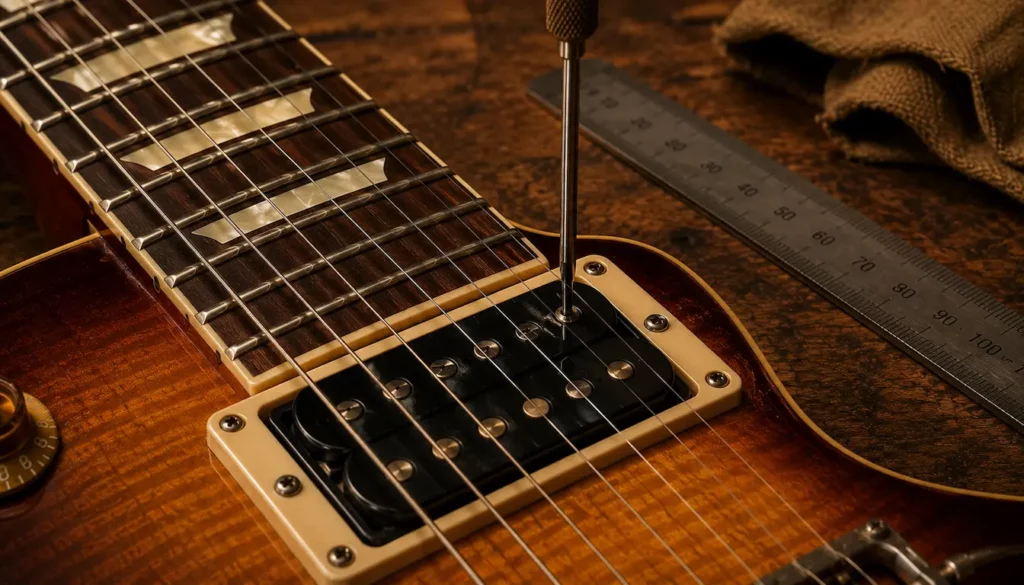
⚡ Pickup Height Directly Affects Feel and Response
Pickup height influences how strongly the strings interact with the pickup’s magnetic field.
A pickup set too close to the strings can feel aggressive or compressed.
One set too far away can feel dull or unresponsive.
The “right” height isn’t universal — it depends on how hard you play,
how dynamic your technique is, and what kind of response feels natural to you.
This is why factory settings are only a starting point, not a rule.
🎵 String Balance and Consistency
Good pickup setup isn’t just about overall height. It’s also about balance.
If some strings sound louder or clearer than others, it can affect:
-
Chord clarity
-
Lead consistency
-
Dynamic control
Balancing pickup response across strings helps the guitar feel predictable and easier to control, especially when switching between rhythm and lead playing.
🔧 Setup Changes How Pickups Behave — Not What They Are
Setup adjustments don’t turn one pickup into another.
Instead, they change how that pickup behaves.
A well-set pickup:
-
Responds evenly across strings
-
Tracks your picking dynamics more accurately
-
Feels easier to control at different volumes and intensities
This is why two guitars with the same pickups can feel completely different to play.
🧩 Setup Works Together With Electronics and Pickup Type
Pickup performance doesn’t exist in isolation.
Setup interacts with pickup type and electronics to shape the overall playing experience.
Understanding setup first makes discussions about electronics and pickup selection much clearer — because you’re evaluating components that are already working correctly.
Pickup type is only part of the equation — where that pickup sits on the guitar also plays a major role in how it responds and feels, which is explained in detail in How Pickup Position Affects Electric Guitar Tone In Kits.
This relationship forms the foundation for understanding why setup changes can have such a strong effect on feel and response.
Before adjusting pickup height or balance, it helps to understand how the guitar’s electronics shape signal behavior and control, which is explained in How Guitar Electronics Shape Tone Beyond Pickups.
🎸 Better Setup Creates Better Response
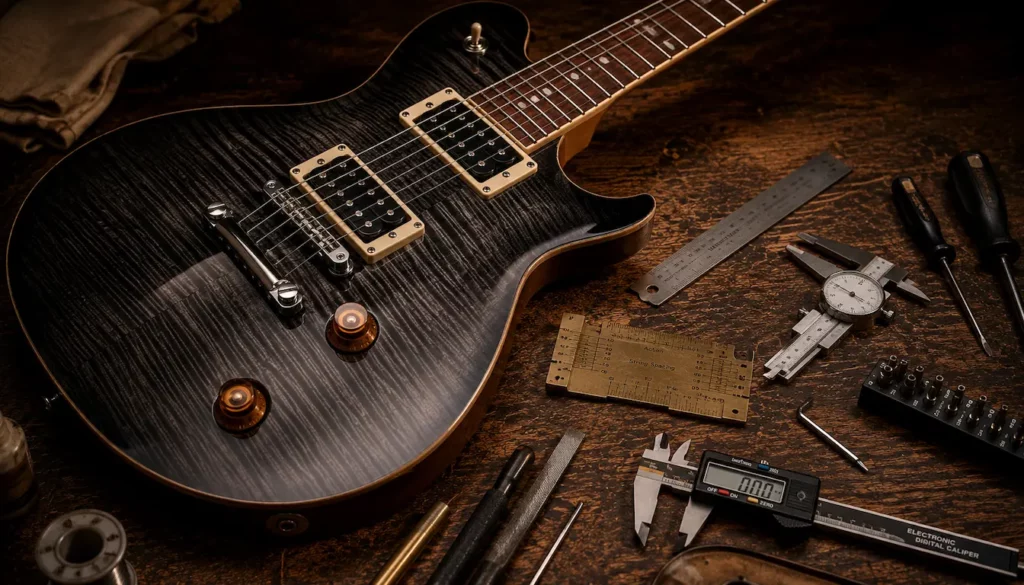
🎯 This Is About Control, Not Perfection
Setup is not about chasing ideal measurements or copying someone else’s settings.
It’s about making the guitar respond naturally to how you play.
Many players get more satisfaction from a careful setup than from a pickup swap — because the guitar finally feels cooperative instead of resistant.
🏁 Final Thoughts…
Before replacing pickups, it’s worth understanding how setup influences performance.
Height, balance, and adjustment shape how pickups respond to your hands far more than most players expect.
This page isn’t about tools or procedures — it’s about awareness.
Once your pickups are working in harmony with your playing style, decisions about electronics or pickup types become clearer and more confident.
Sometimes the best upgrade is simply letting the pickup do its job properly.
 Ready to Start?
Here’s your next step —
pick one and go:
 New to guitar kits?
Start with
Step-by-Step Guide To Building
Your First Electric Guitar Kit
and
Essential Tools Every Electric Guitar Kit
Builder Should Have.
Already built a kit?
Jump into
How To Properly Set Up Your
Electric Guitar Kit For Intonation
or
Fixing Common Problems:
Buzzing And Dead Frets.
Chasing better tone?
Head to
Understanding Humbucker
Vs Single Coil Pickups In Kits
or
Playing With Tone Controls:
Tips For Electric Guitar Kits
and start experimenting.
 Your Guitar, Your Build,
Your Sound
You don’t need a custom shop or a tech on speed dial.
All you need is a little guidance, some patience,
and a place to go that shows you what to do next.
Come on man… You got this.
GuitarCrafts
is here to help you along the way.
Craft it. Play it. Own it!