Skip to content
Electric Guitar Kits Logo
Menu
  • Home
  • Start Here
    • Build Your First Guitar Kit
    • Essential Tools Every Electric Guitar Kit Builder Should Have
    • Setting Up The Bridge And Neck On Your Electric Guitar Kit
    • Are DIY Guitar Kits Good For Beginners?
    • Mastering Tone Controls on Your Electric Guitar Kit (Beginner-Friendly Guide)
  • Fix & Setup
    • How To Adjust Truss Rod For Neck Relief In Guitar Kits
    • Adjusting Action On An Electric Guitar
    • How To Properly Set Up Your Electric Guitar Kit For Intonation
    • Fix Buzzing Frets & Dead Notes
    • Setting Up The Bridge And Neck On Your Electric Guitar Kit
  • Pickups & Wiring
    • Understanding Humbucker Vs Single Coil Pickups In Kits
    • How Pickup Height Affects Electric Guitar Tone
    • How To Adjust Pickup Height On Electric Guitar
    • Guide To Wiring Your Electric Guitar Kit For Optimal Performance
    • How To Shield Your Guitar’s Electronics For Noise Reduction
  • Tone & Upgrades
    • How Tone Pots Shape Feel and Control on Your Guitar
    • How Guitar Electronics Shape Tone Beyond Pickups
    • Does Guitar Wood REALLY Affect Tone? (What Builders Notice First)
    • Best Pickups for Guitar Kits (Budget to Pro Tone Upgrades)
    • How To Choose The Perfect Nut Material For Your Electric Guitar
  • Mods & Custom Builds
    • D.I.Y. Fretboard Inlays For Guitar Kits (Creative Upgrade Guide)
    • D.I.Y. Custom Guitar Inlays (Step-By-Step Guide)
    • How To Choose Between Neck-Through And Bolt-On Necks In Kits
    • String Changing Techniques To Protect Your Guitar
    • Electric Guitar Customization & Mods Guide
Menu

Category: Neck & Setup

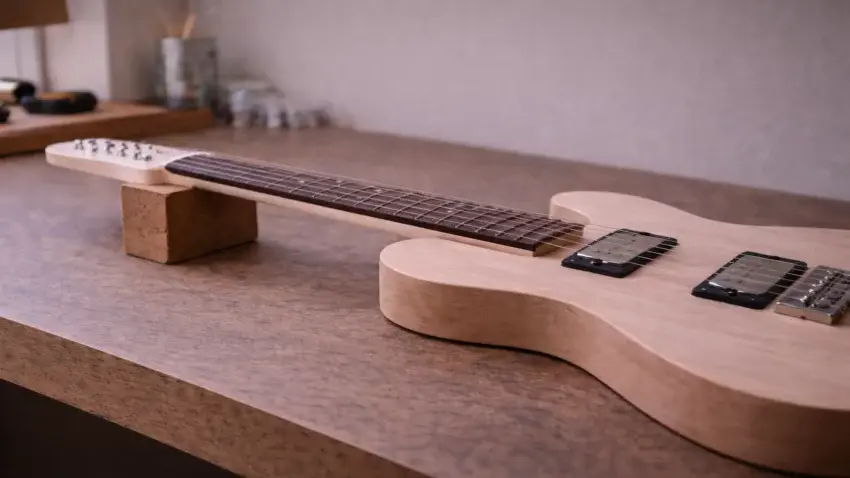
First-person view looking down the fretboard of an electric guitar kit from the headstock, showing strings and frets in perspective to visually inspect natural neck relief.

How to Check Neck Relief Safely

Posted on January 28, 2026January 28, 2026 by Wayne

Before making any truss rod adjustments, it’s important to check neck relief correctly. Many setup problems come from skipping this step or checking relief inconsistently. The goal here isn’t to chase numbers or force changes — it’s to observe how the neck is behaving under string tension, so you know whether an adjustment is even…

Read more
Electric guitar kit resting on a workbench with the neck fully visible under string tension, subtly showing natural neck relief in a calm, instructional workshop setting.

What Is Guitar Neck Relief?

Posted on January 28, 2026January 28, 2026 by Wayne

Neck relief is one of the most misunderstood parts of guitar setup — especially for beginners. Many players assume a guitar neck should be perfectly straight. In reality, a small amount of forward curve is intentional and necessary for clean tone and comfortable playability. This guide explains what guitar neck relief actually is, why it…

Read more
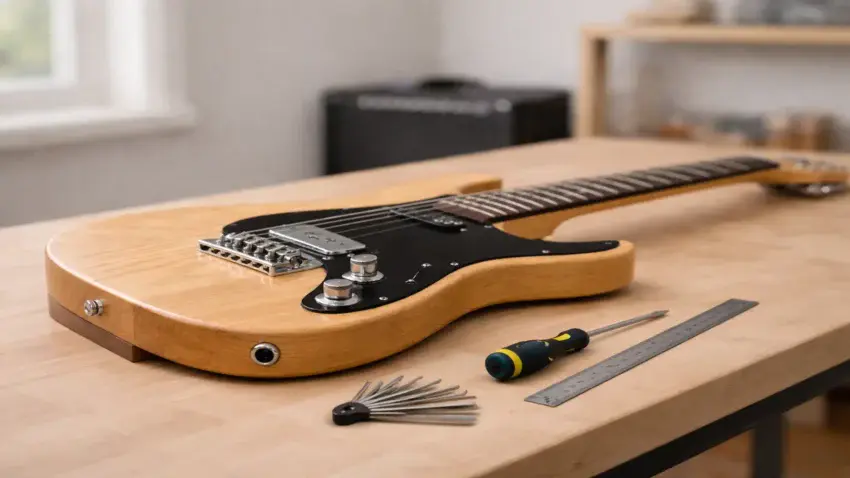
Electric guitar kit resting on a workbench with basic setup tools nearby, fully strung and idle, representing calm troubleshooting and setup readiness in a beginner-friendly workshop setting.

Electric Guitar Setup Tools, Common Problems & Fixes

Posted on January 27, 2026January 27, 2026 by Wayne

Not every setup issue is solved by turning a screw. After neck relief, action, and intonation are set, most remaining problems fall into one of three categories: A small adjustment that needs patience A tool-related limitation A problem that shouldn’t be forced This guide explains which tools are actually used during electric guitar setup, how…

Read more
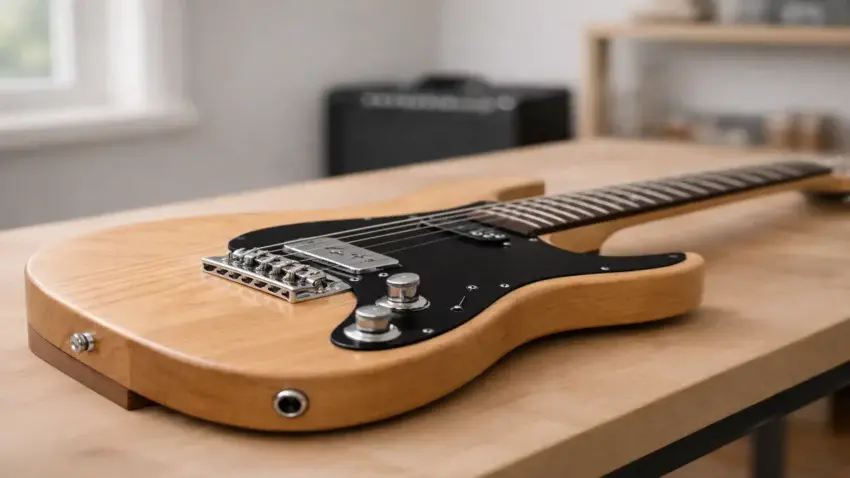
Electric guitar kit resting on a workbench with a black pickguard and visible bridge saddles, showing natural saddle alignment for checking intonation and tuning accuracy in a calm workshop setting.

Electric Guitar Intonation & Tuning Accuracy Setup

Posted on January 27, 2026January 27, 2026 by Wayne

Once neck relief and action feel right, the final step in a proper electric guitar setup is intonation. Intonation determines whether your guitar plays in tune across the entire fretboard, not just at open strings. A guitar can be perfectly tuned at the nut and still sound sharp or flat higher up the neck if…

Read more
Electric guitar kit resting idle on a workbench with the bridge and strings visible, showing natural string height above the fretboard for evaluating action and overall playability.

Electric Guitar Action & Playability Setup

Posted on January 27, 2026January 27, 2026 by Wayne

Once neck relief is set correctly, the next step in an electric guitar setup is action — the height of the strings above the frets. Action has more influence on how a guitar feels than almost any other adjustment. Too high, and the guitar feels stiff and tiring to play. Too low, and buzzing, choking…

Read more
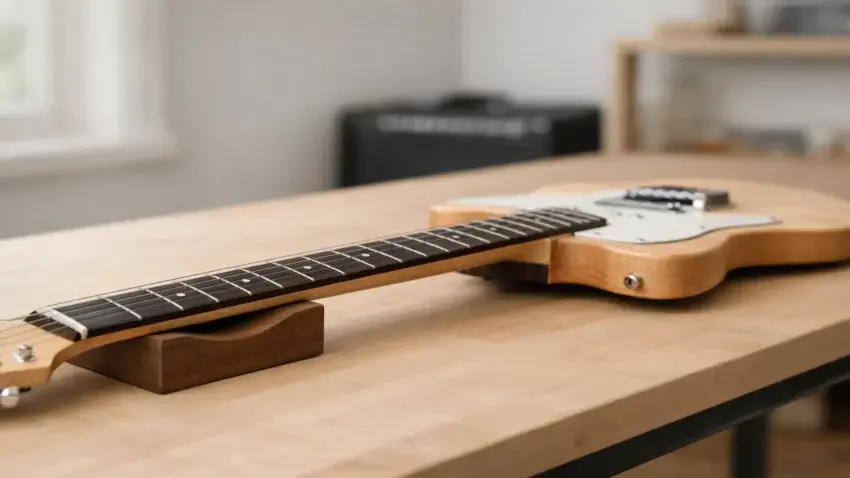
Electric guitar kit resting on a workbench with the neck supported and strings under tension, showing a straight fretboard for inspecting neck relief in a calm workshop setting.

Electric Guitar Neck Relief & Truss Rod Adjustment

Posted on January 27, 2026January 27, 2026 by Wayne

Setting up an electric guitar starts with the neck.Before you adjust string height, touch the bridge, or think about intonation, neck relief has to be right. Neck relief refers to the slight forward curve built into a guitar neck to allow strings to vibrate cleanly. Too much relief makes a guitar feel stiff and hard…

Read more
Finished electric guitar kit resting on a workbench with setup tools set aside, illustrating a pause before adjustment to avoid common guitar setup mistakes.

Common Setup Mistakes During Electric Guitar Kit Builds

Posted on January 26, 2026January 26, 2026 by Wayne

Most setup problems don’t come from bad parts — they come from doing the right things in the wrong order, or adjusting without understanding what the numbers are telling you. When building an electric guitar kit, it’s easy to chase buzz, tuning issues, or playability problems by constantly tweaking hardware. Unfortunately, that usually creates new…

Read more
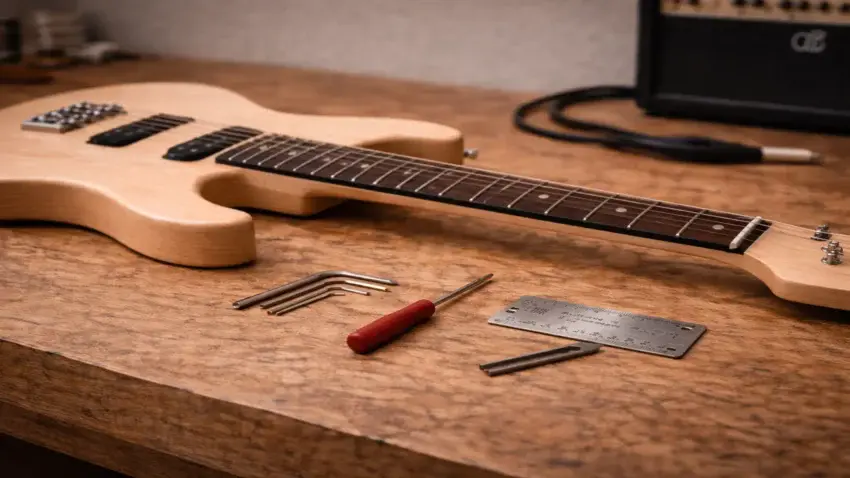
Finished electric guitar kit on a workbench with adjustment tools including hex keys, a small screwdriver, string action gauge, and clip-on tuner, showing fine-tuning and setup adjustments.

Setup & Adjustment Tools for Electric Guitar Kits

Posted on January 26, 2026 by Wayne

Once you’ve measured everything correctly, setup and adjustment tools are what let you make the changes that matter. These tools don’t tell you what’s wrong — they let you fix it.Action height, neck relief, intonation, and tuning stability all depend on having the right tools to make small, controlled adjustments without damaging parts or chasing…

Read more
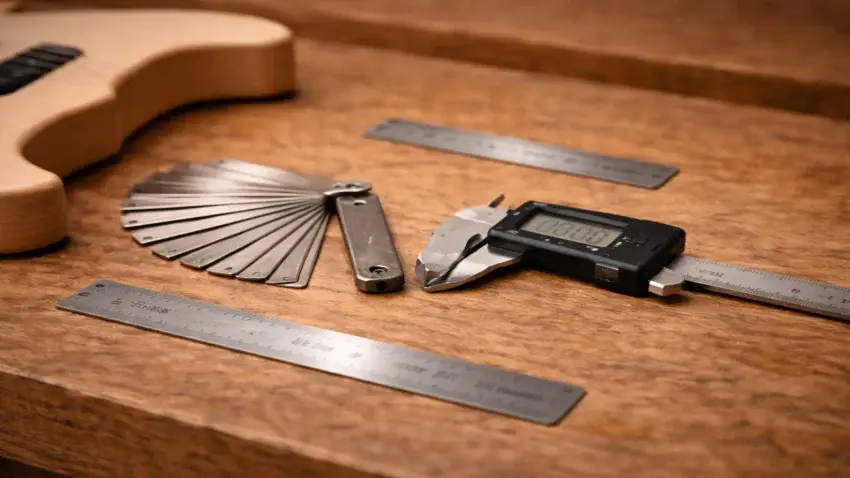
Unfinished electric guitar kit on a workbench with measuring tools including a steel ruler, digital calipers, feeler gauges, and straight edge, showing precise measurement before setup adjustments.

Measuring Tools Used During Electric Guitar Kit Setup

Posted on January 26, 2026January 26, 2026 by Wayne

If you’re building an electric guitar kit, measuring tools are what turn guesswork into consistency. You don’t need a full luthier shop — but you do need a few reliable tools that let you check alignment, spacing, and clearances instead of guessing and hoping everything lines up later. This guide focuses specifically on measuring tools…

Read more
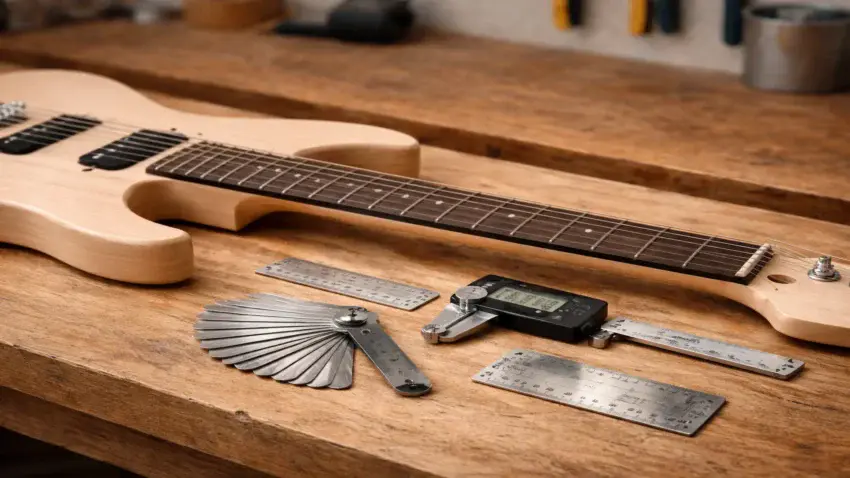
Electric guitar kit on a workbench with measuring and setup tools including feeler gauges, rulers, calipers, and a string action gauge, showing preparation for accurate guitar setup.

Measuring & Setup Tools for Electric Guitar Kits

Posted on January 26, 2026July 2, 2026 by Wayne

Building an electric guitar kit isn’t just about assembling parts — it’s about getting everything to line up, sit correctly, and play the way it should. That’s where measuring and setup tools come in. These tools don’t make your guitar sound better on their own, but they prevent the small errors that quietly ruin playability,…

Read more

Posts pagination

  • Previous
  • 1
  • 2
  • 3
  • 4
  • Next
  • Facebook
  • Pinterest
  • YouTube

© 2026 Guitar Crafts | Privacy Policy

© 2026 My Electric Guitar Kits Site | Powered by Superbs Personal Blog theme