
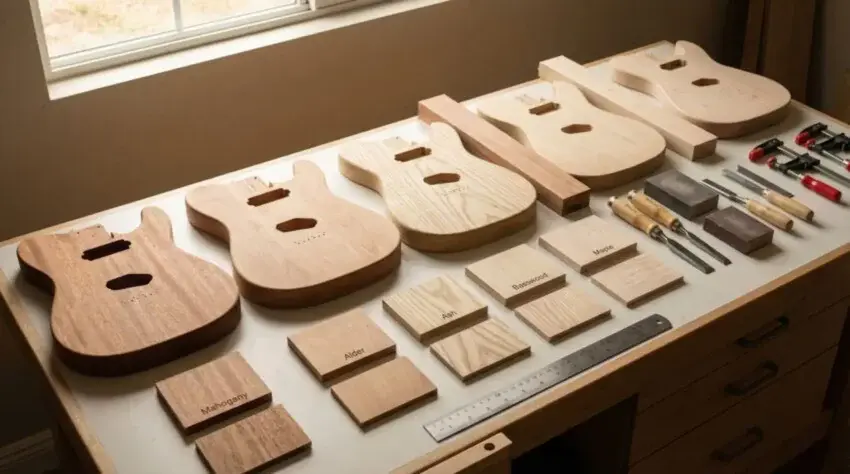
When you’re building your first (or tenth) DIY axe,
wood choices for electric guitar kits play a
massive role in how your finished build feels,
sounds, and even responds to your playing.
Whether you’re chasing warm classic-rock tones,
bright modern attack, or something exotic and
eye-catching, the wood you pick shapes everything
from sustain to weight to resonance.
In this guide,
we break down the most beginner-friendly,
tone-reliable woods and help you choose the
right blank for your next GuitarCrafts masterpiece.

🪵 Recommended
Tonewood Body Blanks
Here are three solid, reliable tonewood blanks
you can use for kit upgrades, scratch builds,
and custom bodies.
Basswood 21″ x 14″ x 2″
Unfinished Guitar Body Blank
If you want an easy-to-shape body that delivers
smooth mids and a balanced, neutral tone, this
basswood blank is your best budget-friendly bet.
It carves beautifully, finishes easily, and keeps
the guitar lightweight for long jam sessions.
 Amazon Product Suggestion:
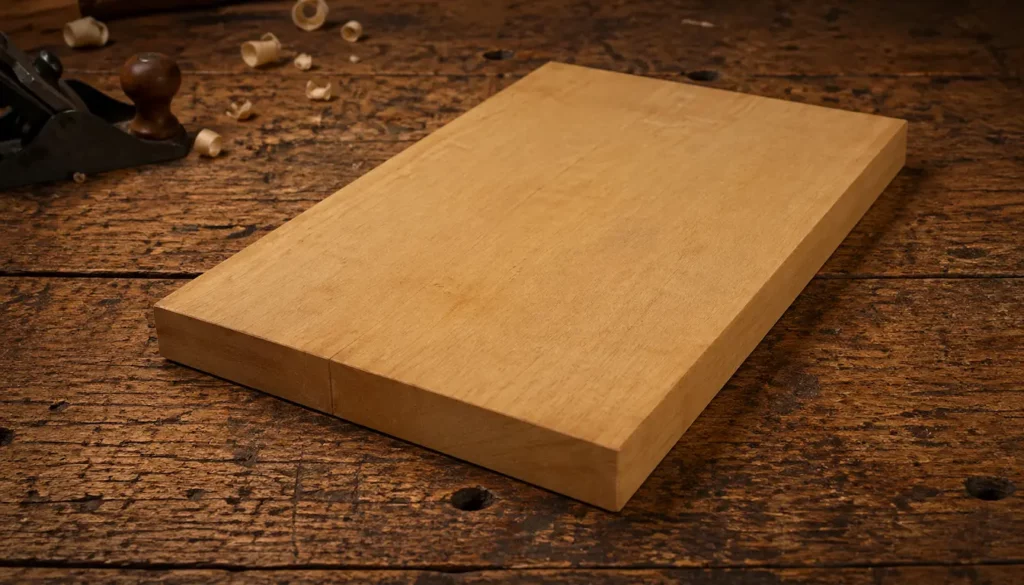
✔️ Basswood 21″ x 14″ x 2″
(Unfinished Guitar Body Blank)
A lightweight basswood body blank
that’s easy to shape and
great for balanced tone.
Ideal for custom builds and
routing your own design.
Why It’s Great:
✔️ Lightweight — Balanced tone
✔️ Full-size — Fits most builds
✔️ Easy to work — Shape and sand
✔️ DIY ready — Perfect for custom builds
3-Piece Poplar Electric
Guitar Body Blank
Poplar is a fantastic “step-up” wood that still cuts
cleanly but brings a touch more clarity and snap
than basswood.
Perfect for Explorer-style or modern builds where
you want brighter mids without the price jump.
Amazon Product Suggestion:
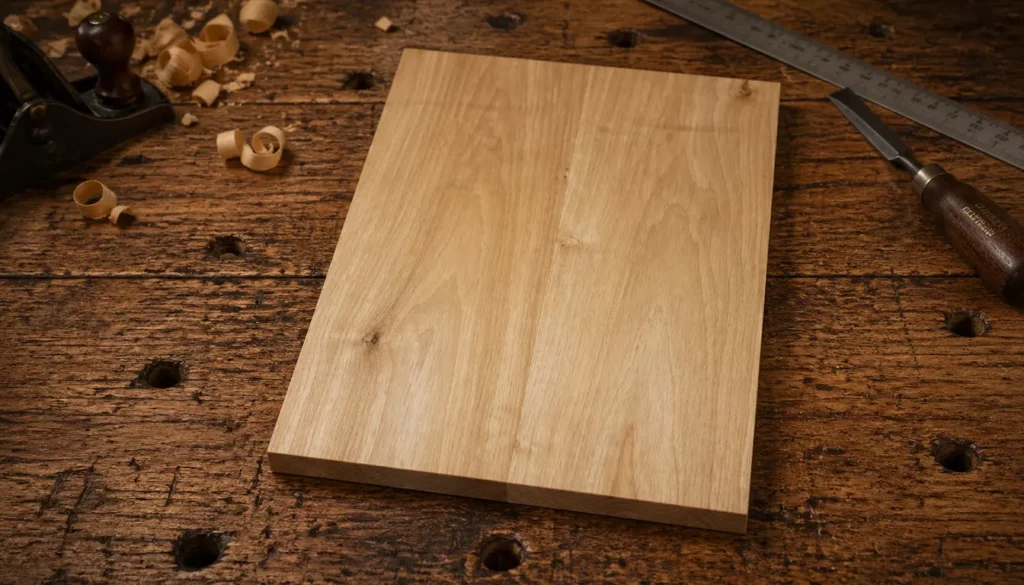
✔️ 3-Piece Poplar
Electric Guitar Body Blank
A stable poplar body blank
that’s easy to shape
and takes finishes well.
Great for bold designs and
comfortable, lightweight builds.
Why It’s Great:
✔️ Full-size — Fits Explorer builds
✔️ Easy to work — Smooth cutting
✔️ Lightweight — Comfortable feel
✔️ Stable — Resists warping
3-Piece Padauk & Sapele
Electric Guitar Body Blanks
If you’re craving bold tone and exotic visual flair,
this Padauk & Sapele laminate is a beast.
It gives your guitar a rich, punchy midrange with
beautiful natural striping and top-tier sustain —
a head-turner in both sound and appearance.
Amazon Product Suggestion:
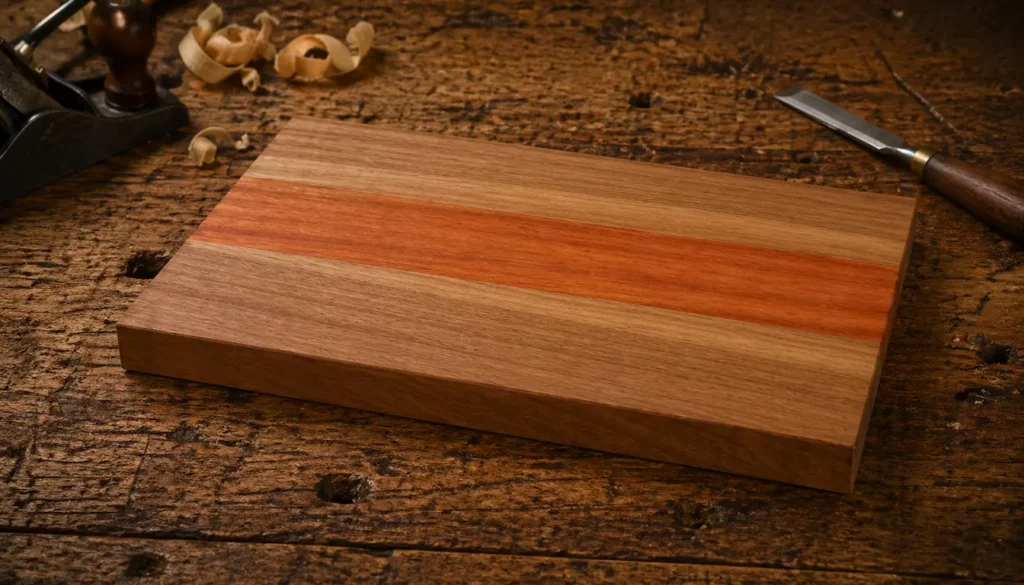
✔️ 3-Piece Electric Guitar Body Blanks
(Padauk & Sapele Hardwood)
An exotic hardwood blank with a bold
Padauk center and stable Sapele wings.
Delivers great tone, strength,
and a high-end look for custom builds.
Why It’s Great:
✔️Exotic look — Striking grain
✔️Strong & stable — Great sustain
✔️Full-size — Fits most builds
✔️Easy to work — Shape and finish
🛠️ Getting Started With
Choosing Your Tonewood
Each wood has its own feel, weight,
and sonic fingerprint.
This guide will walk you through the fundamentals
so you can make the perfect choice for your next
electric kit build.
10 Steps To Choosing
the Right Wood for
Your Electric Guitar Kit
1. Decide the type of
guitar you want to build
Different shapes favor different woods.
Strat-style? Alder or basswood.
LP-style? Mahogany or heavier hardwoods.
2. Consider your playing style
Heavy-handed players often prefer
denser woods for resonance and sustain.
Soft players benefit from responsive, lighter woods.
3. Pick your tonal
direction early
Warm?
Bright?
Neutral?
Your wood sets the “baseline”
that pickups modify
— not replace.
4. Think about the
final weight
Basswood and poplar = lightweight.
Padauk & Sapele = heavier but fuller tone.
5. Evaluate grain and appearance
Some woods take stains beautifully (maple, sapele).
Others prefer solid color finishes (basswood, poplar).
6. Check stability and workability
If you’re routing or contouring,
choose woods that cut cleanly.
Basswood = super easy.
Exotics = tougher but rewarding.
7. Match wood density
to pickup type
Hot humbuckers love denser woods.
Low-output single-coils love lighter, airy woods.
8. Compare sustain and resonance
Heavier hardwoods usually support longer sustain.
Lighter woods give snappy attack and brighter edges.
9. Think ahead to your finish
Oil, stain, dye, or solid paint — your finish should complement your wood choice.
10. Don’t overlook comfort
Body weight, contour depth, and thickness
all affect long-term playing comfort.
✌️👉 Pro Tips
(Because that’s what I do)
👉👉Pro Tip #1:
Wood Is Your Starting Tone
— Not the Final Word
Pickups shape 70% of your final sound, but
your wood determines how the guitar responds.
Choose the feel you want in your hands first.
👉👉Pro Tip #2:
Exotic Woods Equal
Premium Looks
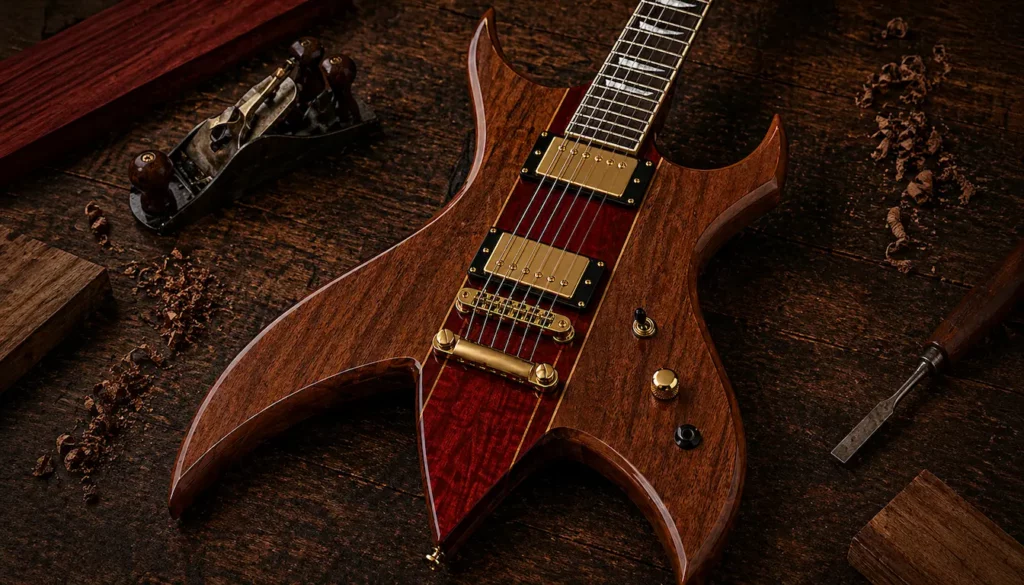
Padauk & Sapele give incredible tone, but
they also add resale value and bragging rights.
Great for “showpiece” builds.
👉👉Pro Tip #3:
Don’t Fear Basswood
Beginners often overlook basswood,
but it’s used in tons of pro-level guitars.
Smooth, predictable, lightweight
— perfect for modding.
👉👉Pro Tip #4:
Poplar Is the Unsung Hero
Poplar sits right between basswood and alder,
giving you a nice balanced tone
without the premium price tag.
🎤 Final Thoughts…
When it comes to
wood choices for electric guitar kits,
there’s no single “best” option —
Only the best fit for your playing style,
finish goals, and build ambitions.
Whether you choose lightweight basswood,
versatile poplar, or the bold punch of
padauk and sapele, each wood brings its
own personality to your electric guitar.
Pick the one that inspires you, carve it your way,
and build the guitar that feels like YOURS.
 Ready to Start?
Here’s your next step —
pick one and go:
 New to guitar kits?
Start with
Step-by-Step Guide To Building
Your First Electric Guitar Kit
and
Essential Tools Every Electric Guitar Kit
Builder Should Have.
Already built a kit?
Jump into
How To Properly Set Up Your
Electric Guitar Kit For Intonation
or
Fixing Common Problems:
Buzzing And Dead Frets.
Chasing better tone?
Head to
Understanding Humbucker
Vs Single Coil Pickups In Kits
or
Playing With Tone Controls:
Tips For Electric Guitar Kits
and start experimenting.
 Your Guitar, Your Build,
Your Sound
You don’t need a custom shop or a tech on speed dial.
All you need is a little guidance, some patience,
and a place to go that shows you what to do next.
Come on man… You got this.
GuitarCrafts
is here to help you along the way.
Craft it. Play it. Own it!