If you’re building your own electric guitar kit,
comparing bolt-on vs set neck electric
guitar kits for tone is one of the smartest
decisions you can make early in the process.
The neck joint you choose doesn’t just
change how the guitar looks —
It shapes resonance, sustain, attack, feel,
and even how the instrument responds
under your fingers.
Bolt-on builds tend to give you that
crisp, snappy punch perfect for funk,
pop, and classic rock.
Set necks, on the other hand, are all about
smooth warmth, rich mids, and long,
singing sustain straight out of the blues
and hard-rock playbook.
In this guide,
I’ll break down how each style works,
how they’re built, and most importantly,
how each one can shape the final tonal
personality of your guitar.

🔧 Essential Tools for
Accurate Neck Fitting
Dialing in a guitar neck fit is all about precision
— small inaccuracies can lead to alignment issues,
poor sustain, or setup headaches later on.
Using the right tools from the start makes
neck fitting cleaner, more controlled,
and far easier to fine-tune.
Irwin Tools IRWIN
Marples Forstner Bit
If you’re dialing in neck pockets or
cleaning up a rough heel fit,
having the right cutting tools makes
the whole job smoother
and way more accurate.
Here’s one I always keep within
arm’s reach in the shop:
 Amazon Product Suggestion:
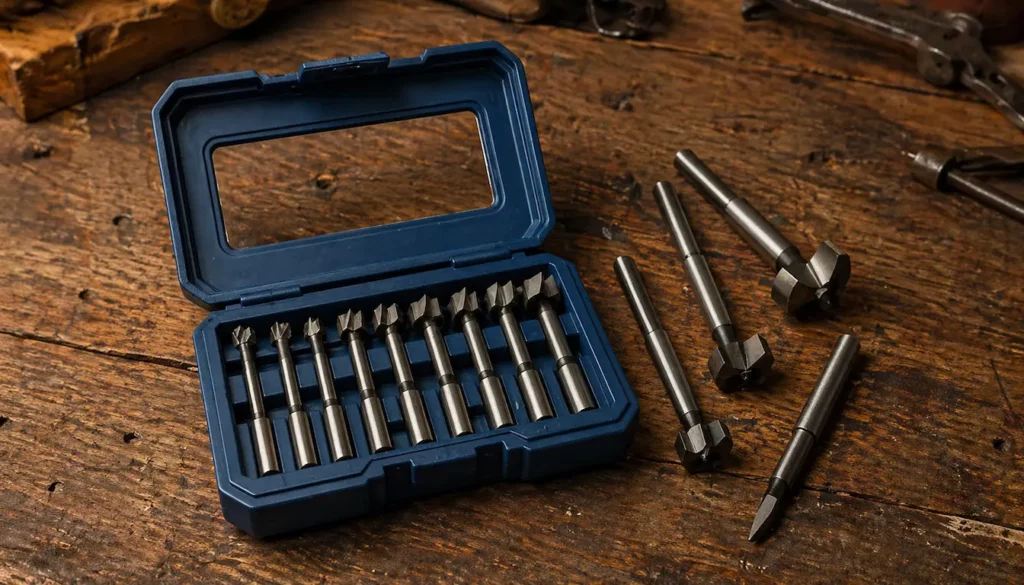
 Irwin Tools IRWIN
Marples Forstner Bit
(8-Piece Set)
The Irwin Marples Forstner Bit Set
delivers clean, precise flat-bottom holes
with minimal tear-out.
Ideal for guitar work in both
hardwood and softwood.
Why it’s great:
Clean cuts — Minimal tear-out
Versatile — Cavities, tuner holes, jigs
Accurate — Stays true in hardwoods
Durable — Long-lasting steel set
BOSCH PR20EVS
Colt 1.0 HP
When you need clean pocket walls,
smooth tenon adjustments,
or precise depth control,
a reliable palm router becomes
your best friend in the shop.
This one delivers pro-level results
without the bulk:
Amazon Product Suggestion:
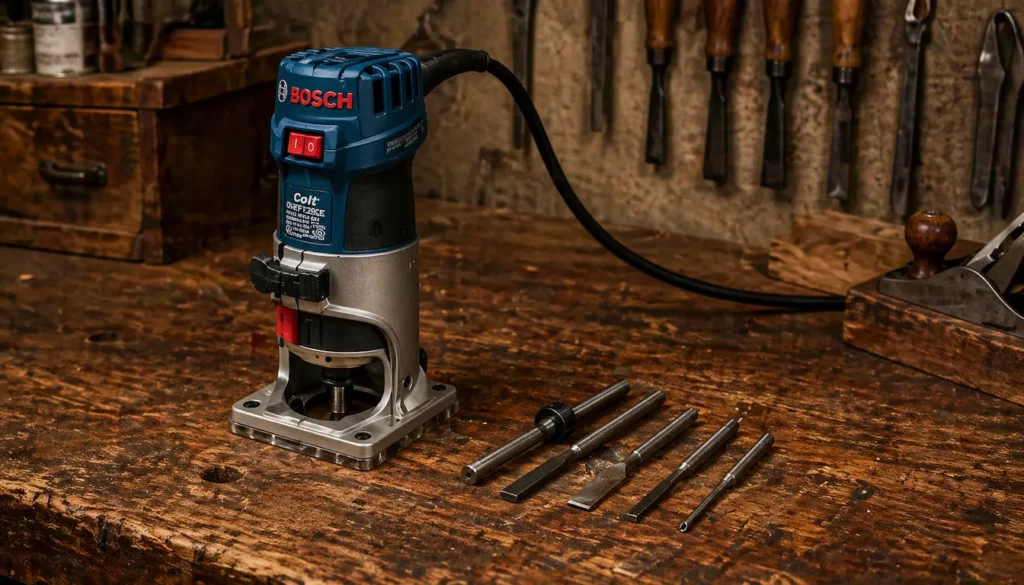
BOSCH PR20EVS
Colt 1.0 HP
(Palm Router)
The Bosch Colt PR20EVS is a
compact router built for precise,
controlled cuts.
Perfect for inlays, cavities,
and detailed guitar work.
Why it’s great:
Variable speed — Precise control
Smooth start — No sudden jumps
Durable base — Stable aluminum
Compact design — Ideal for detail work
Jivarry Digital Caliper
When you’re fitting necks — bolt-on or
set-neck—precise measurements
make or break the build.
A good digital caliper keeps everything
accurate down to the thousandth:
Amazon Product Suggestion:
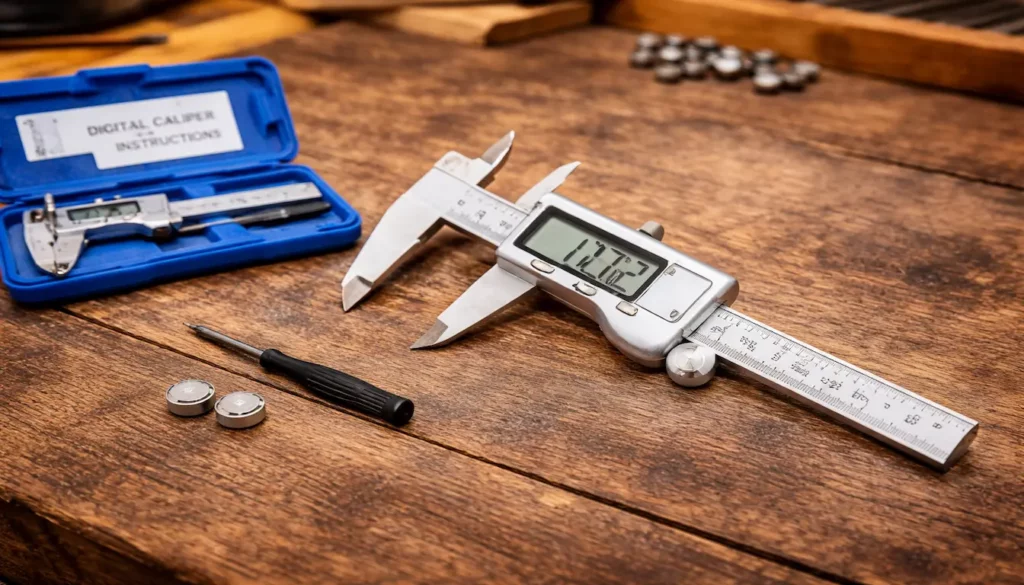
Jivarry Digital Caliper
(6-Inch)
The Jivarry Digital Caliper is
an accurate, easy-to-use tool
for precise measurements.
It switches units instantly and
helps you measure with confidence.
Why it’s great:
Clear display — Easy to read
Quick switch — Inches/mm
Accurate — Smooth, precise travel
Versatile — Inside, outside, depth measurements
🪛 Step-By-Step:
Getting a Perfect Neck Fit
(Bolt-On & Set-Neck)
These steps show exactly where each tool
helps you dial in tone, sustain, and build quality.
1. Measure the
Neck & Pocket Fit
Before touching wood, grab the
digital caliper and check three things:
-
pocket width
-
heel/tenon thickness
-
depth of the pocket or mortise
This tells you instantly
whether you’ve got a tight,
tone-friendly fit or
if adjustments are needed.
2. Clean Up the Pocket
or Mortise Floor
If the pocket bottom is uneven
or too shallow, use the
Irwin Forstner bits to shave
just enough material to level it out.
A smooth pocket floor =
better resonance transfer.
3. Refine the Walls
for Proper Tightness
If the sides of the pocket or mortise
are slightly tight or rough,
the Bosch PR20EVS palm router
with a trim bit will clean the walls
perfectly straight.
This prevents twist, gaps,
or poor contact —
all of which kill tone.
4. Check Your Centerline
Again
After adjustments,
re-measure the alignment with the
digital caliper and a straightedge.
Bolt-on builds need perfect side alignment.
Set-necks need perfect angle alignment.
5. Dry Fit and Test
Resonance
Before installing screws or glue:
-
Insert the neck
-
Press it firmly into place
-
Tap the heel and listen for
vibration
A clean, crisp ring means
you nailed the fit.
6. Install the Neck
(Bolt-On)
For bolt-on builds,
pre-drill the pilot holes using the
caliper to match screw depth,
then install the plate and screws.
Waxing the screws helps
prevent chipping and gives
smoother pulling force.
7. Glue the Neck
(Set-Neck)
For set-necks, apply wood glue to the tenon,
seat it firmly, and clamp.
Use the caliper again to ensure you didn’t
shift the neck angle under clamp pressure.
8. Let the Joint Settle
Bolt-on: ready immediately.
Set-neck: give it a full 24 hours.
Good wood-to-wood contact
always rewards you
with better tone.
9. String Up and Check Feel
Now you’ll hear the magic:
-
Bolt-ons → bright attack
and snap -
Set-necks → warm mids
and long sustain
Your tool work directly shapes
how the guitar responds.
✌️PRO TIPS…
“That’s kinda my thing…”
👉 For Bolt-On Builds:
-
Use your digital caliper to match
screw depth so you don’t accidentally
punch through the fretboard. -
If the pocket floor isn’t perfectly flat,
hit it lightly with the
Irwin Forstner bit —
Just enough to remove high spots
without widening the pocket. -
A tiny shim can fix neck angle fast,
but only after you’ve checked
all your measurements.
👉 For Set-Neck Builds:
-
Always dry-fit the tenon, then use the
Bosch palm router to kiss the
mortise walls for a perfect,
no-slop fit. -
Check the neck angle twice:
once before glue, once after clamping,
using the digital caliper to confirm
consistent depth front-to-back. -
Slow-setting glue gives you precious
wiggle room — never rush a set-neck job.
👉 For Both Build Styles:
-
Measure everything with the
caliper before making cuts.
Guessing equals headaches. -
Clean cuts = clean tone.
Use the Forstner bits and
router to eliminate gaps,
chatter, and loose fit that
kills sustain. -
When in doubt, stop,
re-measure, and adjust.
Precision is the cheapest
upgrade you’ll ever make.
🎯 Final Thoughts…
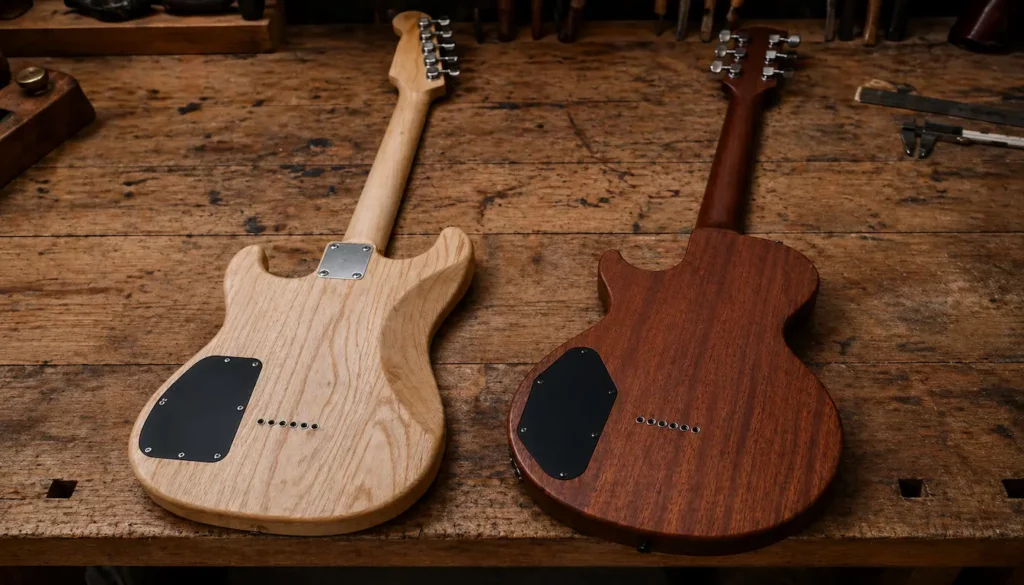
Choosing between a bolt-on and a set-neck
electric guitar kit really comes down to the
tone and feel you want from your build.
Bolt-ons deliver that crisp, snappy attack with
tons of clarity, while set-necks bring warmth,
midrange depth, and long, singing sustain.
Both styles can sound incredible —
The real magic comes from how precisely
the neck and body connect.
That’s why tools like a digital caliper,
a Bosch palm router, and a solid set of
Forstner bits make such a huge difference.
When your pockets are level,
your angles are right, and your fit is tight,
the guitar resonates better, plays better,
and ends up feeling like a custom-built
instrument instead of a kit.
At the end of the day,
whether you choose the punch of a bolt-on
or the smooth character of a set-neck,
getting the fit right is what unlocks the
tone you’re chasing.
Build it clean, measure everything,
and let the guitar reward you
every time you pick it up.
 Ready to Start?
Here’s your next step —
pick one and go:
 New to guitar kits?
Start with
Step-by-Step Guide To Building
Your First Electric Guitar Kit
and
Essential Tools Every Electric Guitar Kit
Builder Should Have.
Already built a kit?
Jump into
How To Properly Set Up Your
Electric Guitar Kit For Intonation
or
Fixing Common Problems:
Buzzing And Dead Frets.
Chasing better tone?
Head to
Understanding Humbucker
Vs Single Coil Pickups In Kits
or
Playing With Tone Controls:
Tips For Electric Guitar Kits
and start experimenting.
 Your Guitar, Your Build,
Your Sound
You don’t need a custom shop or a tech on speed dial.
All you need is a little guidance, some patience,
and a place to go that shows you what to do next.
Come on man… You got this.
GuitarCrafts
is here to help you along the way.
Craft it. Play it. Own it!
Doesn’t this go right up there with the “tone wood” theory? 🤷🏻♂️
Great question — and it’s a fair comparison to bring up 👍
The key difference is what’s actually being discussed.
“Tone wood” arguments usually claim that body wood alone dramatically changes amplified tone.
That’s where things get exaggerated.
Neck joints are a little different.
In this case, we’re talking about mechanical coupling — how securely the neck and body connect, how vibration transfers,
and how that affects attack, sustain, and feel before pickups ever come into play.
Even builders who disagree on tone wood generally agree on a few things:
A tighter neck joint = better energy transfer
Bolt-on vs set-neck changes attack and decay behavior
Feel under the hands is often more noticeable than EQ differences
That’s why the article focuses less on “magic tone” and more on fit, contact, and build precision.
A sloppy bolt-on will sound dead. A poorly fitted set-neck won’t magically sustain forever either.
So yeah — skepticism is healthy 👌
This isn’t about myths, it’s about physics, fit, and player feel.
Appreciate you reading and chiming in 🤘