Skip to content
Electric Guitar Kits Logo
Menu
  • Home
  • Start Here
    • Build Your First Guitar Kit
    • Essential Tools Every Electric Guitar Kit Builder Should Have
    • Setting Up The Bridge And Neck On Your Electric Guitar Kit
    • Are DIY Guitar Kits Good For Beginners?
    • Mastering Tone Controls on Your Electric Guitar Kit (Beginner-Friendly Guide)
  • Fix & Setup
    • How To Adjust Truss Rod For Neck Relief In Guitar Kits
    • Adjusting Action On An Electric Guitar
    • How To Properly Set Up Your Electric Guitar Kit For Intonation
    • Fix Buzzing Frets & Dead Notes
    • Setting Up The Bridge And Neck On Your Electric Guitar Kit
  • Pickups & Wiring
    • Understanding Humbucker Vs Single Coil Pickups In Kits
    • How Pickup Height Affects Electric Guitar Tone
    • How To Adjust Pickup Height On Electric Guitar
    • Guide To Wiring Your Electric Guitar Kit For Optimal Performance
    • How To Shield Your Guitar’s Electronics For Noise Reduction
  • Tone & Upgrades
    • How Tone Pots Shape Feel and Control on Your Guitar
    • How Guitar Electronics Shape Tone Beyond Pickups
    • Does Guitar Wood REALLY Affect Tone? (What Builders Notice First)
    • Best Pickups for Guitar Kits (Budget to Pro Tone Upgrades)
    • How To Choose The Perfect Nut Material For Your Electric Guitar
  • Mods & Custom Builds
    • D.I.Y. Fretboard Inlays For Guitar Kits (Creative Upgrade Guide)
    • D.I.Y. Custom Guitar Inlays (Step-By-Step Guide)
    • How To Choose Between Neck-Through And Bolt-On Necks In Kits
    • String Changing Techniques To Protect Your Guitar
    • Electric Guitar Customization & Mods Guide
Menu

Month: January 2026

Close-up of an electric guitar fretboard showing a string very near a specific fret, highlighting where buzzing strings or dead frets can occur along the neck.

Fixing Buzzing Strings & Dead Frets

Posted on January 28, 2026January 28, 2026 by Wayne

Buzzing strings and dead frets are some of the most frustrating problems guitar players run into — especially after a setup that seemed correct. The mistake most people make is assuming buzz always means something is wrong or broken. In reality, buzzing and dead notes usually point to tolerance limits, setup order issues, or structural…


Read more
Electric guitar resting on a stand in a quiet room with a small selection of basic setup tools placed nearby, illustrating simple preparation and a calm guitar setup mindset.

Guitar Setup Tools Explained (What You Actually Use)

Posted on January 28, 2026February 15, 2026 by Wayne

Guitar setup doesn’t require a wall of specialized tools. Most electric guitar setup work relies on a small, basic set of tools, used carefully and intentionally. Problems usually come from misunderstanding what to adjust — not from lacking equipment. This guide explains which setup tools are commonly used, what each one actually does, and why…

Read more
Electric guitar viewed from the body end looking along the fretboard toward the headstock, with upper frets in focus to illustrate where tuning and intonation issues become noticeable up the neck.

Why Guitars Go Out of Tune Up the Neck

Posted on January 28, 2026January 28, 2026 by Wayne

If you’ve ever tuned your guitar perfectly at the open strings only to hear chords sound off higher up the fretboard, you’re not imagining it. This is one of the most common — and most frustrating — experiences for guitar players. The good news is that it’s normal, explainable, and manageable. This guide explains why…

Read more
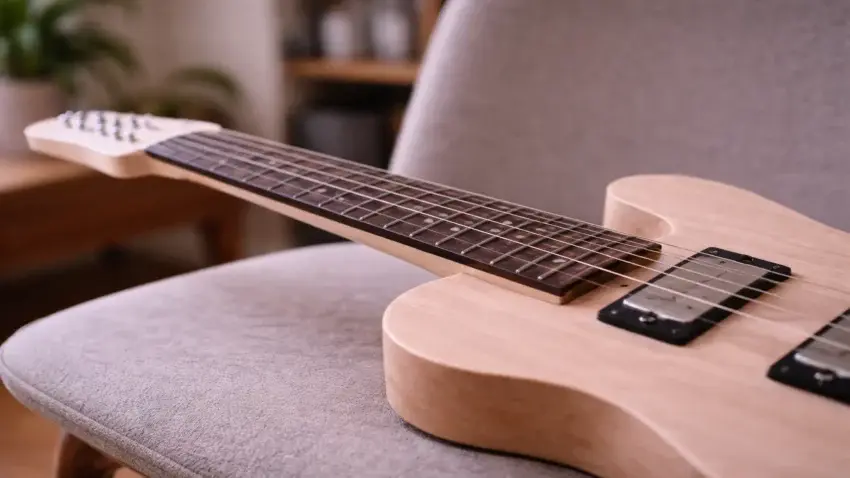
Electric guitar resting on a chair in a quiet room with the upper fretboard clearly visible, illustrating real playing context where chord intonation and pitch accuracy matter.

What Guitar Intonation Means in Real Playing

Posted on January 28, 2026January 28, 2026 by Wayne

Guitar intonation describes how accurately a guitar plays in tune across the fretboard, not just at the open strings. A guitar can be perfectly tuned at the nut and still sound slightly sharp or flat as you move higher up the neck. When that happens, the issue usually isn’t your tuner or your ears —…

Read more
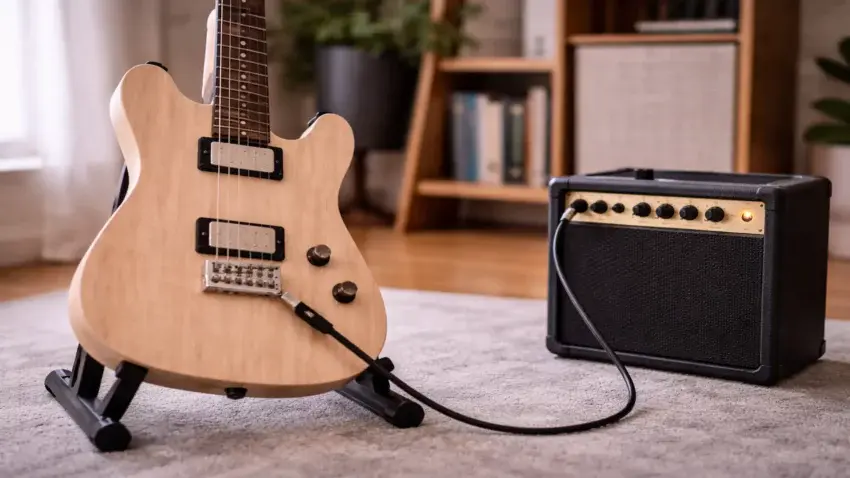
Electric guitar plugged into a small practice amplifier in a home practice space, illustrating real-world playability and the balance between low action and fret buzz.

Low Action vs Fret Buzz: Finding the Balance

Posted on January 28, 2026January 28, 2026 by Wayne

Lowering guitar action can make an electric guitar feel faster and easier to play — but push it too far and fret buzz, choking notes, and uneven response can show up quickly. The goal of action setup isn’t to eliminate every sound or chase the lowest possible string height. It’s to find a usable balance…

Read more
Electric guitar resting in a natural seated playing position on a chair, with the mid-neck fretboard and string height visible to illustrate how guitar action affects feel and playability.

What Guitar Action Is (And Why It Matters)

Posted on January 28, 2026January 28, 2026 by Wayne

Guitar action refers to the height of the strings above the frets.It’s one of the biggest factors in how an electric guitar feels to play. Action doesn’t change pickups, wiring, or tone controls — but it directly affects comfort, speed, accuracy, and fatigue. Two guitars with the same hardware can feel completely different purely because…

Read more
First-person view looking down the fretboard of an electric guitar kit from the headstock, showing strings and frets in perspective to visually inspect natural neck relief.

How to Check Neck Relief Safely

Posted on January 28, 2026January 28, 2026 by Wayne

Before making any truss rod adjustments, it’s important to check neck relief correctly. Many setup problems come from skipping this step or checking relief inconsistently. The goal here isn’t to chase numbers or force changes — it’s to observe how the neck is behaving under string tension, so you know whether an adjustment is even…

Read more
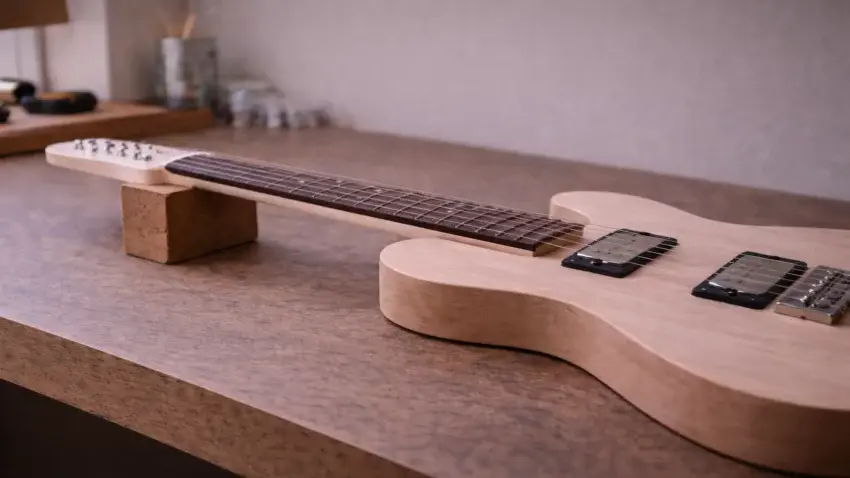
Electric guitar kit resting on a workbench with the neck fully visible under string tension, subtly showing natural neck relief in a calm, instructional workshop setting.

What Is Guitar Neck Relief?

Posted on January 28, 2026January 28, 2026 by Wayne

Neck relief is one of the most misunderstood parts of guitar setup — especially for beginners. Many players assume a guitar neck should be perfectly straight. In reality, a small amount of forward curve is intentional and necessary for clean tone and comfortable playability. This guide explains what guitar neck relief actually is, why it…

Read more
Electric guitar kit resting on a workbench with basic setup tools nearby, fully strung and idle, representing calm troubleshooting and setup readiness in a beginner-friendly workshop setting.

Electric Guitar Setup Tools, Common Problems & Fixes

Posted on January 27, 2026January 27, 2026 by Wayne

Not every setup issue is solved by turning a screw. After neck relief, action, and intonation are set, most remaining problems fall into one of three categories: A small adjustment that needs patience A tool-related limitation A problem that shouldn’t be forced This guide explains which tools are actually used during electric guitar setup, how…

Read more
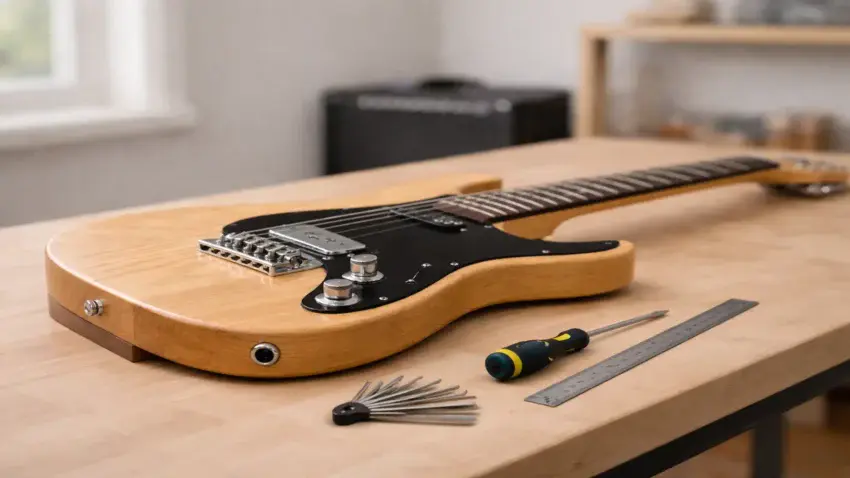
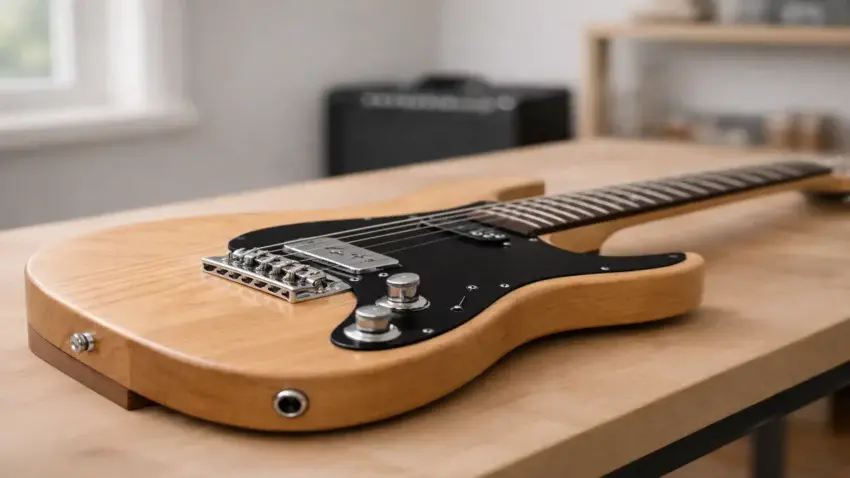
Electric guitar kit resting on a workbench with a black pickguard and visible bridge saddles, showing natural saddle alignment for checking intonation and tuning accuracy in a calm workshop setting.

Electric Guitar Intonation & Tuning Accuracy Setup

Posted on January 27, 2026January 27, 2026 by Wayne

Once neck relief and action feel right, the final step in a proper electric guitar setup is intonation. Intonation determines whether your guitar plays in tune across the entire fretboard, not just at open strings. A guitar can be perfectly tuned at the nut and still sound sharp or flat higher up the neck if…

Read more

Posts pagination

  • 1
  • 2
  • 3
  • 4
  • …
  • 8
  • Next
  • Facebook
  • Pinterest
  • YouTube
Recommended Guitar Kits – See My Top Picks

© 2026 My Electric Guitar Kits Site | Powered by Superbs Personal Blog theme