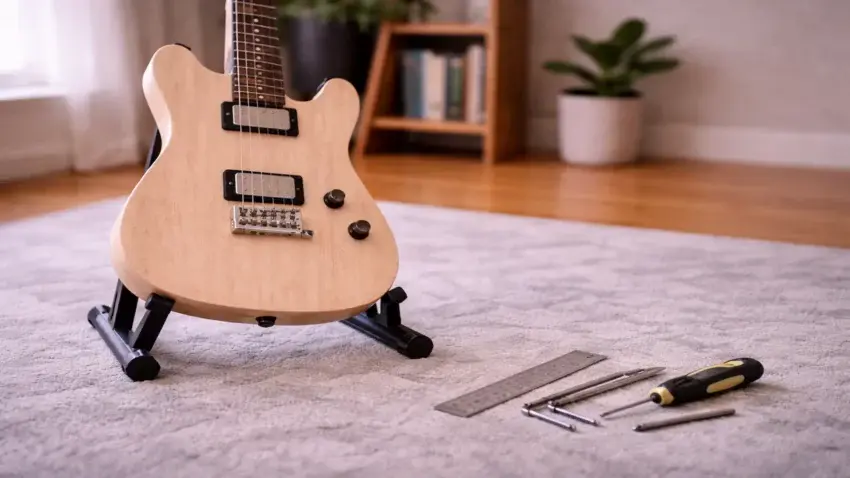
Guitar setup doesn’t require a wall of specialized tools.
Most electric guitar setup work relies on a small, basic set of tools,
used carefully and intentionally.
Problems usually come from misunderstanding what to adjust —
not from lacking equipment.
This guide explains which setup tools are commonly used, what each one actually does,
and why having fewer tools often leads to better results.
This article is part of the Electric Guitar Setup Tools, Common Problems & Fixes guide,
which explains how tools fit into troubleshooting and knowing when adjustments should stop.
Measuring Tools vs Adjustment Tools
Setup tools fall into two simple categories:
Measuring tools
These help you observe and confirm the guitar’s condition.
They don’t change anything — they prevent guessing.
Examples include tools used to:
-
Check neck relief
-
Compare string height
-
Verify consistency after changes
Measuring tools are about information, not action.
Adjustment tools
These physically change the guitar.
They’re used to:
-
Turn a truss rod
-
Raise or lower saddles
-
Adjust bridge height
Adjustment tools should only be used after you understand what needs changing.
Why Fewer Tools Often Work Better
Having too many tools can actually create problems.
More tools often lead to:
-
Over-adjusting
-
Chasing measurements instead of feel
-
Fixing things that weren’t broken
A small, familiar tool set encourages:
-
Slower changes
-
More observation
-
Better decision-making
Confidence comes from understanding — not equipment.
Tools Don’t Fix Structural Problems
This is an important boundary.
Setup tools cannot fix:
-
Twisted necks
-
Uneven frets
-
Incorrect bridge placement
-
Major nut slot errors
When tools stop producing predictable results,
the issue usually lies outside normal setup range.
Recognizing this early prevents damage and frustration.
Why “Tool Lists” Can Be Misleading
Many setup guides overwhelm beginners with long lists of tools.
The reality:
-
Most setups use the same few tools repeatedly
-
Many tools exist for edge cases, not everyday adjustments
-
Buying tools won’t replace understanding setup order
Good setups come from process, not shopping.
When Tools Should Stay Put
There are times when the best move is not picking up a tool.
Pause if:
-
Adjustments create new problems
-
Each change feels unpredictable
-
You’re compensating instead of correcting
-
The guitar stops behaving logically
Tools are meant to help clarify problems — not force solutions.
Tools Support Judgment, Not Confidence
Setup tools are there to:
-
Confirm what you’re seeing
-
Support small, intentional changes
-
Help you stop at the right moment
They don’t make decisions for you.
That’s why understanding setup order matters more than owning equipment.
What Comes Next?
Now that you understand what setup tools are actually used for,
the next step is recognizing common setup problems —
and knowing which ones tools can help with and which ones they can’t.
👉 Next: Fixing Buzzing Strings & Dead Frets
Final Thoughts…
Most setup mistakes don’t come from missing tools.
They come from:
-
Rushing
-
Guessing
-
Adjusting without understanding
A small tool set, used thoughtfully, will take you further than any oversized kit.
GuitarCrafts is here to help you make calm, confident setup decisions.
🎸 Craft it. Play it. Own it. 🎸
Ready to take your guitar passion beyond the workbench?
See how I built GuitarCrafts.com using the training at Wealthy Affiliate — you can do the same.
 Build Your First Website With Wealthy Affiliate (Free)
