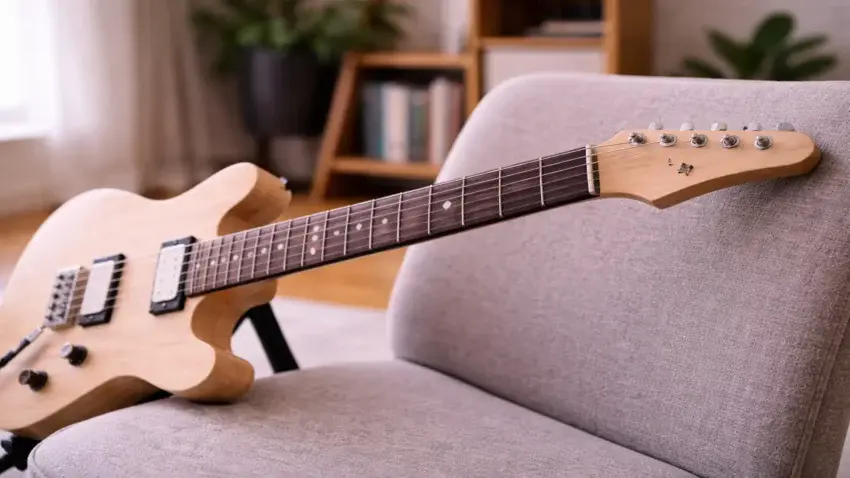
Guitar intonation describes how accurately a guitar plays in tune across the fretboard,
not just at the open strings.
A guitar can be perfectly tuned at the nut and still sound slightly sharp or flat
as you move higher up the neck.
When that happens, the issue usually isn’t your tuner or your ears — it’s intonation.
This guide explains what guitar intonation really means in everyday playing, why it matters,
and why “perfect” intonation isn’t the goal most players think it is.
This article is part of the Electric Guitar Intonation & Tuning Accuracy Setup guide,
which explains how intonation fits into the full setup process
after neck relief and action are set.
Intonation Is About Consistency, Not Perfection
Intonation answers one basic question:
Does the guitar play reasonably in tune everywhere you actually play?
Good intonation means:
-
Open strings are in tune
-
Notes around the 12th fret are close to pitch
-
Chords sound balanced instead of sour
-
Single notes feel settled, not “almost right”
It does not mean every note on every fret is mathematically perfect.
Why a Guitar Can Be In Tune and Still Sound Wrong
Many players run into this situation:
-
The tuner says the guitar is in tune
-
Open chords sound fine
-
Higher notes or barre chords sound off
This happens because tuning an open string only sets one reference point.
As you fret notes, string length, tension, and pressure all change slightly.
Intonation exists to compensate for those changes — not eliminate them entirely.
How Intonation Affects Chords vs Single Notes
Intonation problems show up differently depending on what you play.
-
Single notes may sound slightly sharp or flat but still usable
-
Chords, especially higher up the neck, reveal intonation issues much more clearly
If chords sound “off” even when individual notes seem fine, intonation is often the reason.
This is why many players notice intonation problems while playing, not while tuning.
Why Perfect Intonation Isn’t Possible
Electric guitars use a tuning system called equal temperament,
which spreads small tuning compromises across the fretboard.
On top of that, real-world factors like:
-
String stiffness
-
Action height
-
Fretting pressure
-
Playing style
…all influence pitch.
Because of this, perfect intonation across every fret is not achievable on a standard guitar.
A good setup aims for balance, not mathematical purity.
Intonation Is the Final Setup Step for a Reason
Intonation is adjusted after:
-
Neck relief is set
-
Action feels comfortable and stable
Any change to relief or action affects string length and tension, which in turn affects intonation.
That’s why intonation always comes last — it fine-tunes accuracy after everything else is settled.
When Intonation Is “Good Enough”
Intonation is in a healthy range when:
-
Chords sound balanced where you play most
-
Notes don’t noticeably drift sharp or flat as you move up the neck
-
The guitar feels predictable instead of fussy
Chasing tiny tuner fluctuations often causes more problems than it solves.
Trust how the guitar sounds in real playing situations.
Intonation Is About Playability, Not Numbers
A guitar that sounds good in your hands is set up correctly —
even if a tuner shows minor deviations.
Intonation exists to support music, not fight it.
Understanding this removes a lot of unnecessary frustration during setup.
What Comes Next?
Now that you understand what intonation means in real playing,
the next step is learning why guitars tend to go out of tune as you move up the neck.
👉 Next: Why Guitars Go Out of Tune Up the Neck
Final Thoughts…
Intonation isn’t about chasing perfection —
it’s about making the guitar feel settled and dependable.
When you understand what intonation actually does,
the setup process becomes calmer and far more forgiving.
GuitarCrafts is here to help you focus on music, not numbers.
🎸 Craft it. Play it. Own it. 🎸
Ready to take your guitar passion beyond the workbench?
See how I built GuitarCrafts.com using the training at Wealthy Affiliate — you can do the same.
 Build Your First Website With Wealthy Affiliate (Free)
