
Guitar Fretboard Inlays Explained breaks down
what fretboard inlays are, why they matter,
and how they contribute to both playability
and visual style.
From simple position markers to
detailed custom designs, fretboard inlays can be
purely functional, purely decorative,
or a blend of both.
This hub page explains the main types of
guitar fretboard inlays, common materials and styles,
and how inlays fit into overall guitar customization.
Below, you’ll find links to more detailed guides
covering DIY inlay techniques,
customization options for guitar kits,
and safe ways to personalize your fretboard
without compromising playability.
👉This page is part of my
Electric Guitar
Customization & Mods Guide,
which covers a wide range of guitar
upgrades and personalization options.
🔍 Types of Guitar
Fretboard Inlays
Guitar fretboard inlays come in many forms,
ranging from simple markers to
detailed custom designs.
While traditional dots are the most common,
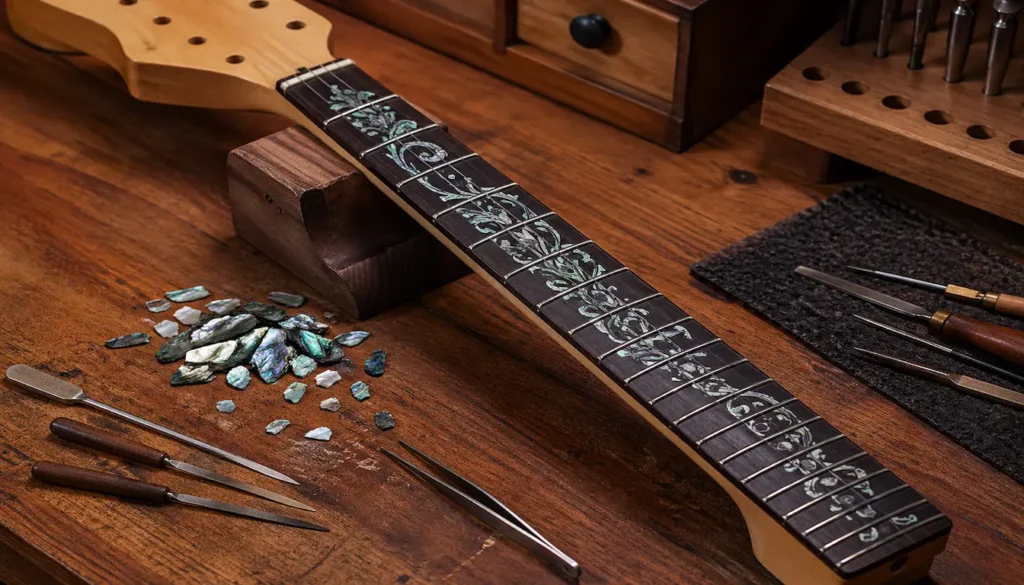
many players prefer symbols, ornate patterns,
or unique art that make the instrument stand out.
Different styles can affect not only a
guitar’s appearance, but also how easy it is to
navigate the fretboard during playing.
Choosing the right inlay depends on tone,
personal preference, and the overall
look of the guitar.
🧱 Common Fretboard
Inlay Materials
Fretboard inlays are made from a
variety of materials, each offering different
visual and durability characteristics.
Common options include plastic, pearloid, abalone,
mother-of-pearl, wood, and modern
synthetic materials.
Material choice doesn’t only impact looks —
it also affects how the inlays hold up over time
and how difficult they are to install.
Some materials are easier to work with for beginners,
while others require more precision and experience.
⚖️ Functional vs
Decorative Inlays
Some fretboard inlays are designed primarily to
help players find their position on the neck,
while others are added mainly for visual impact.
Position markers are essential for beginners and
players who rely on visual cues
while navigating the fretboard.
Understanding the difference between functional
and decorative inlays helps builders and players
decide what’s most important for their guitar
— playability, appearance, or both.
🎸 Fretboard Inlays for
Guitar Kits and Custom Builds
Guitar kits and custom builds offer more flexibility
when it comes to inlay design.
Many kits come with standard dot inlays,
but they can often be modified or replaced to
better match your style.
When working with custom or unfinished fretboards,
it’s important to consider skill level, tools,
and long-term goals before making changes.
The right inlays can bring a guitar to life and make it
feel truly unique.
🛠️ Is Adding Fretboard Inlays
Beginner-Friendly?
Adding or modifying fretboard inlays can range from
very simple to highly advanced depending on the
materials and techniques involved.
Some inlay projects are suitable for beginners,
while others require specialized tools, patience,
and experience.
If you’re just starting out,
it’s recommended to begin with simpler inlay designs
or practice on scrap material before working on your
actual guitar.
🔗 Related Guitar Inlay Guides
- 🎯 DIY Custom Guitar Inlays
Learn how custom inlays can be added to a
guitar fretboard, including common materials
and techniques used in DIY projects. -
🪚 D.I.Y. Fretboard Inlays For Guitar Kits
Explore the types of fretboard inlays commonly
used in guitar kits and how they affect both
appearance and playability. -
🎨 D.I.Y. Fretboard Customization
Take a deeper look at more advanced
fretboard customization options for
experienced builders and modders.
 Ready to Start?
Here’s your next step —
pick one and go:
 New to guitar kits?
Start with
Step-by-Step Guide To Building
Your First Electric Guitar Kit
and
Essential Tools Every Electric Guitar Kit
Builder Should Have.
Already built a kit?
Jump into
How To Properly Set Up Your
Electric Guitar Kit For Intonation
or
Fixing Common Problems:
Buzzing And Dead Frets.
Chasing better tone?
Head to
Understanding Humbucker
Vs Single Coil Pickups In Kits
or
Playing With Tone Controls:
Tips For Electric Guitar Kits
and start experimenting.
 Your Guitar, Your Build,
Your Sound
You don’t need a custom shop or a tech on speed dial.
All you need is a little guidance, some patience,
and a place to go that shows you what to do next.
Come on man… You got this.