
Skip to content
Electric Guitar Kits Logo
Menu
  • Home
  • Customization & Mods
    • Adding A Tremolo System To Your Electric Guitar Kit
    • Best Upgrades for Budget Guitar Kits (What Actually Makes a Difference)
    • D.I.Y. Fretboard Customization (Inlays, Radius & Leveling)
    • D.I.Y. Fretboard Inlays For Guitar Kits (Creative Upgrade Guide)
    • DIY Semi-hollow Guitar Kit Internal Chambers
    • D.I.Y. Custom Guitar Inlays (Step-By-Step Guide)
    • Electric Guitar Customization & Mods Guide
    • Guitar Fretboard Inlays Explained
  • Neck & Setup
    • Adjust Guitar Neck Truss Rod
    • Adjusting Action On An Electric Guitar
    • Adjusting Action And Intonation On Your Newly Built Guitar Kit
    • Comparing Bolt-on Vs Set Neck Electric Guitar Kits For Tone
    • How To Adjust Truss Rod For Neck Relief In Guitar Kits
    • How To Choose Between Neck-Through And Bolt-On Necks In Kits
    • How To Choose The Perfect Nut Material For Your Electric Guitar
    • How To Properly Set Up Your Electric Guitar Kit For Intonation
    • Refretting Your Electric Guitar Kit: When And How To Do It
    • How To Fix Buzzing Frets And Dead Notes On Your DIY Guitar Kit
    • Setting Up The Bridge And Neck On Your Electric Guitar Kit
  • Pickups & Wiring
    • Best Pickups for Guitar Kits (Budget to Pro Tone Upgrades)
    • Choosing Capacitors And Pots For Your Electric Guitar Wiring
    • Common Wiring Mistakes And How To Fix Your Electric Guitar Kit
    • Custom Wiring Patterns For Unique Guitar Sounds
    • Guide To Wiring Your Electric Guitar Kit For Optimal Performance
    • Guitar Pickups Guide: Choosing the Right Tone
    • How To Adjust Pickup Height On Electric Guitar
    • How Pickup Position Affects Electric Guitar Tone In Kits
    • How To Shield Your Guitar’s Electronics For Noise Reduction
    • Installing Pickups In Your Electric Guitar Kit: A Complete Guide
    • How To Upgrade Your Guitar Kit With Seymour Duncan & Fender Pickups
    • Step-by-step Soldering Guide For Your DIY Electric Guitar Kit
    • Top Affordable Pickups To Upgrade Your Electric Guitar Kit Tone
    • Understanding Humbucker Vs Single Coil Pickups In Kits
    • Ultimate Guide To Upgrading Pickups And Electronics In Guitar Kits
    • Using Tone Pots And Capacitors To Sculpt Your Sound
  • Tone & Playability
    • Adjusting Pickup Height For Optimal Sound On Your Guitar
    • Best Bluetooth Speakers for Music Lovers Who Care About Sound Quality
    • Effects Of Different Wood Types On Electric Guitar Tone
    • How Pickup Height Affects Electric Guitar Tone
    • Mastering Tone Controls on Your Electric Guitar Kit (Beginner-Friendly Guide)
    • Top DIY Electric Guitar Kits For Custom Tone
    • Wood Choices For Electric Guitar Kits: Expert Recommendations
  • Build Guides
    • Best Pro-level Electric Guitar Kit Build Guide
    • Budget Vs Premium Electric Guitar Kits: Which One To Choose?
    • Essential Tools Every Electric Guitar Kit Builder Should Have
    • Tools Needed For Building An Electric Guitar Kit
    • Beginner’s Guide: Building Your First Electric Guitar Kit Step-by-Step
    • String Changing Techniques To Protect Your Guitar
    • Best DIY Electric Guitar Kits for Custom Tone (2025 Guide)
    • Top Customizable Electric Guitar Kits For Modern Tone
    • Troubleshooting Common Issues During Electric Guitar Kit Assembly
  • Make Money Online
  • Solo Guitar Kits
    • Best Solo Guitar Kits (Complete 2025 Buying Guide)
    • Best Solo Strat-Style DIY Guitar Kits (Buying Guide)
    • Best Solo Tele-Style DIY Guitar Kits (Buying Guide)
    • Best Solo LP-Style DIY Guitar Kits (Beginner-Friendly Guide)
    • Best Solo SG-Style DIY Guitar Kits (Beginner Guide)
    • Best Solo Hollow Body Guitar Kits (Buying Guide)
    • Solo Tele Semi-Hollow DIY Kits
    • Best Solo Offset-Style DIY Guitar Kits (Buying Guide)
    • Solo Explorer & Fire-Style Guitar Kits — EXK, FBK & FVK
Menu
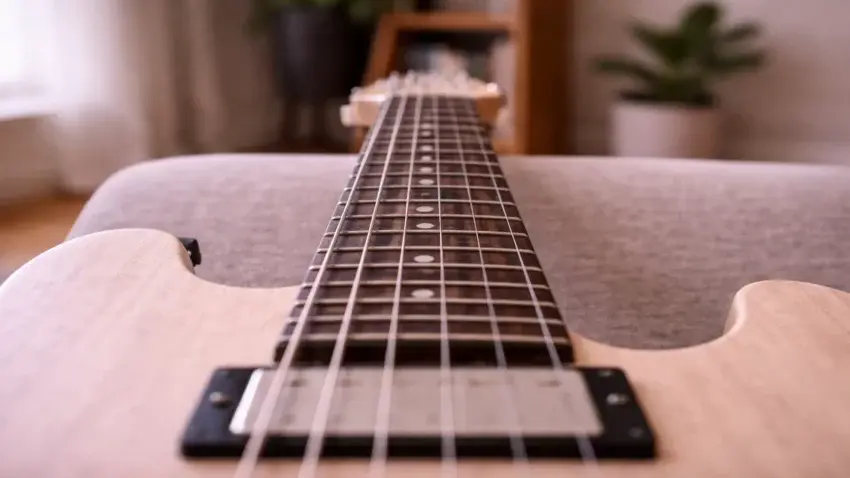
Electric guitar viewed from the body end looking along the fretboard toward the headstock, with upper frets in focus to illustrate where tuning and intonation issues become noticeable up the neck.

Why Guitars Go Out of Tune Up the Neck

Posted on January 28, 2026January 28, 2026 by Wayne

If you’ve ever tuned your guitar perfectly at the open strings only to hear chords sound off
higher up the fretboard, you’re not imagining it.

This is one of the most common — and most frustrating — experiences for guitar players.
The good news is that it’s normal, explainable, and manageable.

This guide explains why guitars tend to drift sharp or flat as you move up the neck,
what factors cause it, and why it doesn’t mean your guitar is broken.


This article is part of the Electric Guitar Intonation & Tuning Accuracy Setup guide,
which explains how intonation fits into the full setup process after neck relief and action are set.


Open Strings Are Only One Reference Point

When you tune a guitar, you’re tuning the open string length —
from nut to bridge.

That sets pitch at one point only.

As soon as you fret a note:

  • The string length changes

  • The tension increases slightly

  • The pitch shifts

Intonation exists to compensate for these changes,
but it can’t remove them completely.


Fretting a String Always Changes Pitch

Pressing a string down to a fret doesn’t just shorten the string —
it also stretches it.

That stretching:

  • Increases tension

  • Pulls the note slightly sharp

  • Becomes more noticeable higher up the neck

The higher the fret, the more this effect shows up, especially on thicker strings.

This is one of the main reasons guitars drift out of tune as you move up the fretboard.


Action Height Plays a Bigger Role Than Most People Think

Higher action requires more downward pressure to fret notes.

More pressure means:

  • More string stretch

  • More pitch change

  • Notes that sound sharper than expected

Lower action reduces this effect, which is why action is always set before intonation.

This also explains why changing action can suddenly make intonation feel wrong —
even if nothing else was touched.


String Thickness and Stiffness Matter

Not all strings behave the same.

Thicker strings:

  • Resist bending more

  • Stretch differently when fretted

  • Often require more compensation

This is why saddles are staggered and why intonation settings vary string by string.

Changing string gauge almost always affects intonation behavior.


Equal Temperament Is a Compromise

Standard guitars use equal temperament,
a tuning system that spreads small pitch compromises evenly across all keys.

That means:

  • Some notes are always slightly off

  • Chords in certain positions reveal it more

  • Perfection is mathematically impossible

This isn’t a flaw — it’s how modern fretted instruments work.

Understanding this removes a lot of unnecessary frustration.


Why Chords Reveal Problems More Than Single Notes

Single notes can sound fine even when intonation is slightly off.

Chords, especially higher up the neck:

  • Stack multiple notes together

  • Amplify small pitch differences

  • Make tuning issues more obvious

That’s why many players notice intonation problems while playing music, not while tuning.


When “Out of Tune” Is Actually Acceptable

A guitar is in a healthy intonation range when:

  • Most chords sound balanced

  • Notes don’t drift obviously sharp or flat

  • The guitar feels predictable while playing

Minor deviations are normal and expected.

Chasing perfect tuner readings often creates more problems than it solves.


This Is Why Intonation Is the Final Step

All of these factors — fretting pressure, action, string behavior — feed into intonation.

That’s why intonation is adjusted last:

  • After neck relief

  • After action

  • After strings settle

It’s the final calibration, not the foundation.


What Comes Next?

Now that you understand why guitars go out of tune up the neck,
the next step is learning how intonation adjustments help compensate for these effects.

👉 Next: Intonation & Tuning Accuracy Setup


Final Thoughts…

Guitars don’t go out of tune up the neck because something is wrong.

They do it because of:

  • Physics

  • String behavior

  • Fretting mechanics

Understanding this makes setup calmer, expectations realistic,
and results far more satisfying.

GuitarCrafts is here to help you work with the instrument — not fight it.


🎸 Craft it. Play it. Own it. 🎸


Ready to take your guitar passion beyond the workbench?

See how I built GuitarCrafts.com using the training at Wealthy Affiliate — you can do the same.
👉👉 Build Your First Website With Wealthy Affiliate (Free)

Wealthy Affiliate Internet Marketing University Banner


Leave a Reply Cancel reply

Your email address will not be published. Required fields are marked *

Learn to make money in the comfort of your own home!

  • Facebook
  • Pinterest
  • YouTube

Recent Posts

  • Fixing Buzzing Strings & Dead Frets
  • Guitar Setup Tools Explained (What You Actually Use)
  • Why Guitars Go Out of Tune Up the Neck
  • What Guitar Intonation Means in Real Playing
  • Low Action vs Fret Buzz: Finding the Balance
  • About Me...
  • Affiliate Disclosure
  • Best Solo Guitar Kits (Complete 2025 Buying Guide)
  • Best Solo Hollow Body Guitar Kits (Buying Guide)
  • Best Solo LP-Style DIY Guitar Kits (Beginner-Friendly Guide)
  • Best Solo Offset-Style DIY Guitar Kits (Buying Guide)
  • Best Solo SG-Style DIY Guitar Kits (Beginner Guide)
  • Best Solo Strat-Style DIY Guitar Kits (Buying Guide)
  • Best Solo Tele-Style DIY Guitar Kits (Buying Guide)
  • Build Your Own Dream Guitar Kit (Without Feeling Overwhelmed)
  • GuitarCrafts Homepage
  • How I Started Making Money Online With Wealthy Affiliate
  • Privacy Policy
  • Solo Explorer & Fire-Style Guitar Kits — EXK, FBK & FVK
  • Solo Guitars Review (2025): Are Their DIY Guitar Kits Worth It?
  • Solo Tele Semi-Hollow DIY Kits

Archives

  • January 2026
  • December 2025
  • November 2025
  • September 2025
  • August 2025
  • July 2025

Categories

  • Build Guides
  • Customization & Mods
  • Neck & Setup
  • Pickups & Wiring
  • Tone & Playability
  • Uncategorized
© 2026 My Electric Guitar Kits Site | Powered by Superbs Personal Blog theme