
Skip to content
Electric Guitar Kits Logo
Menu
  • Home
  • Customization & Mods
    • Adding A Tremolo System To Your Electric Guitar Kit
    • Best Upgrades for Budget Guitar Kits (What Actually Makes a Difference)
    • D.I.Y. Fretboard Customization (Inlays, Radius & Leveling)
    • D.I.Y. Fretboard Inlays For Guitar Kits (Creative Upgrade Guide)
    • DIY Semi-hollow Guitar Kit Internal Chambers
    • D.I.Y. Custom Guitar Inlays (Step-By-Step Guide)
    • Electric Guitar Customization & Mods Guide
    • Guitar Fretboard Inlays Explained
  • Neck & Setup
    • Adjust Guitar Neck Truss Rod
    • Adjusting Action On An Electric Guitar
    • Adjusting Action And Intonation On Your Newly Built Guitar Kit
    • Comparing Bolt-on Vs Set Neck Electric Guitar Kits For Tone
    • How To Adjust Truss Rod For Neck Relief In Guitar Kits
    • How To Choose Between Neck-Through And Bolt-On Necks In Kits
    • How To Choose The Perfect Nut Material For Your Electric Guitar
    • How To Properly Set Up Your Electric Guitar Kit For Intonation
    • Refretting Your Electric Guitar Kit: When And How To Do It
    • How To Fix Buzzing Frets And Dead Notes On Your DIY Guitar Kit
    • Setting Up The Bridge And Neck On Your Electric Guitar Kit
  • Pickups & Wiring
    • Best Pickups for Guitar Kits (Budget to Pro Tone Upgrades)
    • Choosing Capacitors And Pots For Your Electric Guitar Wiring
    • Common Wiring Mistakes And How To Fix Your Electric Guitar Kit
    • Custom Wiring Patterns For Unique Guitar Sounds
    • Guide To Wiring Your Electric Guitar Kit For Optimal Performance
    • Guitar Pickups Guide: Choosing the Right Tone
    • How To Adjust Pickup Height On Electric Guitar
    • How Pickup Position Affects Electric Guitar Tone In Kits
    • How To Shield Your Guitar’s Electronics For Noise Reduction
    • Installing Pickups In Your Electric Guitar Kit: A Complete Guide
    • How To Upgrade Your Guitar Kit With Seymour Duncan & Fender Pickups
    • Step-by-step Soldering Guide For Your DIY Electric Guitar Kit
    • Top Affordable Pickups To Upgrade Your Electric Guitar Kit Tone
    • Understanding Humbucker Vs Single Coil Pickups In Kits
    • Ultimate Guide To Upgrading Pickups And Electronics In Guitar Kits
    • Using Tone Pots And Capacitors To Sculpt Your Sound
  • Tone & Playability
    • Adjusting Pickup Height For Optimal Sound On Your Guitar
    • Best Bluetooth Speakers for Music Lovers Who Care About Sound Quality
    • Effects Of Different Wood Types On Electric Guitar Tone
    • How Pickup Height Affects Electric Guitar Tone
    • Mastering Tone Controls on Your Electric Guitar Kit (Beginner-Friendly Guide)
    • Top DIY Electric Guitar Kits For Custom Tone
    • Wood Choices For Electric Guitar Kits: Expert Recommendations
  • Build Guides
    • Best Pro-level Electric Guitar Kit Build Guide
    • Budget Vs Premium Electric Guitar Kits: Which One To Choose?
    • Essential Tools Every Electric Guitar Kit Builder Should Have
    • Tools Needed For Building An Electric Guitar Kit
    • Beginner’s Guide: Building Your First Electric Guitar Kit Step-by-Step
    • String Changing Techniques To Protect Your Guitar
    • Best DIY Electric Guitar Kits for Custom Tone (2025 Guide)
    • Top Customizable Electric Guitar Kits For Modern Tone
    • Troubleshooting Common Issues During Electric Guitar Kit Assembly
  • Make Money Online
  • Solo Guitar Kits
    • Best Solo Guitar Kits (Complete 2025 Buying Guide)
    • Best Solo Strat-Style DIY Guitar Kits (Buying Guide)
    • Best Solo Tele-Style DIY Guitar Kits (Buying Guide)
    • Best Solo LP-Style DIY Guitar Kits (Beginner-Friendly Guide)
    • Best Solo SG-Style DIY Guitar Kits (Beginner Guide)
    • Best Solo Hollow Body Guitar Kits (Buying Guide)
    • Solo Tele Semi-Hollow DIY Kits
    • Best Solo Offset-Style DIY Guitar Kits (Buying Guide)
    • Solo Explorer & Fire-Style Guitar Kits — EXK, FBK & FVK
Menu
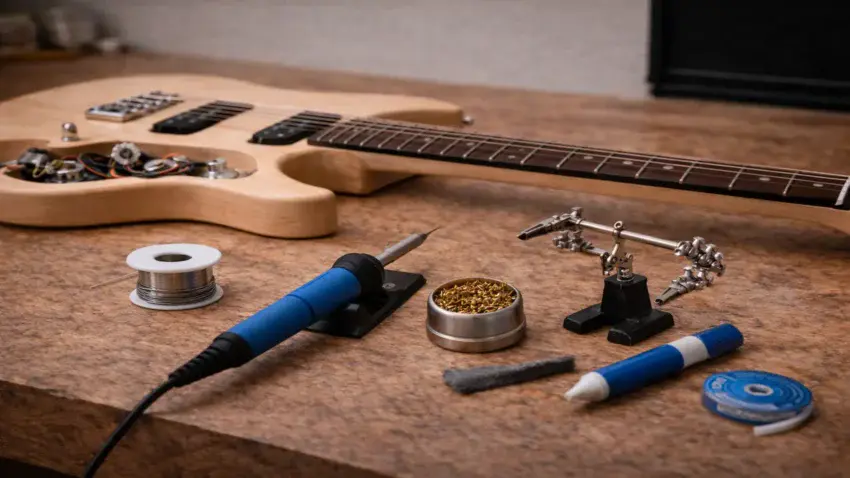
Soldering tools including a temperature-controlled iron, solder spool, helping hands, and tip cleaner arranged on a workbench beside a partially wired electric guitar kit, illustrating clean electrical connections.

Soldering Tools Used During Electric Guitar Kit Wiring

Posted on January 26, 2026January 27, 2026 by Wayne

Wiring an electric guitar kit is less about electronics theory and more about
making clean, reliable connections.

That reliability comes almost entirely from using the right soldering tools.
Poor tools create cold joints, excess heat, and unreliable signals —
even if the wiring diagram is correct.

This guide focuses specifically on soldering tools used during electric guitar kit wiring,
what each tool is responsible for,
and where soldering fits into the overall wiring and electronics process.


For a broader view of wiring and electronics as a system, start with the main guide:
Wiring and Electronics Tools for Electric Guitar Kits.


Why Soldering Tools Matter More Than Technique

Most wiring problems aren’t caused by bad soldering skill —
they’re caused by inconsistent heat and poor control.

Common issues include:

  • Cold solder joints

  • Overheated components

  • Melted insulation

  • Noisy or intermittent connections

Good soldering tools don’t make wiring faster — they make it predictable.


Core Soldering Tools You’ll Use

Soldering Iron (Temperature-Controlled)

A temperature-controlled soldering iron is the most important wiring tool.

It’s used to:

  • Heat joints evenly

  • Prevent overheating components

  • Create consistent solder flow

Fixed-temperature irons often run too hot or too cold, which leads to unreliable joints.


Solder (Electronics-Grade)

The solder itself matters more than most beginners expect.

Electronics solder is used to:

  • Bond wires to pots, switches, and jacks

  • Create low-resistance electrical connections

Using the wrong type of solder can cause poor flow and weak joints.


Helping Hands or PCB Clamps

Holding parts steady is critical during soldering.

Helping hands are used to:

  • Secure wires and components

  • Prevent movement while solder cools

  • Improve joint consistency

Movement during cooling is a common cause of failed connections.


Tip Cleaner (Sponge or Brass Wool)

Clean tips transfer heat efficiently.

Tip cleaners are used to:

  • Remove oxidation

  • Maintain consistent heat transfer

  • Extend tip life

A dirty tip causes uneven heating and messy joints.


Desoldering Braid or Pump

Mistakes happen — correction tools matter.

Desoldering tools are used to:

  • Remove excess solder

  • Correct wiring errors

  • Replace components cleanly

Trying to “re-melt and fix” joints without removal usually makes things worse.


When Soldering Happens in the Build

Soldering typically happens:

  • After dry-fitting electronics

  • Before final installation into the body

  • Before shielding or cavity covers

Good soldering happens deliberately —
rushing wiring almost always leads to rework later.


Soldering vs Wiring vs Troubleshooting

Soldering tools create connections.
Wiring tools manage routing and layout.
Troubleshooting tools diagnose problems after the fact.

Understanding this separation prevents tool overlap and unnecessary frustration.


Once connections are planned, stepping back to the soldering tools
is what ensures wiring joints are solid before moving on.


Final Thoughts…

Clean wiring starts with clean solder joints.

When heat is controlled, components are stable, and joints cool properly,
guitar wiring becomes reliable instead of fragile.
Good soldering tools don’t just improve sound —
they reduce noise, prevent failures, and make future changes easier.


Ready to Start Adjusting Your Tone?

Check out our other guides:

👉 If you’re new to guitar kits:
Start with Step-by-Step Guide To Building Your First Electric Guitar Kit and Essential Tools Every Electric Guitar Kit Builder Should Have.

👉 If you already own a kit guitar:
Jump into How To Properly Set Up Your Electric Guitar Kit For Intonation or Fixing Common Problems: Buzzing And Dead Frets.

👉 If you’re chasing better tone:
Head to Understanding Humbucker Vs Single Coil Pickups In Kits or Playing With Tone Controls: Tips For Electric Guitar Kits and start experimenting.


Your Guitar, Your Build, Your Sound

You don’t need a custom shop or a tech on speed dial.
All you need is a little guidance, some patience, and a place to go that shows you what to do next.
Come on man… You got this.

GuitarCrafts is here to help you along the way.


🎸Craft it. Play it. Own it! 🎸


Ready to take your guitar passion beyond the workbench?

See how I built GuitarCrafts.com using the training at Wealthy Affiliate — you can do the same.
👉👉 Build Your First Website With Wealthy Affiliate (Free)

Wealthy Affiliate Internet Marketing University Banner


Leave a Reply Cancel reply

Your email address will not be published. Required fields are marked *

Learn to make money in the comfort of your own home!

  • Facebook
  • Pinterest
  • YouTube

Recent Posts

  • Fixing Buzzing Strings & Dead Frets
  • Guitar Setup Tools Explained (What You Actually Use)
  • Why Guitars Go Out of Tune Up the Neck
  • What Guitar Intonation Means in Real Playing
  • Low Action vs Fret Buzz: Finding the Balance
  • About Me...
  • Affiliate Disclosure
  • Best Solo Guitar Kits (Complete 2025 Buying Guide)
  • Best Solo Hollow Body Guitar Kits (Buying Guide)
  • Best Solo LP-Style DIY Guitar Kits (Beginner-Friendly Guide)
  • Best Solo Offset-Style DIY Guitar Kits (Buying Guide)
  • Best Solo SG-Style DIY Guitar Kits (Beginner Guide)
  • Best Solo Strat-Style DIY Guitar Kits (Buying Guide)
  • Best Solo Tele-Style DIY Guitar Kits (Buying Guide)
  • Build Your Own Dream Guitar Kit (Without Feeling Overwhelmed)
  • GuitarCrafts Homepage
  • How I Started Making Money Online With Wealthy Affiliate
  • Privacy Policy
  • Solo Explorer & Fire-Style Guitar Kits — EXK, FBK & FVK
  • Solo Guitars Review (2025): Are Their DIY Guitar Kits Worth It?
  • Solo Tele Semi-Hollow DIY Kits

Archives

  • January 2026
  • December 2025
  • November 2025
  • September 2025
  • August 2025
  • July 2025

Categories

  • Build Guides
  • Customization & Mods
  • Neck & Setup
  • Pickups & Wiring
  • Tone & Playability
  • Uncategorized
© 2026 My Electric Guitar Kits Site | Powered by Superbs Personal Blog theme