If you care about sound quality, choosing the best Bluetooth speakers for music lovers
can feel like a gamble.
Many promise “premium audio” but prioritize smart features, apps, and firmware updates
over the one thing that actually matters: how the music sounds day after day.
I’m not writing this as a spec-sheet roundup or a lab test.
I’m writing it as someone who spends most of his time in a music room,
works at a computer with music playing constantly, and notices immediately when bass gets thin
or highs turn harsh.
I also learned the hard way that great sound means nothing if the speaker isn’t reliable.
This guide is for music lovers who want lower lows, cleaner highs, and fewer gimmicks —
and who don’t want to replace a “premium” speaker after a short ownership window.

What Sound Quality Really Means in a Bluetooth Speaker
Before getting into specific models, it helps to define what “sound quality” actually means
in a real room — not on marketing copy.
Deep bass (not fake bass)
Good bass comes from cabinet volume and proper tuning, not aggressive digital boosting.
Fake bass sounds impressive for five minutes and exhausting after an hour.
Clean, extended highs
Highs should sound open and detailed without becoming sharp or fatiguing.
Cymbals should shimmer, not hiss.
Balance at real listening volumes
If a speaker only sounds good when cranked, it’s not tuned well.
A good speaker stays balanced at low to moderate volume, especially in an office or music room.
Physical controls and reliability
For music lovers, reliability matters as much as tone.
A speaker that locks up, freezes, or depends on firmware behaving perfectly is a liability — not a feature.
My Real Experience With the Marshall Acton III
I bought the Marshall Acton III because, on paper, it checked all the right boxes —
and it had strong reviews at the time, which reinforced my decision.
-
Classic amp-style look
-
Solid initial sound
-
Trusted brand reputation
And to be fair, when it worked, it sounded good.
The low end had weight, and the overall voicing was enjoyable for casual listening.
The problem wasn’t the sound.
The problem was reliability.
What went wrong
After normal use, the speaker entered a failure state:
-
The source light began flashing continuously
-
Buttons became completely unresponsive
-
Bluetooth stopped working
-
AUX input produced no sound
The speaker would power on, lights would illuminate, but nothing responded.
No reset sequence fixed it.
No troubleshooting brought it back.
At that point, sound quality became irrelevant.
A speaker that looks great and sounds good only when it works is not a premium product.
The lesson
Smart features, firmware layers, and app-driven control introduce failure points.
When those systems break, the speaker becomes a decorative box with an electrical cord —
no matter how good it once sounded.
That experience directly shaped how I evaluate Bluetooth speakers now.
Why Reliability Matters Just as Much as Sound
Music lovers don’t want to “manage” their speakers.
We want to turn them on, play music, and trust that they’ll behave the same way tomorrow
as they did today.
Physical controls, stable Bluetooth implementations,
and minimal dependence on apps matter more than voice assistants or firmware tricks.
A speaker should be an appliance, not a project.
That brings me to what I replaced the Acton III with.
My Sound-First Bluetooth Speaker Recommendations
These are three speakers I’m comfortable recommending to people who actually care about
sound quality.
No gimmicks.
No hype.
Just honest use-case guidance.
 Amazon Product Suggestion:
1. Klipsch Three Plus
(Primary Recommendation)
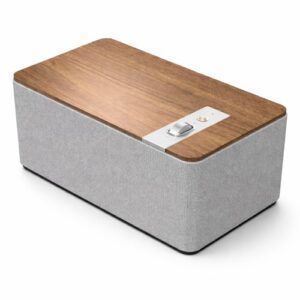
The Klipsch Three Plus is what I moved to — and it immediately reminded me what a
well-tuned speaker should sound like.
Why it stands out:
-
Deep, controlled bass without boom
-
Clear, open highs that stay smooth
-
Excellent balance at desk and room volume
-
Physical knobs that just work
The larger cabinet gives the low-end room to breathe,
while Klipsch’s tuning keeps mids clean and highs detailed.
It fills a music room without needing to be pushed hard,
which is exactly what you want when you spend hours listening while working.
If you want low lows and high highs without fatigue, this speaker delivers.
Best for:
Music rooms, offices, nearfield listening, sound-first buyers
Amazon Product Suggestion:
2. Klipsch The One Plus
(Matte Black)
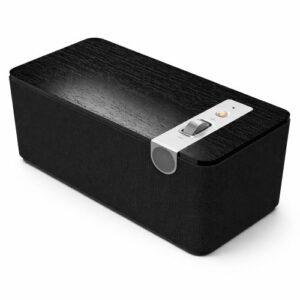
The Klipsch One Plus is the right choice if you want the same sound philosophy in a smaller footprint.
It doesn’t dig quite as deep as the Three Plus, but it keeps the same clean voicing and reliable behavior. Bass is tight, highs are articulate, and the sound stays enjoyable for long listening sessions.
Best for:
Smaller rooms, desks with limited space, moderate volume listening
Amazon Product Suggestion:
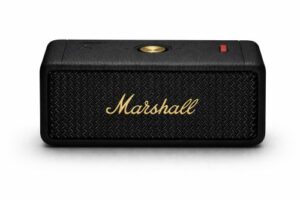
3. Marshall Emberton II
(Portable Option)
If you need portability, the Marshall Emberton II is worth mentioning —
because it succeeds where the Acton III failed.
It’s simple, durable, and stable.
No complicated firmware layers.
No freezing controls.
For a portable speaker, it delivers surprisingly balanced sound and dependable operation.
It won’t replace a room speaker, but it’s a good grab-and-go option for
people who still like the Marshall sound signature without the headaches.
Best for:
Portable use, secondary listening spaces, travel
What to Look for When Choosing a Sound-Quality Bluetooth Speaker
If you’re shopping beyond these models, keep this checklist in mind:
-
Cabinet size matters more than watt ratings
-
Physical controls beat touch controls every time
-
Stable Bluetooth > extra features
-
Good sound at low volume is a sign of proper tuning
Ignore marketing buzzwords and focus on how the speaker is built and voiced.
Final Thoughts…
I didn’t set out to write about smart speakers.
I set out to replace one that failed me.
The experience with the Marshall Acton III reinforced something important:
sound quality only matters if the speaker is reliable.
Once I moved to a more sound-first, less gimmick-driven design, everything improved —
bass, clarity, and peace of mind.
If you care about music, tone, and tone, skip the smart-home fluff.
Buy a speaker that’s built to sound good first and last.
Choosing the right speaker isn’t much different from choosing the right guitar components or understanding how pickup position affects tone.
That’s how you end up listening to more music — and thinking about your gear a whole lot less.
 Craft it. Play it. Own it!
Ready to take your guitar passion beyond the workbench?
See how I built GuitarCrafts.com using the training at Wealthy Affiliate — you can do the same.
 Build Your First Website With Wealthy Affiliate (Free)
