
Skip to content
Electric Guitar Kits Logo
Menu
  • Home
  • Customization & Mods
    • Adding A Tremolo System To Your Electric Guitar Kit
    • D.I.Y. Fretboard Customization (Inlays, Radius & Leveling)
    • D.I.Y. Fretboard Inlays For Guitar Kits (Creative Upgrade Guide)
    • DIY Semi-hollow Guitar Kit Internal Chambers
    • D.I.Y. Custom Guitar Inlays (Step-By-Step Guide)
    • Electric Guitar Customization & Mods Guide
    • Guitar Fretboard Inlays Explained
  • Neck & Setup
    • Adjust Guitar Neck Truss Rod
    • Adjusting Action On An Electric Guitar
    • Adjusting Action And Intonation On Your Newly Built Guitar Kit
    • Comparing Bolt-on Vs Set Neck Electric Guitar Kits For Tone
    • How To Adjust Truss Rod For Neck Relief In Guitar Kits
    • How To Choose Between Neck-Through And Bolt-On Necks In Kits
    • How To Choose The Perfect Nut Material For Your Electric Guitar
    • How To Properly Set Up Your Electric Guitar Kit For Intonation
    • Refretting Your Electric Guitar Kit: When And How To Do It
    • How To Fix Buzzing Frets And Dead Notes On Your DIY Guitar Kit
    • Setting Up The Bridge And Neck On Your Electric Guitar Kit
  • Pickups & Wiring
    • Guitar Pickups Guide: Choosing the Right Tone
    • Choosing Capacitors And Pots For Your Electric Guitar Wiring
    • Common Wiring Mistakes And How To Fix Your Electric Guitar Kit
    • Custom Wiring Patterns For Unique Guitar Sounds
    • Guide To Wiring Your Electric Guitar Kit For Optimal Performance
    • How To Adjust Pickup Height On Electric Guitar
    • How Pickup Position Affects Electric Guitar Tone In Kits
    • How To Shield Your Guitar’s Electronics For Noise Reduction
    • Installing Pickups In Your Electric Guitar Kit: A Complete Guide
    • How To Upgrade Your Guitar Kit With Seymour Duncan & Fender Pickups
    • Step-by-step Soldering Guide For Your DIY Electric Guitar Kit
    • Top Affordable Pickups To Upgrade Your Electric Guitar Kit Tone
    • Understanding Humbucker Vs Single Coil Pickups In Kits
    • Ultimate Guide To Upgrading Pickups And Electronics In Guitar Kits
    • Using Tone Pots And Capacitors To Sculpt Your Sound
  • Tone & Playability
    • Adjusting Pickup Height For Optimal Sound On Your Guitar
    • Best Bluetooth Speakers for Music Lovers Who Care About Sound Quality
    • Effects Of Different Wood Types On Electric Guitar Tone
    • How Pickup Height Affects Electric Guitar Tone
    • Mastering Tone Controls on Your Electric Guitar Kit (Beginner-Friendly Guide)
    • Top DIY Electric Guitar Kits For Custom Tone
    • Wood Choices For Electric Guitar Kits: Expert Recommendations
  • Build Guides
    • Best Pro-level Electric Guitar Kit Build Guide
    • Budget Vs Premium Electric Guitar Kits: Which One To Choose?
    • Essential Tools Every Electric Guitar Kit Builder Should Have
    • Tools Needed For Building An Electric Guitar Kit
    • Beginner’s Guide: Building Your First Electric Guitar Kit Step-by-Step
    • String Changing Techniques To Protect Your Guitar
    • Best DIY Electric Guitar Kits for Custom Tone (2025 Guide)
    • Top Customizable Electric Guitar Kits For Modern Tone
    • Troubleshooting Common Issues During Electric Guitar Kit Assembly
  • Make Money Online
  • Solo Guitar Kits
    • Best Solo Guitar Kits (Complete 2025 Buying Guide)
    • Best Solo Strat-Style DIY Guitar Kits (Buying Guide)
    • Best Solo Tele-Style DIY Guitar Kits (Buying Guide)
    • Best Solo LP-Style DIY Guitar Kits (Beginner-Friendly Guide)
    • Best Solo SG-Style DIY Guitar Kits (Beginner Guide)
    • Best Solo Hollow Body Guitar Kits (Buying Guide)
    • Solo Tele Semi-Hollow DIY Kits
    • Best Solo Offset-Style DIY Guitar Kits (Buying Guide)
    • Solo Explorer & Fire-Style Guitar Kits — EXK, FBK & FVK
Menu
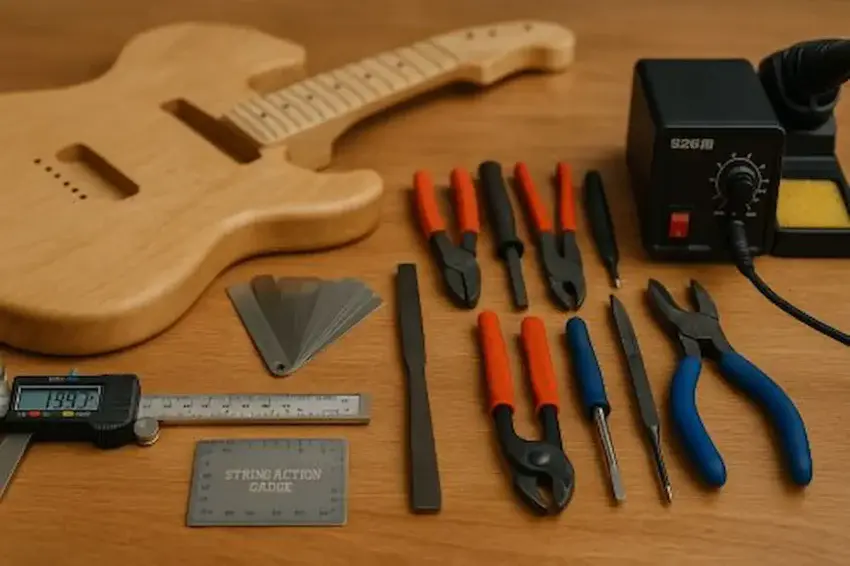
Essential tools needed for building an electric guitar kit laid out on a workbench next to an unfinished guitar body.

Tools Needed For Building An Electric Guitar Kit

Posted on July 28, 2025January 4, 2026 by Wayne

Building your first guitar kit goes a lot smoother when you have the right tools needed for building an electric guitar kit already laid out on your bench. From shaping and measuring to wiring and final setup, the proper gear helps you work faster, avoid mistakes, and get a clean, professional-looking build.


Affiliate transparency notice for GuitarCrafts.com with guitar icon, explaining that some posts contain affiliate links and that the site may earn a small commission at no extra cost to the reader.


🔧 Gear Up: The Tools That Keep Your Build From Turning Into a Hot Mess

Before you start sanding, shaping, drilling, or melting solder all over the place,
you need the right tools in arm’s reach.

These are the tools that keep your:

  • Build smooth,

  • Your shop clean,

  • And your mind from going insane…

Instead of a frustrating “why the hell is this happening” kind of day.


🎯 MusicNomad Precision String Action Gauge Ruler 

If you want your guitar to play low, clean, and mean, this little ruler is the difference between pro-level setup and “why does my guitar feel like a cheese grater?”


🌟 Amazon Product Suggestion:
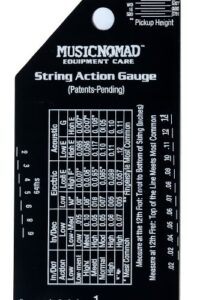
MusicNomad MN602 string action gauge showing etched measurement charts for electric, acoustic, and bass guitar setup, with black stainless steel finish and white precision markings.

✔️MusicNomad Precision String Action Gauge Ruler
for String Height- Metric, SAE, 64ths
(MN602)

This precision-cut stainless-steel ruler makes dialing in string height stupid-easy. Whether you want buttery-low action or something a little higher for heavy picking, this gauge gets your setup tightened up with zero guesswork.

Why It’s Great:

✔ Super accurate laser-etched measurements
✔ Perfect for dialing in bridge and saddle height
✔ Helps prevent buzzing and uneven action
✔ A must-have for pro-level playability


🧰 25Pcs Guitar Repairing Tools Kit Setup Kit 

This kit is packed with all the little tools you never think about until you need them —
then suddenly they’re the only thing standing between you and a full-blown meltdown.


🌟 Amazon Product Suggestion:
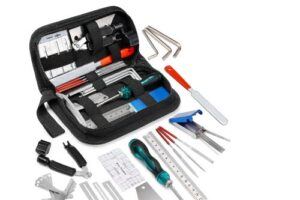
Guitar repair and setup tool kit with 25 pieces, including files, hex wrenches, string action ruler, screwdrivers, feeler gauges, and other luthier tools neatly arranged in a black zippered case on a white background.

✔️25Pcs Guitar Repairing Tools Kit Setup Kit
(with Carry Bag)

Packed with all the tiny tools you always end up needing mid-build, this kit saves you from digging around the shop or making emergency hardware-store runs. Files, wrenches, screwdrivers, spacers —
It’s got everything.

Why It’s Great:

✔ Full set of fret and nut files for tight spots
✔ Includes screwdrivers, hex keys, and spacers
✔ Great all-in-one kit for beginners
✔ Perfect backup tools for pros


📐 Jivarrry Digital Caliper

When you need dead-on measurements and zero guesswork, this caliper keeps you from eyeballing things like a caveman and praying it lines up.


🌟 Amazon Product Suggestion:
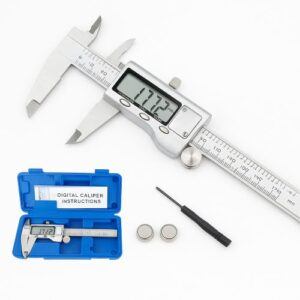
Stainless steel digital caliper with large LCD display, shown alongside its blue storage case, two button batteries, and a small screwdriver on a clean white background.

✔️ Jivarry Digital Caliper
(Stainless Steel, Large LCD, 6-Inch)

When accuracy matters — and it always does when building guitars — this digital caliper is your go-to. Perfect for neck pocket depth, tuner spacing, bridge alignment, and hardware fit.

Why It’s Great:

✔ Ultra-precise readings down to 0.01mm
✔ Makes neck and hardware alignment easy
✔ Great for measuring nut slots and shim thickness
✔ Clear digital display you can read with tired eyes


⚡ KAIWEETS 6000-Count Digital Multimeter 

If your wiring starts acting funky, this multimeter saves your sanity by telling you exactly what’s wrong instead of letting you chase ghosts for an hour.


🌟 Amazon Product Suggestion:
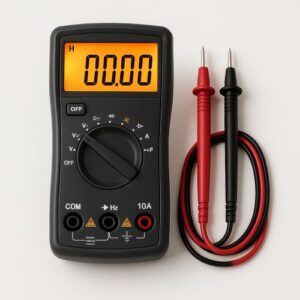
Clean studio photo of a digital multimeter with a bright backlit display and red/black test leads neatly placed beside it on a white background with a soft shadow.

✔️ KAIWEETS 6000-Count Digital Multimeter

Electrical gremlins don’t stand a chance. This multimeter helps you test continuity, check pickup output, verify grounds, and catch wiring mistakes before you screw the pickguard back on.

Why It’s Great:

✔ Checks continuity with an instant beep
✔ Helps diagnose wiring faults fast
✔ Great for verifying ground connections
✔ Clear backlit display for shop lighting


🔥 YIHUA 926 III Soldering Station

A solid soldering station keeps your wiring clean and controlled, so you’re not out here burning your fingertips off like a rookie pyro. (yes, I’ve done that)


🌟 Amazon Product Suggestion:
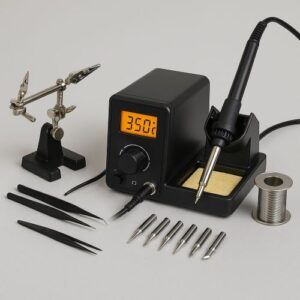
Studio-style photo of a digital soldering station with temperature display, soldering iron in its stand, soldering tips, tweezers, helping hands, and a roll of solder on a neutral light-gray background with a soft shadow.

✔️ YIHUA 926 III Digital Soldering Station  
Precision Temp Control + Full Accessory Kit
(60W)

A stable, reliable soldering station makes wiring clean, safe, and consistent.
Steady heat, comfortable grip, and a stand that won’t melt your bench.
Everything a kit builder needs.

Why It’s Great:

✔ Fast heat-up with steady temperature control
✔ Perfect for pickups, pots, and switches
✔ Comfortable iron for long wiring session
✔ Comes with a safe stand and sponge tray


🪚 Step-By-Step: How These Tools Keep Your Build On Track

Having the right tools is one thing.
Knowing when to grab them is what keeps your build from turning into a train wreck.
Here’s how these tools earn their keep from the moment you crack the box open.


1️⃣ Unbox the Kit and Check the Basics

Before you get excited and start bolting stuff together, slow down and inspect everything.

  • Use the digital caliper to check neck pocket width, bridge post spacing, and tuner holes so you’re not forcing parts into the wrong spots.

  • Grab a small screwdriver from the tool kit to snug up any loose screws that came from the factory.


👉👉 Pro tip: Write down any measurements that look “off” so you’re not guessing later.


2️⃣ Mock Up the Neck and Body Fit

This is where you make sure the guitar’s skeleton is solid before you do anything pretty.

  • Set the neck in the pocket and use the caliper and straight edge from your kit to check alignment to the bridge.

  • If things are tight or slightly crooked, use the files from the 25pcs tool kit to kiss away high spots instead of hogging out half the pocket.


3️⃣ Prep for Finish and Hardware

A clean build starts before the first coat of finish or the first screw goes in.

  • Use the tool kit’s sandpaper, files, and small brushes to smooth edges, round sharp corners, and clean up routing fuzz.

  • Lay the string action gauge on the bare neck to get a feel for how low you’d like the setup to be when it’s all done.

It helps you plan ahead instead of guessing at the end.


4️⃣ Install Tuners, Bridge, and Other Hardware

This is the “measure twice, drill once” part of the show.

  • Use the digital caliper to mark even tuner spacing and make sure your bridge is centered on the neck.

  • The screwdrivers and wrenches from the tool kit keep everything snug without stripping soft screws.


👉👉 Pro tip: Take your time here. Sloppy hardware placement is one of the hardest things to hide later.


5️⃣ Wire Up the Electronics

Now it’s time to melt some solder (without burning the fingerprints off again).

  • Fire up the YIHUA 926 III soldering station and set it to a comfortable working temp so joints flow clean without cooking your components.

  • Tin your wires, heat the lug, flow the solder, and let the joint cool naturally —

No blowing on it, no wiggling it while it’s soft.


6️⃣ Test Everything Before Closing It Up

Don’t screw the pickguard or control plate down just yet.
This is where the multimeter earns its spot on the bench.

  • Use the KAIWEETS multimeter to check continuity from pickups to output jack.

  • Make sure your grounds are solid and there are no accidental shorts between lugs.

If something’s dead, it’s way easier to fix now than after everything is buttoned up.


7️⃣ Set Neck Relief and Action

Once the strings are on, it’s time to dial in the feel.

  • Use feeler gauges from the tool kit to set neck relief at the 7th – 8th fret.

  • Then grab the MusicNomad string action gauge and set your action at the bridge to a comfortable height —

Low enough to feel slick, high enough to avoid buzz.


8️⃣ Final Checks, Fine-Tuning, and Play Time

Now you’re just chasing comfort.

  • Re-check intonation, pickup height, and action with the string gauge and your basic tools.

  • Make small adjustments until the guitar feels like it belongs in your hands, not on a store wall.

When you use these tools at the right time, the whole build stops feeling like a gamble and starts feeling like a controlled project.

Less “hope this works,” more “yeah, I meant to do that.” 🎸🔥


⭐ Pro Tips for a Smoother, Saner Build


👉👉 Take pictures as you wire.
If something stops working, you’ll know exactly where each wire was before you started “fixing” things that weren’t broken.


👉👉 Let the soldering iron do the work.
If you have to push the wire into the lug, the iron isn’t hot enough — or you’re rushing.

Slow down. Melt, flow, done.


👉👉 Measure everything twice — drill once. (or measure once and cuss twice)
Your digital caliper is your best friend. Your drill… not so much.

Protect that body from “oops” holes.


👉👉 Check continuity before closing anything.
If the multimeter doesn’t beep, don’t screw the plate down.
Save yourself the rage.


👉👉 Walk away when you get frustrated.
Seriously. Builders don’t rage-finish guitars — that’s how you end up sanding through the finish or snapping a screw in the neck pocket.


🎸 Final Thoughts

Building an electric guitar kit isn’t just about following instructions —
It’s about having the right tools to keep your build under control.
When you’ve got good measuring gear, reliable soldering equipment, and the basic setup tools within reach, the entire process goes smoother, cleaner, and a whole lot less stressful.

Take your time
Trust your tools
And enjoy the build

By the time you’re done, you won’t just have a guitar —

You’ll have a custom instrument you built with your own two hands, and that hits different every time you plug it in.


Ready to Start Adjusting Your Tone?

Check out our other guides:

👉 If you’re new to guitar kits:
Start with Step-by-Step Guide To Building Your First Electric Guitar Kit and Essential Tools Every Electric Guitar Kit Builder Should Have.

👉 If you already own a kit guitar:
Jump into How To Properly Set Up Your Electric Guitar Kit For Intonation or Fixing Common Problems: Buzzing And Dead Frets.

👉 If you’re chasing better tone:
Head to Understanding Humbucker Vs Single Coil Pickups In Kits or Playing With Tone Controls: Tips For Electric Guitar Kits and start experimenting.


Your Guitar, Your Build, Your Sound

You don’t need a custom shop or a tech on speed dial.
All you need is a little guidance, some patience, and a place to go that shows you what to do next.
Come on man… You got this.

GuitarCrafts is here to help you along the way.


🎸Craft it. Play it. Own it! 🎸


Ready to take your guitar passion beyond the workbench?

See how I built GuitarCrafts.com using the training at Wealthy Affiliate — you can do the same.
👉👉 Build Your First Website With Wealthy Affiliate (Free)

Wealthy Affiliate Internet Marketing University Banner


4 thoughts on “Tools Needed For Building An Electric Guitar Kit”

  1. Leahrae says:
    August 14, 2025 at 9:20 pm

    This is such a clear and practical guide to assembling the essential toolkit for building an electric guitar from a kit. What stands out most is how you strike a balance between must-have basics—like a soldering iron, drill or screwdriver, clamps, and a saw—and the optional upgrades that can streamline the build, such as precision rulers, steel straightedges, or cozy workspace setups. I especially liked how you emphasize the value of accuracy and protecting the hardware during installation—those small touches can make setup smoother and the final product feel truly polished. Your tips feel approachable for anyone taking on their first build. I’d be curious—what tool have you found newcomers tend to underestimate in its importance, only to wish they’d had it on hand later?

    Reply
    1. admin says:
      August 15, 2025 at 12:26 pm

      Thanks so much! I’m really glad the guide came across as approachable. Getting the right tools from the start can make the whole process feel a lot less intimidating.

      One tool I’ve seen many first-time builders underestimate is a good set of feeler gauges. They’re inexpensive, but they make a world of difference when it comes to dialing in neck relief, string height, and even pickup clearance. Without them, you’re mostly eyeballing adjustments—and that can lead to chasing your tail trying to fix action or buzzing issues later. Once builders try them, they usually say, “I can’t believe I didn’t get these sooner!”

      Reply
  2. Sean Sorath says:
    August 17, 2025 at 2:30 pm

    The article “Essential Tools Needed For Building An Electric Guitar Kit” is a highly practical and useful guide for beginners. It goes beyond simply listing tools and provides a logical breakdown of what is needed for each stage of the build, from basic assembly to the final setup. The explanations of key terms like “action” and “intonation” are especially helpful, as they empower the reader with the knowledge required to not just build, but also properly set up their instrument. The guide successfully manages to be both comprehensive and encouraging, which is crucial for a project that can seem daunting to a first-timer.

    Beyond the tools, are there any specific types of glue, clamps, or finishes that you have found to be particularly effective for working with guitar kit materials, and why?

    Reply
    1. admin says:
      August 18, 2025 at 2:56 am

      Thank you so much! I’m glad the guide came across as both practical and encouraging. Building a guitar kit for the first time can definitely feel intimidating. Regarding glue, clamps, and finishes: for most kit builds, Titebond Original wood glue works great for assembling wood components because it’s strong, dries clear, and is easy to clean up. Spring clamps and small bar clamps are ideal for holding parts together without crushing delicate pieces. For finishes, nitrocellulose lacquer gives that classic look and feel, while water-based poly is easier for beginners and less fussy to apply. 

      Each choice balances ease of use with professional results, depending on your comfort level and desired final look.

      Thanks again,

      ~Wayne

      Reply

Leave a Reply Cancel reply

Your email address will not be published. Required fields are marked *

Learn to make money in the comfort of your own home!

  • Facebook
  • Pinterest
  • YouTube

Recent Posts

  • Solo Guitar Kits
  • Electric Guitar Build Guides: Step-by-Step Help for Guitar Kit Builders
  • Tone & Playability: Dialing In the Feel and Sound of Your Electric Guitar Kit
  • Electric Guitar Pickups & Wiring Guide
  • Electric Guitar Neck & Setup Guide
  • About Me...
  • Affiliate Disclosure
  • Best Solo Guitar Kits (Complete 2025 Buying Guide)
  • Best Solo Hollow Body Guitar Kits (Buying Guide)
  • Best Solo LP-Style DIY Guitar Kits (Beginner-Friendly Guide)
  • Best Solo Offset-Style DIY Guitar Kits (Buying Guide)
  • Best Solo SG-Style DIY Guitar Kits (Beginner Guide)
  • Best Solo Strat-Style DIY Guitar Kits (Buying Guide)
  • Best Solo Tele-Style DIY Guitar Kits (Buying Guide)
  • Build Your Own Dream Guitar Kit (Without Feeling Overwhelmed)
  • GuitarCrafts Homepage
  • How I Started Making Money Online With Wealthy Affiliate
  • Privacy Policy
  • Solo Explorer & Fire-Style Guitar Kits — EXK, FBK & FVK
  • Solo Guitars Review (2025): Are Their DIY Guitar Kits Worth It?
  • Solo Tele Semi-Hollow DIY Kits

Archives

  • January 2026
  • December 2025
  • November 2025
  • September 2025
  • August 2025
  • July 2025

Categories

  • Build Guides
  • Customization & Mods
  • Neck & Setup
  • Pickups & Wiring
  • Tone & Playability
  • Uncategorized
© 2026 My Electric Guitar Kits Site | Powered by Superbs Personal Blog theme