
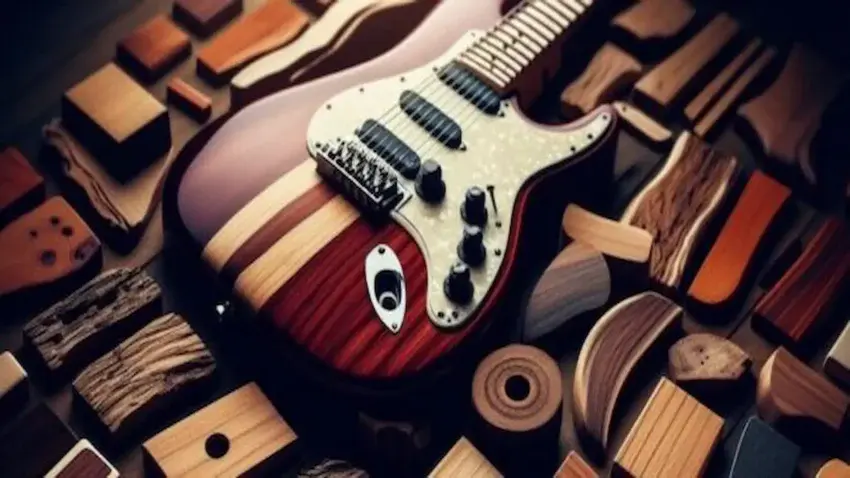
Every electric guitar has a voice, and that voice starts long before the pickups, strings, or hardware —
It begins with the wood. In Effects Of Different Wood Types On Electric Guitar Tone, we take a warm, down-to-earth look at how alder, mahogany, ash, maple, and other popular tonewoods shape the feel and personality of your build.
Whether you want a guitar that rings with bright clarity, sings with rich warmth, or sits comfortably somewhere in the middle, choosing the right wood can bring your vision to life and make your kit feel uniquely yours.
 This guide is part of my Tone & Playability Guide, where I cover the setup
and adjustments that make an electric guitar kit sound better and feel easier to play.

⭐ Recommended Tools & Tonewood Essentials
Before diving into how different woods shape the sound of your guitar, it helps to have a few simple tools and care products on hand. These make it easier to evaluate the wood you’re working with, keep your fretboard feeling great, and ensure your kit’s components match proper measurements.
Here are a few tonewood-friendly essentials that fit perfectly with this project.
⭐ Fretboard Conditioning Oil
Fretboard conditioning oils keep your guitar’s neck feeling smooth, hydrated, and responsive by restoring natural moisture to unfinished woods like rosewood, ebony, and pau ferro.
Over time, sweat, dust, and dry air can pull oils from the wood, leaving the fretboard looking dull and feeling rough during play. A quality fretboard oil cleans, revitalizes, and protects the wood in one simple step — preventing cracking, enhancing grain color, and keeping your guitar performing at its best.
🌟 Amazon Product Suggestion:
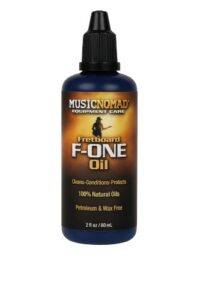
✔️ MusicNomad F-ONE Fretboard Oil
(2 oz Bottle — 100% Natural Cleaner & Conditioner)
The MusicNomad F-ONE Fretboard Oil is a premium, all-natural conditioning oil designed specifically for unfinished fretboard woods like rosewood, ebony, and pau ferro. With a pure blend free of petroleum, waxes, silicone, and water, it cleans, hydrates, and protects without leaving behind residue or buildup. Perfect for restoring dry fretboards, enhancing natural wood color, and keeping your guitar feeling smooth and responsive during play.
Why it’s great:
✔️ 100% natural oil blend — No petroleum, lemon oil, silicone, or wax
✔️ Safe for all unfinished fretboards — Rosewood, ebony & pau ferro
✔️ Restores moisture & prevents cracking
✔️ Cleans grime and conditions at the same time
✔️ Enhances wood grain and deepens color
✔️ Trusted by luthiers and guitar techs worldwide
⭐Digital Calipers
Digital calipers give you ultra-precise measurements down to thousandths of an inch, making them perfect for checking board thickness, tenon sizes, dowel diameters, and tool setups.
The digital readout eliminates guesswork and ensures every cut or fit is exactly what you intended.
🌟 Amazon Product Suggestion:
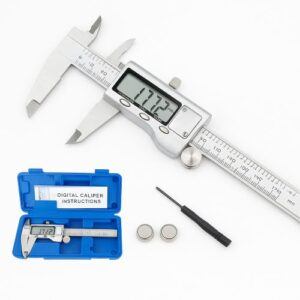
✔️ Jivarry Digital Caliper
(Stainless Steel, Large LCD, 6-Inch)
The Jivarry Digital Caliper is an affordable, accurate measuring tool that every woodworker should keep in their shop. With a smooth stainless-steel slide, a large easy-to-read LCD, and instant switching between inches, millimeters, and fractions, it makes precise measuring fast and frustration-free.
Perfect for checking board thickness, inside/outside dimensions, dowels, hardware sizing, and fine adjustments during joinery work.
Why it’s great:
✔️Large, clear digital display
✔️Switch between inch/mm/fractions instantly
✔️ Stainless steel body for smooth, accurate travel
✔️ Measures inside, outside, depth & step values
✔️Perfect for tight-tolerance woodworking and tool setup
✔️Comes with case, batteries & mini screwdriver
⭐Mahogany Guitar Body Blank
If you’re exploring how different tonewoods shape an electric guitar’s character, it makes sense to look at a real example you can use in your own build. Mahogany is one of the most popular choices for creating warm, rich tones with great sustain, and a high-quality body blank gives you a solid foundation to hear those characteristics for yourself. Here’s a great option if you want to build with a classic, warm-voiced wood.
🌟 Amazon Product Suggestion:
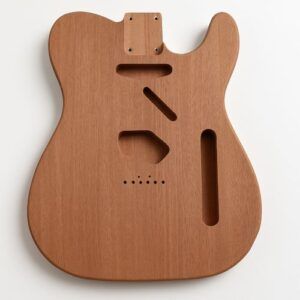
✔️Alnicov Unfinished Mahogany Telecaster Body
A solid mahogany Tele-style body that’s perfect for DIY builders who want warm tone, classic Tele comfort, and a blank canvas ready for sanding, shaping, or finishing any way you want.
Why It’s Great:
✔️ Solid Mahogany Construction — Delivers warm mids, smooth highs, and excellent sustain.
✔️ Telecaster-Correct Routing — Pre-cut for standard Tele pickups and control layout.
✔️ Smooth, Workable Surface — Easy to sand, stain, oil, or paint.
✔️ Perfect for Custom Projects — Great starting point if you want to experiment.
✔️ Compatible With Standard Tele Necks — Designed for 25.5″ scale neck pockets
⭐ Understanding Tonewoods: How Different Woods Shape Electric Guitar Tone
When you’re building an electric guitar kit, the type of wood you choose plays a huge role in how the finished instrument sounds and responds in your hands. Each tonewood has its own personality —
Some are bright and snappy, others are warm and full, while a few offer a balanced middle ground.
Here’s a closer look at the most common guitar woods and what they bring to your build.
Alder: Balanced, Clear, and Versatile
Alder is one of the most beginner-friendly tonewoods because of its smooth, even response across lows, mids, and highs. It’s lightweight, easy to shape, and delivers a tone that feels familiar to most players.
Tone Profile: Balanced, clear, slightly rounded highs
Weight: Light to medium
Best For: Rock, blues, pop, country
Why It Works: Alder doesn’t emphasize any extreme frequencies, which gives it a comfortable,
all-purpose sound suitable for almost any pickup configuration.
Ash: Bright Snap With Strong Dynamics
Ash is chosen for builders who want a guitar with real bite.
It has a tight grain, beautiful figuring, and a clear, articulate tone that responds well to dynamic playing.
Tone Profile: Bright, snappy, airy highs with firm lows
Weight: Can range from light (swamp ash) to medium/heavy
Best For: Country, funk, clean tones, anything needing definition
Why It Works: Ash adds character to the midrange and provides great note separation, making chords sound crisp and single notes stand out.
Mahogany: Warm, Rich, and Full of Sustain
Mahogany is loved for its deep, warm midrange and long, singing sustain.
If you want a smooth, thick sound with a classic feel, mahogany delivers every time.
Tone Profile: Warm mids, smooth highs, strong sustain
Weight: Medium to heavy
Best For: Blues, classic rock, lead players, thick rhythm tones
Why It Works: Mahogany naturally enhances resonance, making notes feel round and powerful with a buttery response.
Basswood: Smooth, Soft, and Perfect for Modern Tones
Basswood often gets overlooked, but it’s one of the most frequently used tonewoods in modern guitars. It’s lightweight, easy to carve, and pairs extremely well with high-output pickups.
Tone Profile: Soft mids, balanced lows, gentle highs
Weight: Light
Best For: Hard rock, metal, fast playing, heavily processed tones
Why It Works: Basswood doesn’t have sharp frequency spikes, so it delivers a smooth, even platform for aggressive tones and high-gain setups.
Maple: Bright, Focused, and Full of Attack
Maple is a dense, hard tonewood that adds clarity and precision to a guitar’s voice.
Whether used as a neck, a cap, or a full solid body, it enhances brightness and articulation.
Tone Profile: Bright, punchy, tight low end
Weight: Medium to heavy
Best For: Shredding, jazz, fast leads, anything requiring precision
Why It Works: Maple emphasizes note definition, making complex runs sound sharp, clear, and controlled.
Walnut: Warm With a Clear, Defined Edge
Walnut sits tonally between mahogany and maple. It’s warm and rich, but with a tighter, more focused midrange.
Tone Profile: Warm but with strong clarity
Weight: Medium
Best For: Blues-rock, alternative, modern clean tones
Why It Works: Walnut offers warmth without sacrificing definition, making it an excellent middle-ground tonewood.
Fretboard Woods: The “Feel” Factor
Even though pickups have more influence on tone, your fretboard wood changes the feel and subtle character of your guitar.
Rosewood
Warm, natural, slightly oily feel
Smooth highs, great for blues and classic rock
Ebony
Bright, crisp, fast
Snappy attack — loved by shred and metal players
Maple
Bright, smooth, and clear
Adds extra snap and bite to your tone
Your fretboard doesn’t just affect tone — it affects how the guitar plays.
And that matters just as much.
⭐ Bringing It All Together
Choosing the right tonewood is about matching the sound you want with the feel you love.
Whether you want the thick warmth of mahogany, the sparkling clarity of ash, or the balanced versatility of alder, the wood you choose is the first step in shaping a guitar that feels truly yours.
⭐ Final Thoughts…
Choosing the right tonewood is one of the most enjoyable parts of building an electric guitar kit.
It’s where sound, feel, and personal taste all come together in a way that makes your guitar truly unique. Whether you’re drawn to the warm, singing sustain of mahogany, the bright clarity of ash, or the balanced versatility of alder, every wood brings its own character into the mix.
At the end of the day, there’s no “best” tonewood — there’s only the one that inspires you to pick up the guitar and play.
When you match the right wood with the right pickups, hardware, and setup, your kit transforms from a simple project into a guitar with its own voice and personality.
Build what excites you.
Shape it your way.
And most of all —
Enjoy every step of the journey.
Ready to Start Adjusting Your Tone?
Check out our other guides:
👉 If you’re new to guitar kits:
Start with Step-by-Step Guide To Building Your First Electric Guitar Kit and Essential Tools Every Electric Guitar Kit Builder Should Have.
👉 If you already own a kit guitar:
Jump into How To Properly Set Up Your Electric Guitar Kit For Intonation or Fixing Common Problems: Buzzing And Dead Frets.
👉 If you’re chasing better tone:
Head to Understanding Humbucker Vs Single Coil Pickups In Kits or Playing With Tone Controls: Tips For Electric Guitar Kits and start experimenting.
Your Guitar, Your Build, Your Sound
You don’t need a custom shop or a tech on speed dial.
All you need is a little guidance, some patience, and a place to go that shows you what to do next.
Come on man… You got this.
GuitarCrafts is here to help you along the way.
 Craft it. Play it. Own it!
Ready to take your guitar passion beyond the workbench?
See how I built GuitarCrafts.com using the training at Wealthy Affiliate — you can do the same.
Build Your First Website With Wealthy Affiliate (Free)

Very interesting article for me, Wayne, because I like to play a little electric guitar myself. I have always wondered what are the different effects each particular type of wood for an electric guitar that exist. I believe wood density and even the wood’s grain structure play a significant role in the resonance of an electric guitar. A strong and durable wood, such as maple, is ideal for an electric guitar. Thank you for a very educational article, Wayne.
Best wishes,
Kent
Thanks so much for the kind words, Kent! You’re absolutely right, wood density and grain structure both play a big role in how an electric guitar resonates, even with all the electronics involved. Maple’s a great example, bright, strong, and super stable, which makes it a favorite for necks and tops. I’m glad the article gave you some insight into how those wood choices shape tone. Appreciate you stopping by and sharing your thoughts!
This article does a fantastic job of navigating the long-standing debate around tonewoods and electric guitar tone. I appreciate how it acknowledges that pickups and electronics often dominate tone, yet still highlights how woods subtly influence resonance, sustain, and the instrument’s feel. The tonal breakdown—alder for balanced mids, ash for brightness, mahogany for warmth, maple for snappy attack, and basswood for neutrality—is practical and reflective of classic guitar traditions.
I especially like how you emphasize pairing woods and pickups intelligently—like bright single-coils with a warm mahogany body—to create tonal harmony rather than competition. The role of wood isn’t about radical shifts in sound, but nuanced coloring that resonates both physically and emotionally with the player.
Well done blending technical insight with musical intuition. It strikes a perfect chord for builders and players alike.
Thank you so much! I’m glad the guide resonated with you. You’re spot on! While pickups and electronics often shape the core tone, the choice of wood adds those subtle layers of resonance, sustain, and feel that really connect a player to their instrument.
I’m especially happy to hear that the tonal pairings came through clearly. It’s all about creating harmony between wood and electronics so the guitar not only sounds great but feels right in the hands. Those little nuances are what make each build unique and rewarding.
I really appreciate your thoughtful feedback, and I hope it inspires builders to experiment and find their own perfect combinations!
Thanks again,
~Wayne
I love the way you have broken down the different types of wood that the guitar is made from and the difference in sound types. Everyone has their own preference, depending on the type of music genre they prefer to play, so it is good to have this comparison chart.
I love the pic of the guitar made with a mash of different woods and I think this is the most beautiful guitar that I have ever seen.
They say maple is a very strong wood. Would this perhaps be a better bet for someone who plays in a rock band, as it should last longer with all the bouncing around?
Thanks so much for the kind words! I’m glad the comparison chart and breakdown were helpful! You’re absolutely right that every player gravitates toward certain woods depending on the style of music they enjoy. That “mash” guitar is one of my favorites too! Such a creative use of contrasting tones and grains.
As for maple, you’re spot on! It’s a strong, dense wood that not only holds up well physically but also delivers a bright, cutting tone that can really shine in a rock setting. Many rock players love it for fretboards and necks because it can handle plenty of wear and tear while keeping good clarity. For bodies, maple tends to be heavier, so it can withstand the energy of live playing but might feel a bit weighty over long gigs. If durability and brightness are priorities, maple is definitely a solid bet!
Thanks again,
~Wayne
There is no good evidence that the body wood has a sonic influence in solid-body guitars. There are no good studies using real guitars that have shown that.
And other studies have shown that things like bridge admittance are very low – that is, much less string vibration energy enters the body than some players think (and if it did, that would mean vibrations LOST from the strings – the Conservation of Energy law. So sustain would be poor for a start. The fact that sustain isn’t poor is evidence that body vibration is unimportant.). Other measurements of real guitars are also consistent with that.
That doesn’t mean that only pickups matter. There are in fact many things that have been measured in real solid-body guitars to be sonically important. The solid body wood is just not one of them.
Prof Manfred Zollner is the author of the 1200-page “Physics of the Electric Guitar”, based on decades of research with real guitars by him and others. As he said recently (in German, on the SUPERGAIN youtube channel, translated here): “For the electric guitar, the body wood does not matter”.
Sure — physics says the string energy mostly stays in the strings. But guitars aren’t lab equipment. They’re extensions of our hands. When you spend 40 hours sanding, oiling, and stringing up two guitars with different woods, you feel the difference before you ever plug in. That may not show up on a scope, but it sure shows up in the music.
Everything I said has been correleted with how real guitars sound.
You’re basically saying “woodworking” tells you how a guitar will sound better than measuring their physics ? Then why can’t luthiers predict how a guitar will sound ?
The measurements of the physics of real guitars correlate directly with how they sound. The notion that those things can’t be measured is nonsense.
Old notions of what makes electric guitars sound how they do were based on a simplistic dichotomy – if it’s not the pickups it must be “the wood”. Guitars aren’t that simple.
And I don’t think you’ll actually find many luthiers agreeing that alder sounds a particular way, or ash another way. It’s only big guitar company marketing departments who still say that kind of thing these days. But you talk to the people who work there in R&D for example and you’ll hear something different.
Appreciate the science lesson, V! You’ve clearly read the textbooks. But guitars aren’t test benches, and players aren’t lab rats. You can measure all the resonance transfer and bridge admittance you want, but out in the real world, nobody’s plugging their Les Paul into an oscilloscope.
I’ve built and played enough guitars to know this: two pieces of wood with the same pickups, same bridge, and same setup can still feel completely different. One sings, the other feels like it’s holding its breath. That’s not marketing… That’s experience.
Sure, physics says most of the string energy stays in the strings. But pick up two guitars back-to-back, one swamp ash and one mahogany, and tell me you don’t notice a difference in how it breathes and responds. You can’t measure “feel” with a frequency graph any more than you can measure “mojo” with a caliper.
So yeah, science is cool, but so is the human element. And that’s the part that makes guitars more than just slabs of wood with wires. They’re personal. They’ve got soul. Try quantifying that in your next paper.
~ Wayne
Except that we CAN measure the sonic difference you (and probably everyone else) can hear between the guitar you made out of swamp ash and the guitar you made of mahogany.
That sonic difference that we all hear is just not DUE to alder and mahogany.
It’s due to an amalgam of known measurable elements. Even same-model bridges have different resonances that subtract different frequencies from the strings. Same-wood, same-dimension necks have different resonant modal frequencies, and different string-fret micro-damping. Same-model pickups can have different resonant frequencies and Q factors (although pickup makers refuse to publish those key specs). Same-grade bar magnets can have different strengths along their lengths, or between magnetic pole pieces. All that has been measured in real guitars – a sonic difference due to solid body wood has not. That multi-factor amalgam is why two same-model guitars can often sound different.
Your mental model (the “human element”) of what makes guitars sound the way they do is just too simplistic. You’re basically saying if it has all the same parts then the only reason it can sound different is “the wood”. That’s been known to be wrong by guitar scientists for three decades, from measurements and listening tests of real guitars.
I appreciate the deep dive — sounds like you’ve spent a lot of time in the lab on this one.
My post wasn’t meant to turn this into a science paper, though… It’s about what builders and players actually hear and feel when working with different woods. There’s a big difference between analyzing frequencies and actually holding a guitar that just comes alive in your hands.
You’re absolutely right that tone involves a mix of factors… but pretending wood doesn’t play any role at all doesn’t line up with what decades of real-world builders and players have experienced. Numbers help tell the story, but guitars are both science and soul. The wood’s not everything, but it sure isn’t nothing either.
~ Wayne
The only way that builders could conclude that solid body wood influences the tone of solid-body guitars from their experience and hearing would be if alder always sounded like alder “should”, and ash always sounded like ash “should”, etc etc. But guitars made with alder bodies don’t always sound like that, or the same. And guitars made with ash bodies don’t always sound like that, or the same.
Lots of same-model guitars sound similar. Some sound different. Whether or not they are made of the same wood species or not. Their sonic differences do not follow their body wood species (nor is there any evidence that it’s “the piece” of wood that matters, not the species).
So there is no logical way that a builder can conclude from that varied experience that the solid wood from which they make bodies contributes to the sound. With all the things that are known (from measurements of actual guitars) to influence guitar sound, how could they discern a “body wood” effect from amongst all those influences to reach a conclusion that body wood is important ? Tell me what specific experiences could lead one to do that ? There is no logic that would allow them to do that (unless as I said, each body wood species ALWAYS sounded a particular way).
There is also no scientific explanation for how solid wood could influence the sound. Ask a few builders who believe in tonewood how it “works”. You won’t get a sensible answer. Because there isn’t one, and most have no scientific training. You’ll get lots of different answers. Most of which make no physics sense.
Finally, there are no measurements that have supported a sonic role for solid body wood in real guitars.
But builders are influenced by the same misinformation as players. The more honest builders will tell you that they believe or don’t believe in tonewood simply because that’s what they’ve read or heard from other builders. But most realize over time that their experience doesn’t match with a body wood influence. When they start to dig deeper, they realize that it was a theory without evidence. Coming as I said from an inadequate mental model of what makes solid-body guitars sound how they do – the simplistic “pickups or ‘the wood’ “.
Nothing I’ve said here is controversial to anyone with an understanding of basic physics and a knowledge of the published literature based on complex measurements of real guitars, correlating their measured physics with how they sound.
It’s only contoversial to the science-challenged, who curiously think that famous players, guitar journalists, and guitar builders/manufacturers are authorities on guitar physics.
Well, here we go again… the eternal “tonewood doesn’t matter” sermon! I swear, this debate pops up more often than mosquitoes at a Cajun Crawfish Boil. I appreciate the science angle, truly… but out here in the real world, where guitars actually get played instead of graphed, things sound and feel a little different.
You can measure frequencies and waveforms all day long, but you can’t measure the grin that shows up when a well-built guitar just rings out right. That’s where the human part comes in. Builders like me trust what our hands and ears tell us; not because it’s mystical, but because the proof’s been humming through amps and studios for decades.
Sure, nobody’s saying the wood does everything. Pickups, hardware, setup, even the finish all shape the sound. But pretending the body wood doesn’t add its own flavor is like saying barbecue wood doesn’t affect the smoke. Technically, the fire cooks the meat, but anyone who’s spent time near a pit knows better.
I respect the physics, I really do. But guitars are both science and soul. You can’t spreadsheet that feeling when a note blooms under your fingers and the whole room vibrates with just the right tone. That’s the magic part! …and last I checked, magic doesn’t always show up on a spectrum analyzer.
Anyway, you keep crunchin’ your numbers, and I’ll keep chasin’ tone through sawdust and solder. Between your lab coat and my calluses, maybe we’ll meet in the middle someday and find that perfect frequency of “good feel.”
~Wayne