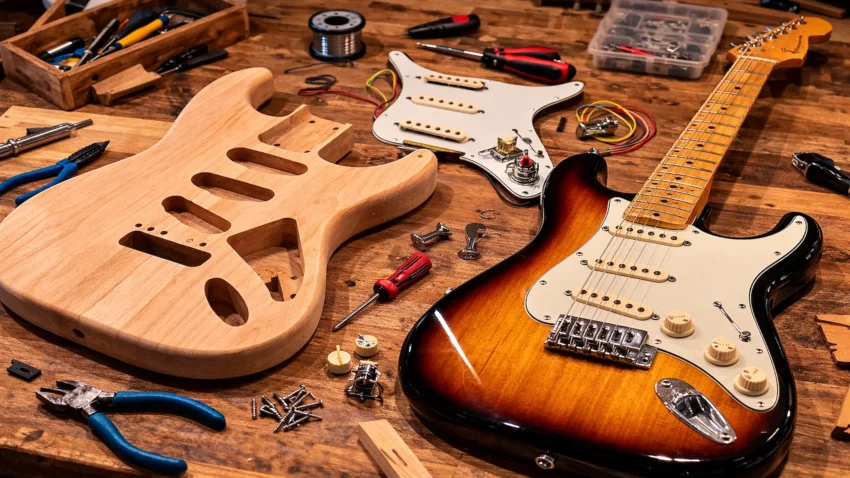
Few electric guitars are as instantly recognizable as the Stratocaster-style design.
Known for its sleek body shape, versatile pickup configuration, and smooth playability,
the Strat-style guitar has remained one of the most popular electric guitar designs for decades.
For DIY builders, Stratocaster-style guitars offer a great balance between classic tone and customization options.
Whether you’re assembling your first guitar kit or upgrading an existing build,
understanding how the Strat design works can help you get the best results from your project.
In this guide, we’ll explore what makes Stratocaster-style guitars unique, how their pickup configuration shapes their tone,
and why many builders choose Strat-style kits for their DIY projects.
What Is A Stratocaster Style Guitar?
A Stratocaster-style guitar is a solid-body electric guitar known for its contoured body shape and three-pickup configuration.
The design was created to provide greater comfort, tonal versatility, and easier access to higher frets.
Common features of Strat-style guitars include:
-
A double-cutaway body shape
-
Contoured body for player comfort
-
Three single-coil pickups
-
Five-way pickup selector switch
-
Tremolo bridge system
These features make Strat-style guitars extremely versatile,
allowing players to achieve a wide range of tones suitable for many different genres.
For builders, Strat-style kits provide a flexible platform for customization and upgrades.
Why Stratocasters Are So Popular
Stratocaster-style guitars have remained popular for generations because
they offer a combination of comfort, versatility, and distinctive tone.
Players appreciate Strat-style guitars for several reasons:
-
Comfortable body contours
-
Wide tonal range from multiple pickups
-
Smooth playability across the fretboard
-
Tremolo bridge for expressive playing
-
Highly customizable electronics
Because of their versatility, Strat-style guitars are used in many musical styles including
blues, rock, funk, pop, and modern indie music.
Their ability to produce both clean tones and overdriven sounds makes them a favorite among
both beginners and professional musicians.
Stratocaster Pickup Configuration
One of the defining features of a Strat-style guitar is its three-pickup configuration.
Most Strat-style guitars use three single-coil pickups paired with a five-way selector switch.
This setup provides several tonal combinations.
Bridge Pickup
The bridge pickup produces a bright and cutting tone that works well for rock rhythms and lead guitar parts.
It provides strong attack and clarity, especially when using overdrive or distortion.
Middle Pickup
The middle pickup adds balance and warmth.
When combined with either the bridge or neck pickup,
it creates the well-known Strat “quack” tone that is popular in funk and clean rhythm playing.
Neck Pickup
The neck pickup delivers a warmer and smoother tone, making it ideal for blues leads,
expressive solos, and clean melodic playing.
The combination of these three pickups allows Strat-style guitars to
produce a wide variety of tones from a single instrument.
Why Stratocasters Are Great For DIY Guitar Kits
Stratocaster-style guitars are extremely popular among DIY builders
because they offer plenty of opportunities for customization.
Several design features make Strat-style kits appealing:
-
Easily replaceable pickguards with pre-wired electronics
-
Tremolo bridge for expressive playing techniques
-
Multiple pickup combinations
-
Simple bolt-on neck construction
-
Wide range of available upgrade parts
Because the electronics are often mounted to the pickguard,
many builders find Strat kits easier to modify than other guitar designs.
This makes them a great choice for experimenting with
new pickups, wiring configurations, and hardware upgrades.
Stratocaster Tone Explained
Strat-style guitars are famous for their bright, clear tone and dynamic response.
The three single-coil pickups produce a sound that many players describe as:
-
Clear and articulate
-
Bright and sparkling
-
Responsive to picking dynamics
-
Excellent for clean and lightly overdriven tones
These tonal qualities make Strat-style guitars especially popular for
blues, classic rock, funk rhythm, and expressive lead playing.
When combined with effects pedals and amplifiers,
Strat-style guitars can produce an enormous range of sounds.
Stratocaster Mods And Custom Builds
Another reason Strat-style guitars are popular with builders is
the wide range of available modifications.
Many players customize their Strat builds with upgrades such as:
-
aftermarket pickups
-
upgraded tremolo bridges
-
locking tuners
-
custom pickguards
-
wiring modifications
These upgrades allow builders to fine-tune their guitar’s tone
and performance to match their playing style.
Strat-style guitars are often considered one of the best platforms for
learning about guitar electronics and customization.
Stratocaster Style Guitar Kits For DIY Builders
If you’re interested in building your own guitar,
Stratocaster-style kits are an excellent starting point.
Their bolt-on neck construction and modular electronics make them approachable for beginners
while still offering room for advanced modifications.
Many builders enjoy working with Strat-style kits because the design allows for
easy upgrades and experimentation with different pickup combinations.
If you’re exploring Strat-style kits, you can check out several great options here:
👉 Best Stratocaster-Style DIY Guitar Kits For Builders
Famous Stratocaster Players
Over the years, many legendary guitarists have relied on Stratocaster-style guitars
to create some of the most recognizable sounds in music.
Some well-known Stratocaster players include:
-
Jimi Hendrix – Known for his explosive playing style and iconic Strat tones that shaped rock guitar history.
-
Eric Clapton – Famous for his expressive blues playing and smooth Stratocaster sound.
-
Stevie Ray Vaughan – A legendary blues guitarist known for powerful Strat tone and aggressive playing.
-
David Gilmour – The Pink Floyd guitarist who created many famous Stratocaster lead tones.
These artists helped establish the Stratocaster as one of the most influential electric guitars ever created.
👉 If you’re comparing Stratocaster and Les Paul style guitars,
you may also want to read our Stratocaster vs Les Paul: Which Guitar Is Better?
guide to understand the key differences between these two legendary designs.
Final Thoughts…
Stratocaster-style guitars have earned their reputation as one of the most
versatile electric guitar designs ever made.
Their comfortable body shape, flexible pickup configuration,
and wide tonal range make them a favorite among players across many musical genres.
For DIY builders, Strat-style kits offer an excellent opportunity to explore guitar building
while experimenting with tone and customization options.
Whether you’re assembling your first guitar kit or upgrading an existing build,
understanding the Stratocaster design will help you get the most out of your project.
Stratocaster Setup & Tone Tips
Stratocaster-style guitars are incredibly responsive to small adjustments.
Tweaking pickup height, tone controls, and electronics can
dramatically change the sound and feel of your instrument.
👉 If you want to fine-tune the tone of your Strat-style guitar,
these guides can help:
• Adjusting Pickup Height For Optimal Sound On Your Guitar
• Mastering Tone Controls on Your Electric Guitar Kit
• How Pickup Position Affects Electric Guitar Tone In Kits
Ready to Start Adjusting Your Tone?
Check out our other guides:
 If you’re new to guitar kits:
Start with Step-by-Step Guide To Building Your First Electric Guitar Kit
and Essential Tools Every Electric Guitar Kit Builder Should Have.
If you already own a kit guitar:
Jump into How To Properly Set Up Your Electric Guitar Kit For Intonation
or Fixing Common Problems: Buzzing And Dead Frets.
If you’re chasing better tone:
Head to Understanding Humbucker Vs Single Coil Pickups In Kits
or Playing With Tone Controls: Tips For Electric Guitar Kits and start experimenting.
Your Guitar. Your Build. Your Sound.
Your next great guitar build could begin today.
All you need is the right tools, a little patience,
and a passion for great tone.
Come on man… You got this.
GuitarCrafts is here to help you along the way.
 Craft it. Play it. Own it!