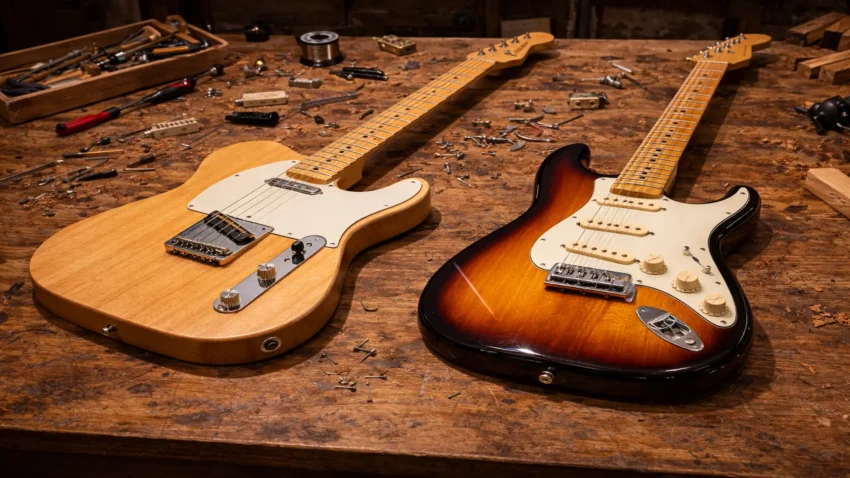
The Telecaster and Stratocaster are two of the most famous electric guitar designs ever created.
Both guitars have shaped modern music for decades and remain incredibly popular with players of every skill level.
For DIY guitar builders, these two styles are often the first kits people consider building.
While they may look similar at first glance, the Telecaster and Stratocaster actually feel and sound very different.
Understanding those differences can help you decide which guitar style is the better choice for your playing style.
⚖️ Telecaster vs Stratocaster: Quick Comparison
| Feature | Telecaster | Stratocaster |
|---|---|---|
| Pickups | Two single-coil pickups | Three single-coil pickups |
| Bridge | Fixed bridge | Tremolo bridge |
| Body Shape | Single cutaway | Double cutaway with contours |
| Tone | Bright and punchy | Smooth and versatile |
| Best For | Rhythm and country tones | Lead playing and versatility |
| Beginner Friendly | Very easy to build | Slightly more complex setup |
🎸 The Telecaster Design
The Telecaster was the first commercially successful solid-body electric guitar.
Its simple design made it incredibly reliable and easy to manufacture,
which is why the Tele remains popular with guitar builders today.
Typical Telecaster features include:
• two single-coil pickups
• fixed bridge design
• bolt-on neck construction
• simple control layout
• bright, punchy tone
Telecasters are known for their strong attack and clear articulation,
making them favorites for country, blues, rock, and even modern indie music.
The straightforward construction also makes Telecaster kits extremely beginner-friendly.
👉 If you’re leaning toward a Tele build and want to keep costs down,
here’s a breakdown of the best Telecaster kits under $300 that are actually worth it.
🎸 The Stratocaster Design
The Stratocaster was introduced several years after the Telecaster and added a number of new design innovations.
The Strat’s body contours and expanded electronics gave players more comfort and tonal flexibility.
Typical Stratocaster features include:
• three single-coil pickups
• five-way pickup selector
• body contours for comfort
• tremolo bridge system
• versatile tone controls
Strats are famous for their smooth lead tones,
expressive vibrato, and wide tonal range.
Because of the extra electronics and tremolo bridge,
Strat builds can be slightly more complex than Tele builds,
but they offer a lot of tonal flexibility.
🔍 Telecaster vs Stratocaster: Key Differences
🎵 Pickups
Telecasters use two single-coil pickups, which produce a direct and punchy tone.
Stratocasters use three single-coil pickups, giving players more tonal options.
The Strat’s middle pickup position allows for the famous “quack” tone heard in
funk and blues.
🌉 Bridge Design
Telecasters use a fixed bridge, which improves tuning stability and sustain.
Stratocasters use a tremolo bridge system, allowing players to bend notes
and create vibrato effects.
This makes Strats more expressive, but also slightly more complicated to set up.
🔊 Tone
Telecaster tone is typically:
• bright
• sharp attack
• strong midrange
• excellent for rhythm
Stratocaster tone is typically:
• smooth
• glassy highs
• wider tonal range
• great for lead playing
Both guitars can cover many genres, but each has its own personality.
🔥 Telecaster Legends Who Defined Country, Rock & Blues
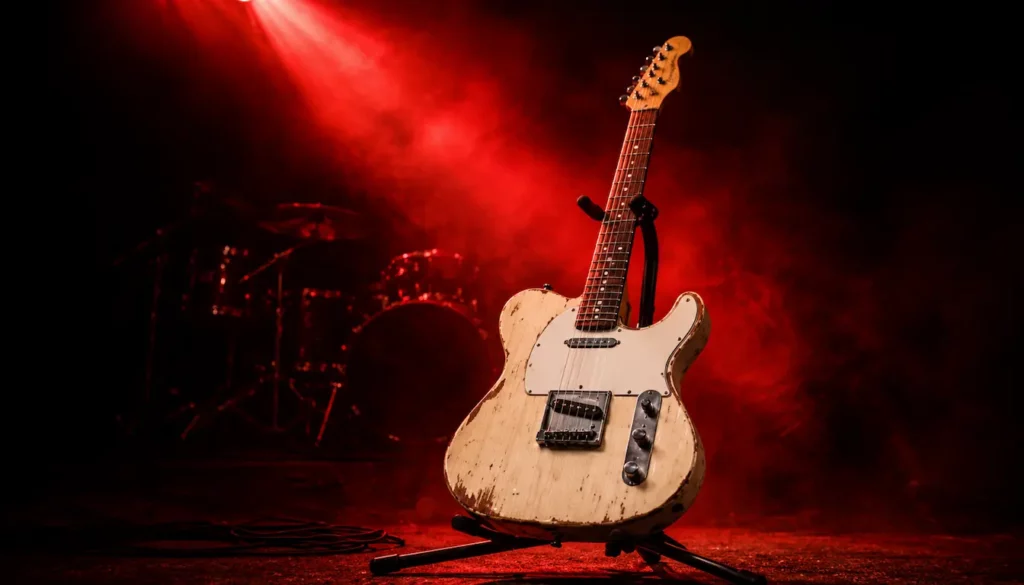
Many legendary guitarists built their sound around Telecasters.
Some well-known Tele players include:
• Keith Richards – The Rolling Stones
• Brad Paisley – modern country guitar virtuoso
• James Burton – pioneer of Tele country guitar
• Joe Strummer – The Clash
Their playing helped make the Telecaster one of the most recognizable guitars in rock history.
⚡ Stratocaster Players Who Changed Guitar History
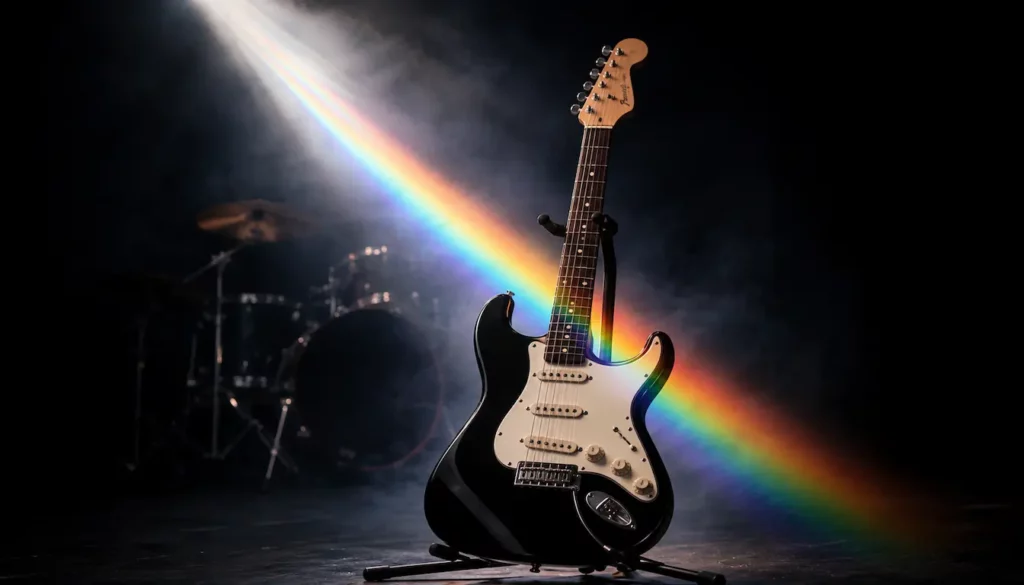
The Stratocaster is equally legendary and has been used by many iconic guitarists.
Some famous Strat players include:
• Jimi Hendrix – revolutionary rock guitarist
• Eric Clapton – blues and rock legend
• Stevie Ray Vaughan – Texas blues powerhouse
• David Gilmour – Pink Floyd lead guitarist
These players helped shape the Strat’s reputation as one of the most expressive electric guitars
ever built.
🎯 Which Guitar Is Better For Beginners?
Both Telecaster and Stratocaster kits are great choices for first-time builders.
However, many beginners find the Telecaster slightly easier because of its simpler
electronics and fixed bridge.
Strat kits offer more tonal variety but may require a bit more setup work due to the
tremolo system.
If your goal is a simple and reliable first guitar build, the Telecaster is often the
easiest starting point.
If you want maximum tonal flexibility, the Stratocaster is a fantastic option.
👉 If you’re interested in Telecaster-style guitars,
you may want to start with our Telecaster Style Guitar Guide For DIY Builders
to learn why this classic design is so popular.
👉 Want to explore the Strat design in more detail?
Check out our Stratocaster Style Guitar Guide For DIY Builders
to understand why Strat-style kits are so versatile.
🎸 Two Legends. Two Different Paths.
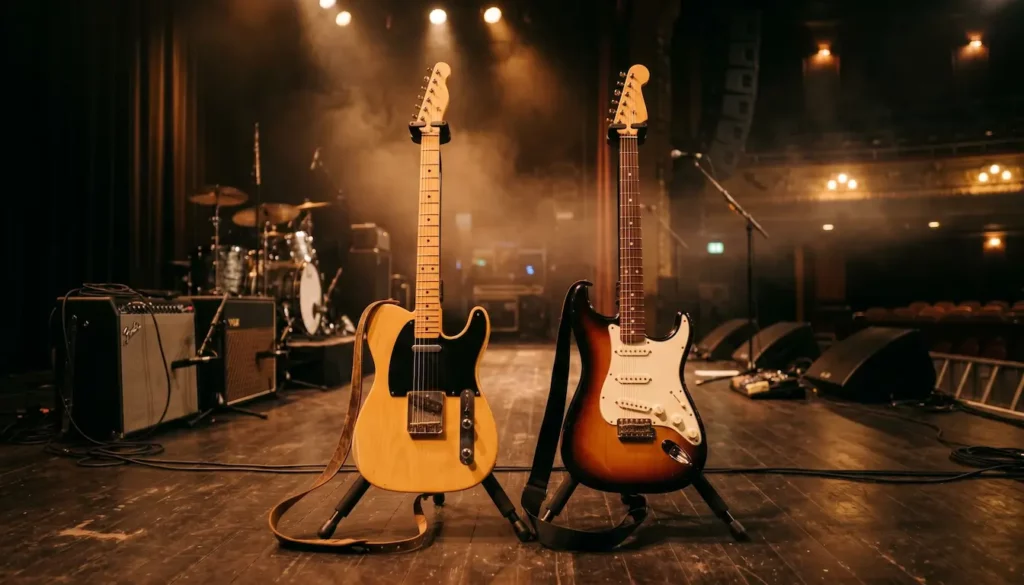
🏁 Final Thoughts…
The Telecaster and Stratocaster are two of the most iconic electric guitars ever created.
Both designs have stood the test of time because they deliver incredible tone, reliability, and versatility.
For DIY guitar builders, choosing between the two usually comes down to
tone preference and playing style.
The Telecaster offers simplicity and punch, while the Stratocaster provides comfort and tonal flexibility.
Either one can become an incredible custom instrument when built with care.
 Ready to Start Adjusting Your Tone?
Here’s your next step —
pick one and go:
 New to guitar kits?
Start with
Step-by-Step Guide To Building
Your First Electric Guitar Kit
and
Essential Tools Every Electric Guitar Kit
Builder Should Have.
Already built a kit?
Jump into
How To Properly Set Up Your
Electric Guitar Kit For Intonation
or
Fixing Common Problems:
Buzzing And Dead Frets.
Chasing better tone?
Head to
Understanding Humbucker
Vs Single Coil Pickups In Kits
or
Playing With Tone Controls:
Tips For Electric Guitar Kits
and start experimenting.
 Your Guitar, Your Build,
Your Sound
You don’t need a custom shop or a tech on speed dial.
All you need is a little guidance, some patience,
and a place to go that shows you what to do next.
Come on man… You got this.
GuitarCrafts
is here to help you along the way.
Craft it. Play it. Own it!