Building an electric guitar kit involves more than bolting parts together.
Many steps require shaping, fitting, or refining components so everything seats correctly
and feels comfortable to play.
Cutting, shaping, and fitting tools are used during these moments —
when parts are made to fit the guitar, not the other way around.
These tools don’t change tone directly, but they strongly influence playability, comfort,
and long-term reliability.
Poorly fitted nuts, sharp fret ends, rough edges, or misaligned parts usually trace back to
rushed or improper shaping work.
This guide explains the tool categories used for cutting and fitting during guitar kit builds,
what each one is meant to do, and how they fit into the overall process.
Each section introduces a tool group and links out to more focused guides where techniques
and use cases are explained in detail.
Why Cutting And Fitting Matter In Guitar Kit Builds
Guitar kits are manufactured to be adaptable, not perfect out of the box.
Wood thickness varies slightly, hardware tolerances differ, and final setup depends on
how parts meet each other during assembly.
Cutting and fitting tools are used to:
-
Refine parts so they seat cleanly
-
Remove small amounts of material safely
-
Improve comfort and feel
-
Prevent stress, binding, or alignment issues
Most mistakes happen when material is removed too quickly or without a clear purpose.
These tools allow builders to work slowly and deliberately, keeping every adjustment controlled.
Before any material is removed, accurate reference points should be established using
measuring and setup tools for electric guitar kits to ensure adjustments are controlled
and intentional.
Core Cutting And Shaping Tools Used In Guitar Kits
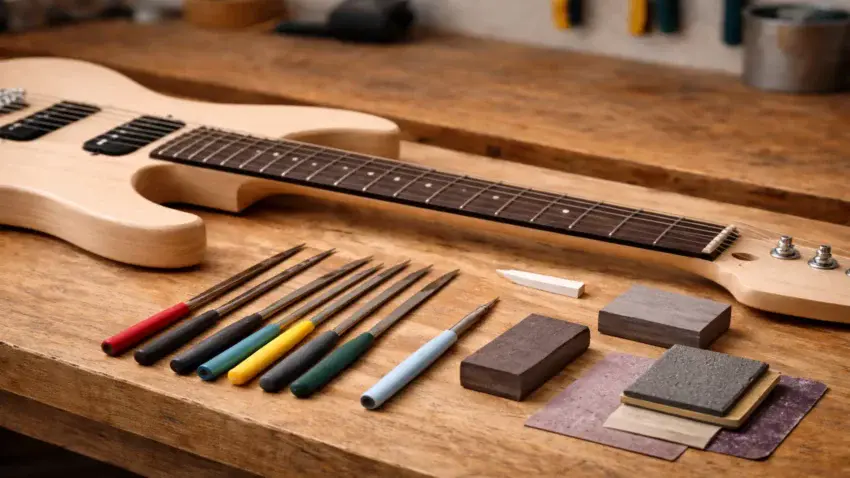
Files And Needle Files
Files are among the most frequently used shaping tools in guitar kit builds.
Needle files, in particular, are used for fine control and detail work.
They are commonly used to:
-
Shape nut slots
-
Dress fret ends
-
Smooth tight corners and edges
-
Adjust small fit issues
Different file shapes serve different purposes, and fine cuts are generally safer
than aggressive ones.
Files are precision tools, not removal tools.
Nut Files And Slotting Tools
Nut files are specialized tools designed to cut clean, controlled slots that match string gauges.
They are used only after measurements confirm adjustment is needed.
They are used to:
-
Lower string height at the nut
-
Improve tuning stability
-
Reduce friction and binding
Because nut material removal is permanent, these tools are used carefully and only when necessary.
Craft Knives And Precision Cutters
Sharp knives are used for trimming, scoring, and cleanup rather than heavy cutting.
They are commonly used to:
-
Clean finish edges
-
Trim tape and shielding
-
Score wood fibers before removal
Sharp blades improve accuracy and reduce tear-out compared to dull tools.
Sandpaper And Abrasives
Abrasives are used to smooth surfaces, refine shapes, and remove tool marks left by files or cutters.
They are used to:
-
Smooth neck and body edges
-
Refine nut and saddle surfaces
-
Prepare surfaces before finishing
Using appropriate grits and progressing gradually prevents over-removal and uneven results.
Fitting Tools For Assembly Accuracy
Small Pliers And Clamps
Pliers and clamps are used to hold, align, or gently position parts during fitting and assembly.
They help with:
-
Holding small components securely
-
Positioning hardware during installation
-
Preventing movement during fitting
These tools are about control, not force.
Flush Cutters And Trimming Tools
Flush cutters are used to trim excess material cleanly without damaging nearby parts.
They are commonly used for:
-
Trimming wire ends
-
Cutting excess zip ties or leads
-
Cleaning up small protrusions
Clean cuts reduce the chance of interference or accidental damage later.
When Cutting And Shaping Tools Are Used During A Build
These tools appear at several points in a guitar kit build:
-
Before final assembly — fitting parts to ensure proper seating
-
During setup — refining nut slots, fret ends, or edges
-
After test fitting — correcting minor alignment or comfort issues
-
During upgrades — adapting parts that weren’t originally included
Most work involves very small material removal. Precision and patience matter more than speed.
How These Tools Fit Into The Bigger Build Process
Cutting and shaping tools work hand-in-hand with measuring tools.
Measurements determine what needs adjustment; shaping tools perform the adjustment itself.
Used correctly, these tools help builders:
-
Avoid forced fits
-
Improve comfort and feel
-
Prevent long-term wear or tuning issues
-
Achieve cleaner, more professional results
The child guides linked from this page break down individual tools and techniques so
each adjustment can be made safely and intentionally.
These shaping and fitting tools are part of the broader set of
essential tools every electric guitar kit builder should have,
which are covered in our main tools overview.
After parts are properly fitted and shaped, reliable operation depends on clean connections,
which are covered in our guide to electronics and wiring tools for electric guitar kits.
Final Thoughts…
Cutting and shaping tools aren’t about modifying a guitar — they’re about finishing it correctly.
Used carefully, they help parts meet cleanly, feel better under the hands,
and function the way they’re meant to.
This page serves as a hub for the tools used to refine fit and finish during electric guitar kit builds.
The related guides below focus on specific tools and scenarios so you can apply each technique with confidence and control.
Ready to Start Adjusting Your Tone?
Check out our other guides:
 If you’re new to guitar kits:
Start with Step-by-Step Guide To Building Your First Electric Guitar Kit and Essential Tools Every Electric Guitar Kit Builder Should Have.
If you already own a kit guitar:
Jump into How To Properly Set Up Your Electric Guitar Kit For Intonation or Fixing Common Problems: Buzzing And Dead Frets.
If you’re chasing better tone:
Head to Understanding Humbucker Vs Single Coil Pickups In Kits or Playing With Tone Controls: Tips For Electric Guitar Kits and start experimenting.
Your Guitar, Your Build, Your Sound
You don’t need a custom shop or a tech on speed dial.
All you need is a little guidance, some patience, and a place to go that shows you what to do next.
Come on man… You got this.
GuitarCrafts is here to help you along the way.
 Craft it. Play it. Own it!
Ready to take your guitar passion beyond the workbench?
See how I built GuitarCrafts.com using the training at Wealthy Affiliate — you can do the same.
Build Your First Website With Wealthy Affiliate (Free)
