

Adjusting the truss rod for proper neck relief in your guitar kit is one of the most important steps in getting your build playing its best. The truss rod controls the slight forward curve of the neck, which affects action, comfort, and whether your strings ring clean or buzz out. When you dial this in correctly, your guitar instantly feels smoother, faster, and easier to play.
This guide walks you through exactly how to adjust the truss rod safely and accurately so your guitar kit ends up with perfect neck relief every time.
👉👉 For a broader overview of neck relief and truss rod adjustments on finished instruments,
see our full guide on adjusting the truss rod on an electric guitar.

🧰 Tools & Gear You’ll Need
Before you adjust the truss rod on your guitar kit, make sure you’ve got the right tools on hand.
These are the essentials that help you measure neck relief accurately, make clean adjustments, and avoid damaging anything in the process.
🌟 Amazon Product Suggestion:
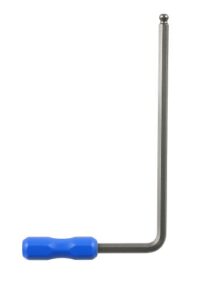
✔️ MusicNomad Premium Truss Rod Wrench
5mm (MN236)
If you’re working on a Martin-style guitar or any kit that uses a 5mm truss rod nut, this wrench is the one you want in your setup bag. The ball-end design makes adjustments easy even at awkward angles, and the ergonomic blue handle gives you tons of control without digging into your hand. MusicNomad tools are known for reliability, and this one delivers smooth, precise neck-relief tweaks every time.
Why It’s Great:
✔️ Designed specifically for Martin 5mm truss rods
✔️Ball-end tip lets you adjust from tight angles
✔️Durable steel construction for long-term use
✔️Comfortable ergonomic handle
✔️Size is laser-etched so you never mix it up with other wrenches
👉 MusicNomad Precision String Action Gauge Ruler
This gauge makes pickup and setup adjustments easy by giving you precise string-to-fret measurements at a glance. The etched markings and clear reference points take out all the guesswork, helping you dial in consistent, reliable action and pickup height every time.
🌟 Amazon Product Suggestion:
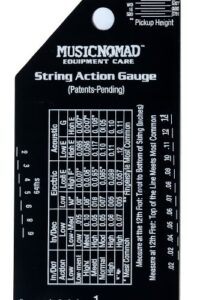
✔️MusicNomad Precision String Action Gauge Ruler
for String Height- Metric, SAE, 64ths
(MN602)
The MusicNomad MN602 String Action Gauge is a precision stainless-steel ruler designed to help you dial in perfect string height on electric, acoustic, and bass guitars. With easy-to-read etched markings in metric, SAE, and 64ths, it takes the guesswork out of action setup and ensures repeatable, pro-level results every time.
Why It’s Great:
✔️Ultra-precise etched measurements — no fading, no guessing
✔️Works for all guitars — electric, acoustic, and bass
✔️Includes action charts for fast, reliable setup targets
✔️Black-on-white contrast makes numbers easy to see under shop lighting
✔️Pocket-size stainless steel design is durable for life
✔️Perfect for accurate 12th-fret action checks on every setup you do
👉 Jivarrry Digital Caliper (Stainless Steel, Large LCD, 6-Inch)
A digital caliper gives you ultra-precise pickup-height measurements down to fractions of a millimeter — far more accurate than a standard ruler. It delivers repeatable, consistent results across all your guitars and makes it easy to return to your exact settings after any setup changes.
🌟 Amazon Product Suggestion:
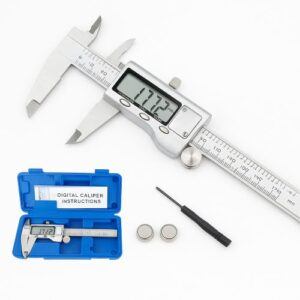
✔️ Jivarry Digital Caliper
(Stainless Steel, Large LCD, 6-Inch)
The Jivarry Digital Caliper is an affordable, accurate measuring tool every woodworker should have. Its smooth stainless-steel slide and large LCD make precise measurements quick and frustration-free, with instant switching between inches, millimeters, and fractions. Ideal for checking thickness, dimensions, hardware sizing, and fine joinery adjustments.
Why it’s great:
✔️Large, clear digital display
✔️Switch between inch/mm/fractions instantly
✔️ Stainless steel body for smooth, accurate travel
✔️ Measures inside, outside, depth & step values
✔️Perfect for tight-tolerance woodworking and tool setup
✔️Comes with case, batteries & mini screwdriver
🛠️ Step-By-Step: How To Adjust the Truss Rod for Proper Neck Relief
Before you start turning the truss rod, it helps to understand the exact process.
These steps walk you through checking your relief, making safe adjustments, and dialing in the perfect neck curve without damaging your guitar kit.
Take it slow, measure often, and let the neck settle between tweaks for the best results.
1. Tune the guitar to pitch
Before touching the truss rod, make sure your guitar kit is fully tuned to standard pitch.
Neck relief changes under string tension, so you always measure it under real playing conditions.
2. Check the current neck relief
Place your straightedge down the center of the fretboard or hold the low E string down at the 1st and last fret.
Use your action gauge or feeler gauge to measure the gap at the 8th fret.
Typical target: about .008″–.012″ of relief for most electric kits.
3. Locate the truss rod adjustment point
Depending on your kit, it will be either:
-
At the headstock (truss rod nut under a cover), or
-
At the heel (access notch near the body)
Your MusicNomad tool will fit most common styles.
4. Adjust the truss rod in small increments
Turn the nut 1/8 to 1/4 turn at a time:
-
Tighten (clockwise) → reduces relief (straightens the neck)
-
Loosen (counterclockwise) → increases relief (adds bow)
Pro Tip 👉 Never force it. If it fights you, stop and re-seat the tool.
5. Re-tune and re-measure
Every adjustment affects tension.
Tune back to pitch → check the 8th-fret gap again → compare your numbers.
Work slowly and let the neck settle between adjustments.
6. Repeat until relief is in the sweet spot
Dial it in until the gap lands right in your comfort zone — usually around .010″ for most kit builders.
This is where playability feels smooth and buzz-free.
7. Check for buzzing or dead spots
Play up and down the neck:
-
Buzzing in lower frets = still too straight → loosen slightly
-
Buzzing higher up = too much bow → tighten slightly
Fine-tune until everything rings clean.
8. Lock in the cover (if you have one)
If your kit uses a truss rod cover at the headstock, reinstall it once everything feels right.
🎸 Final Thoughts…
Dialing in the truss rod is one of those adjustments that can completely transform how your guitar kit plays. A small turn in either direction can mean the difference between a stiff, buzzy neck and a smooth, comfortable setup that feels great in your hands.
Once you set the proper relief, every other part of your setup — action, intonation, and pickup height — becomes easier to dial in.
Take your time, measure carefully, and make small adjustments.
With the right tools and a little patience, you can get your neck relief right where it needs to be and unlock the true playability of your build.
Ready to Start Adjusting Your Tone?
Check out our other guides:
👉 If you’re new to guitar kits:
Start with Step-by-Step Guide To Building Your First Electric Guitar Kit and Tools Every Electric Guitar Kit Builder Should Have.
👉 If you already own a kit guitar:
Jump into How To Properly Set Up Your Electric Guitar Kit For Intonation or Fixing Common Problems: Buzzing And Dead Frets.
👉 If you’re chasing better tone:
Head to Understanding Humbucker Vs Single Coil Pickups In Kits or Playing With Tone Controls: Tips For Electric Guitar Kits and start experimenting.
Your Guitar, Your Build, Your Sound
You don’t need a custom shop or a tech on speed dial.
All you need is a little guidance, some patience, and a place to go that shows you what to do next.
Come on man… You got this.
GuitarCrafts is here to help you along the way.
 Craft it. Play it. Own it!
Ready to take your guitar passion beyond the workbench?
See how I built GuitarCrafts.com using the training at Wealthy Affiliate — you can do the same.
👉👉 Build Your First Website With Wealthy Affiliate (Free)

This is why I enjoy reading blogs’ especially on topics I know nothing about. My daughter got a guitar for her birthday years ago and I didn’t even know what a pick was. Now I know what that and a truss rod is. 🙂 Thank you so much for your guidance. I’ll bookmark this for future needs! It’s really resourceful!
I love hearing that! It’s always fun when something new clicks, especially with guitar stuff. It’s like learning a new language, but way more fun. A pick and a truss rod might seem small, but they make a huge difference in how a guitar feels and plays. Who knows, maybe you’ll be adjusting that truss rod yourself someday. Glad you found it helpful, and I’m happy it earned a spot in your bookmarks!
Thank you so much,
~Wayne
You’ve done it again—another outstanding guide on something that often confuses first-time builders: adjusting the truss rod for perfect neck relief. Your clear breakdown of when to loosen versus tighten, checking relief with a straightedge or feeler gauge, and planning for small, gradual turns takes the mystery—and the stress—right out of the process.
This site continues to be such an invaluable resource. Every time I visit, I’m met with guides that are both authoritative and approachable—perfect for building confidence and craftsmanship. I’ll definitely be heading back whenever I need trustworthy, hands-on advice for my next build. Thank you for the thoughtful insight!
Thank you so much for the kind words! I know truss rod adjustments can feel intimidating the first time you try them, so I’m glad the step-by-step approach helped take the pressure off. Once you get the hang of those small, careful turns and learn to read the neck’s response, it really does become second nature.
It means a lot to hear that you find the guides both trustworthy and approachable—that’s exactly the balance I aim for. I want every builder, no matter their experience level, to feel confident tackling these kinds of adjustments.
Appreciate you stopping by, and I look forward to hearing about your next build when the time comes!
Thanks again,
~Wayne