
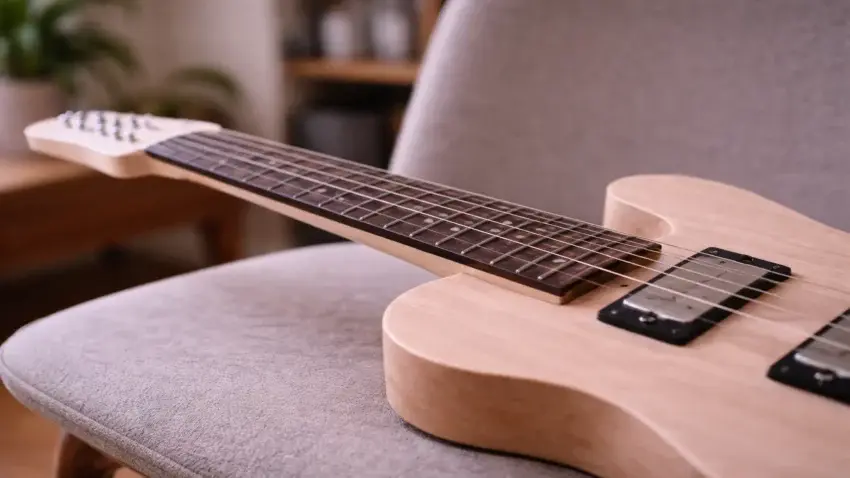
Guitar action refers to the height of the strings above the frets.
It’s one of the biggest factors in how an electric guitar feels to play.
Action doesn’t change pickups, wiring, or tone controls —
but it directly affects comfort, speed, accuracy, and fatigue.
Two guitars with the same hardware can feel completely different
purely because of action height.
This guide explains what guitar action is, what it influences,
and why it matters so much during setup — before you start adjusting anything.
This article is part of the Electric Guitar Action & Playability Setup guide,
which explains how string height fits into the full setup process after neck relief is set.
What “Action” Actually Means
Action is simply the distance between the strings and the frets.
That distance determines:
-
How hard you have to press to fret notes
-
How easily notes bend
-
How forgiving the guitar feels during normal playing
Lower action generally feels faster and lighter.
Higher action provides more clearance and stability.
Neither is “right” on its own — action is about balance.
Why Action Has Such a Big Impact on Feel
Action directly affects fretting effort.
If action is too high:
-
Notes require more pressure
-
Hands tire faster
-
Chords feel stiff and uncooperative
If action is too low:
-
Buzzing may appear
-
Notes can choke during bends
-
Playing feels inconsistent across the neck
Small changes in action can make a guitar feel completely different —
more than many beginners expect.
Action Is Personal (And That’s Normal)
There is no universal “perfect” action.
Action preferences vary based on:
-
Playing style
-
String gauge
-
Hand strength
-
Musical genre
-
Tolerance for fret buzz
Some players prefer ultra-low action and accept a little noise.
Others prefer slightly higher action for stability and control.
A good setup supports the player, not a number on a chart.
Action Works With the Neck, Not Against It
Action adjustments only make sense after neck relief is correct.
If the neck has too much bow or back-bow:
-
Lowering action won’t fix buzz
-
Raising saddles may hide problems temporarily
-
Playability will feel inconsistent
That’s why action is always addressed after neck relief — never before.
Why Chasing “Lowest Possible Action” Backfires
Many beginners aim for the lowest action they’ve heard about online.
The problem:
-
Every guitar has limits
-
Every fretboard is different
-
Wood movement is real
Action that’s too low often creates:
-
New buzz problems
-
Choking notes
-
Frustration during setup
Good action feels easy and reliable — not fragile.
Action Affects Intonation (Later)
Action doesn’t just affect feel — it also affects tuning accuracy.
Higher action requires more pressure to fret notes, which can pull notes slightly sharp.
Lower action reduces that effect.
That’s why intonation is adjusted after action is finalized.
Understanding Action Makes Setup Easier
Before touching saddles or bridges, understanding action helps you:
-
Make smaller, smarter adjustments
-
Avoid chasing problems
-
Recognize when action isn’t the real issue
This knowledge alone prevents many unnecessary setup mistakes.
What Comes Next?
Once you understand what action is and why it matters,
the next step is learning how
string height interacts with playability and fret buzz in real use.
👉 Next: Low Action vs Fret Buzz — Finding the Balance
Final Thoughts…
Action isn’t about copying someone else’s numbers.
It’s about how the guitar feels in your hands.
Understanding this first makes every adjustment calmer and more intentional.
GuitarCrafts is here to help you build guitars that feel good to play — not just good on paper.
🎸 Craft it. Play it. Own it. 🎸
Ready to take your guitar passion beyond the workbench?
See how I built GuitarCrafts.com using the training at Wealthy Affiliate — you can do the same.
 Build Your First Website With Wealthy Affiliate (Free)
