
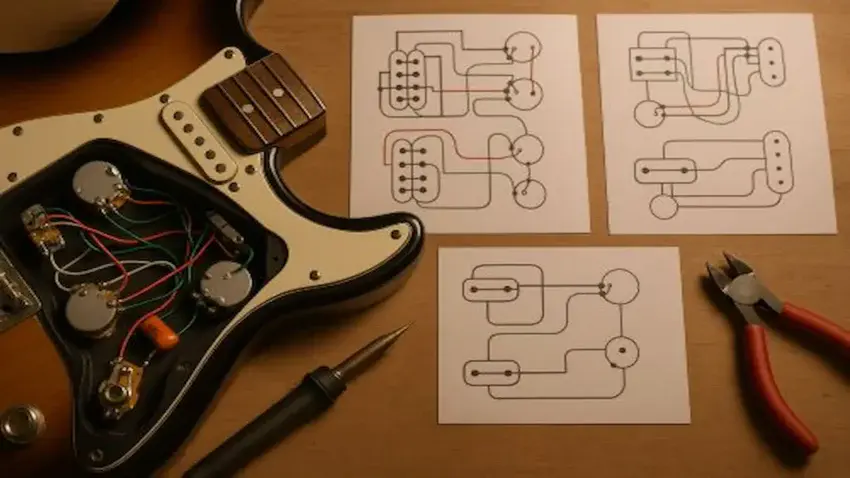
Custom wiring patterns can completely transform the way your electric guitar responds, feels, and sounds. In this guide to guitar wiring patterns, we’ll explore the most useful modifications —
from coil-splitting and series/parallel switching to phase reversal and specialty tone circuits —
so, you can shape your guitar’s voice far beyond the limits of a stock setup.
Whether you’re after tighter clarity, thicker punch, or totally unique textures, a few smart wiring changes can unlock tones that make your guitar truly your own.

🛠️ Tools You’ll Need Before Choosing a Wiring Pattern
Before you dive into wiring patterns, make sure you’ve got the right tools ready. These will make each modification cleaner, easier, and way more reliable.
🎸Soldering Station
For clean, reliable wiring patterns, a quality soldering station is the foundation of your entire setup. A stable iron with temperature control helps you make strong joints that won’t fail later.
🌟 Amazon Product Suggestion:
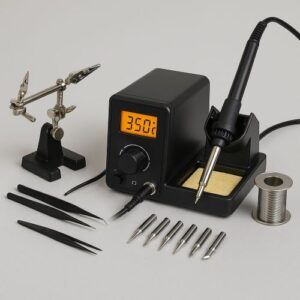
✔️ YIHUA 926 III Digital Soldering Station
Precision Temp Control + Full Accessory Kit
(60W)
This upgraded YIHUA station delivers fast heating, stable temps, and way better than those bargain-bin soldering pens.. It includes multiple tips, a solder sucker, tweezers, helping hands, and a smooth temperature dial — everything you need for clean shielding, wiring repairs, and pickup installs.
Why It’s Great:
✔ Digital temperature control — stable heat = cleaner, stronger solder joints
✔ 60W fast-heating element — reaches set temp quickly for efficient work
✔ Includes 6 precision tips — ideal for tight cavities and detailed guitar wiring
✔ Helping hands + stand — keeps parts steady while you solder
✔ Lead-free solder included — everything you need in one kit
✔ Auto sleep + safety features — runs cooler & safer in a home workshop
✔ Much higher quality than typical “best seller” soldering pens
🎸Multimeter
Before changing wiring layouts, you’ll need a dependable multimeter to confirm continuity, check grounds, and diagnose any issues that pop up during your mod.
🌟 Amazon Product Suggestion:
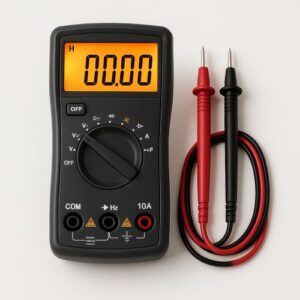
✔️ KAIWEETS 6000-Count Digital Multimeter
This KAIWEETS multimeter is one of the best budget-friendly meters for guitar electronics. With accurate auto-ranging, fast continuity response, and the ability to measure resistance down to fine increments, it’s perfect for checking whether your shielding makes proper electrical contact — and for diagnosing wiring issues inside your guitar kit.
Why It’s Great:
✔ Continuity check — instantly verifies connections
✔ Resistance readings — confirms grounds & wiring health
✔ Auto-ranging — no guessing which setting to use
✔ Bright backlit screen — easy to read inside control cavities
✔ Safety-rated, sturdy design — great for workshop use
✔ Top-rated & affordable — excellent value for guitar builders
It includes durable test leads, a bright backlit display, and reliable build quality that makes it ideal for beginners and experienced builders alike.
🎸Instrument Cable
Once your wiring pattern is complete, a good instrument cable ensures your work pays off with a clean, noise-free signal every time you plug in.
🌟 Amazon Product Suggestion:
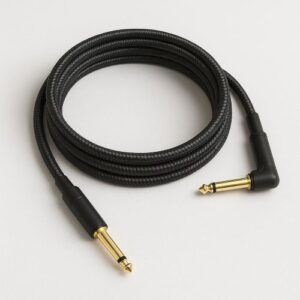
✔️ Ernie Ball Braided Instrument Cable
(18ft – Straight/Angle)
This Ernie Ball cable gives you a clean, quiet signal that actually shows off your shielding work. The braided jacket keeps it tangle-free and durable, and the straight/angle plug setup is perfect for most electric guitar jacks.
Why It’s Great:
✔ Noise-free dual shielding
✔ Ultra-durable braided jacket
✔ Straight + right-angle connectors
✔ Gold-plated plugs for better contact
✔ Smooth, reliable signal for any guitar
🎯Understanding Guitar Wiring Patterns Coil Split Wiring
Custom wiring patterns let you shape your guitar’s voice in ways factory setups simply can’t match. Whether you want more clarity, heavier punch, or completely unique switching options, each pattern below brings its own character and function to your guitar kit.
These are the most useful and beginner-friendly wiring mods you can try —
And every one of them can be done with the tools you just saw above.
🎸 1. Coil-Split Wiring
Coil-splitting lets you turn a full humbucker into a single-coil with the pull of a switch
(usually a push-pull pot).
It gives you brighter, sharper tones perfect for clean picking, funk grooves, and classic single-coil sparkle — without needing an entirely different guitar.
Why players love it:
-
Adds versatility without extra pickups
-
Brighter highs and more articulation
-
Perfect for clean tones and rhythm playing
🎸 2. Series Wiring
Series wiring boosts your output by running both pickup coils one-after-the-other, creating a louder, fatter sound with more midrange push.
It’s a great mod for heavier tones, thick leads, and punchier rhythm parts.
Tone character:
-
Higher output
-
Fuller mids
-
Strong, aggressive response
🎸 3. Parallel Wiring
Parallel wiring is the opposite of series — the coils run side-by-side instead of stacked.
The result is a cleaner, clearer humbucker tone with less output but WAY more articulation.
What you get:
-
Brighter tone
-
Glassy clarity
-
Lower noise than single coils
Great for players who want clarity without losing hum-cancelling performance.
🎸 4. Phase Reversal
Phase reversal flips one pickup’s electrical phase when both pickups are active.
The two signals cancel certain frequencies, giving you a thin, funky, “out-of-phase” sound used by legends like Peter Green.
Where it shines:
-
Blues
-
Funk
-
Experimental tones
-
Sharp, hollow quack
It’s one of the coolest mods you can add with just a simple DPDT switch.
🎸 5. Kill Switch Wiring
A kill switch instantly cuts your signal, letting you create stutter-style effects made famous by
Tom Morello and Buckethead. It’s simple to wire and adds a ton of stage personality.
What it does:
-
Cuts your signal at the press of a button
-
Creates rhythmic stutters and machine-gun effects
-
Requires only one switch and two solder joints
Easy, fun, and wild.
🎸 6. Treble Bleed Circuit
The treble-bleed mod keeps your high-end from disappearing when you lower your guitar’s volume knob. It’s a tiny circuit (one capacitor + one resistor) that makes your volume control WAY more usable.
Why it’s a must-have:
-
Volume knob stays clear instead of muddy
-
Great for smooth swells
-
Perfect for players who ride the volume for clean/crunch transitions
One of the cheapest upgrades with the biggest payoff.
🎸 7. Optional: Blend-Pot Mod
A blend pot lets you “mix” your pickups instead of running one or the other.
This gives you tones you can’t get from a standard 3-way or 5-way switch.
Benefits:
-
Smoothly fade between neck and bridge
-
Create unique mid-position tones
-
Excellent for studio and session work
A killer mod for players wanting more subtle tone control.
⭐ Final Thoughts…
Wiring patterns aren’t just for pros — they’re one of the easiest ways to unlock a completely new palette of tones in your guitar kit.
With the right tools and a clear wiring plan, you can customize your sound in ways that store-bought guitars can’t match.
Take your time,
follow your diagram,
And always check each connection with your multimeter before buttoning up the cavity.
A few smart wiring choices can transform your guitar from “stock” to seriously expressive.
Ready to Start Adjusting Your Tone?
Check out our other guides:
👉 If you’re new to guitar kits:
Start with Step-by-Step Guide To Building Your First Electric Guitar Kit and Essential Tools Every Electric Guitar Kit Builder Should Have.
👉 If you already own a kit guitar:
Jump into How To Properly Set Up Your Electric Guitar Kit For Intonation or Fixing Common Problems: Buzzing And Dead Frets.
👉 If you’re chasing better tone:
Head to Understanding Humbucker Vs Single Coil Pickups In Kits or Playing With Tone Controls: Tips For Electric Guitar Kits and start experimenting.
Your Guitar, Your Build, Your Sound
You don’t need a custom shop or a tech on speed dial.
All you need is a little guidance, some patience, and a place to go that shows you what to do next.
Come on man… You got this.
GuitarCrafts is here to help you along the way.
 Craft it. Play it. Own it!
Ready to take your guitar passion beyond the workbench?
See how I built GuitarCrafts.com using the training at Wealthy Affiliate — you can do the same. Build Your First Website With Wealthy Affiliate (Free)

This guide does an excellent job showing how custom wiring can transform your guitar’s voice—going well beyond the basics. I especially appreciate the clear breakdown of tonal wiring techniques—from coil-splitting and series vs. parallel setups to phase switching—highlighting how each configuration can dramatically shape your sound. The emphasis on understanding Seymour Duncan’s color code, neat wiring practices, and choosing the right wire type for durability and tone really sets this apart—a perfect mix of DIY practicality and tonal creativity. It’s empowering to see that simple wiring tweaks can open up entirely new sonic possibilities. For someone experimenting with these mods, is there a particular wiring technique—like coil-splitting or phase switching—that tends to surprise players the most when they try it for the first time?
Thank you so much! I’m glad the guide resonated! It’s amazing how much creative flexibility proper wiring can unlock.
For many players experimenting with these mods, phase switching tends to be the biggest surprise. The scooped, slightly nasal tone it produces can be quite different from what people expect, and it often sparks a whole new approach to using their pickups. Coil-splitting is also popular, but because it mostly mimics single-coil tones, it usually feels more familiar. Phase switching can really make someone rethink what’s possible from the same set of pickups.
It’s always rewarding to see builders discover these sonic possibilities and start experimenting, They quickly realize just how transformative wiring tweaks can be!
Thanks again,
~Wayne
Thanks for this! I’ve helped with a few basic rewires before, but I never fully understood how much series vs. parallel wiring or phase reversal could completely change the tone. Your explanations make a lot of sense, and I like that you highlight both the practical steps and the tonal impact. I’m curious—have you experimented with combining coil-splitting and phase reversal in the same guitar? I wonder how dramatic the difference would be in real playing situations. Thanks again. This is an informative guide!
Thanks so much! I’m glad the guide helped clarify how series, parallel, and phase changes affect tone. They really do make a noticeable difference. I have experimented with combining coil-splitting and phase reversal in the same guitar, and the results can be quite dramatic, especially when switching between pickups. It gives you some unique, almost quirky tones that can really make certain riffs or chord voicings stand out. It’s a fun way to explore creative sounds without adding more pickups.
Definitely worth experimenting with on a DIY build!
Thanks again,
~Wayne