Building an electric guitar kit isn’t always a bolt-together process.
In many builds, parts need to be trimmed, shortened, or adjusted before they’ll fit correctly.
That’s where cutting tools come in.
This guide focuses specifically on cutting tools used during electric guitar kit builds,
what each one is used for, and where they fit in the overall shaping and fitting process.
These tools remove material — carefully and deliberately — so parts fit the guitar,
not the other way around.
For a broader view of cutting, shaping, and fitting as a system, start with the main guide:
Cutting, Shaping, and Fitting Tools for Electric Guitar Kits.
Why Cutting Tools Matter in Kit Builds
Most cutting in guitar kit builds is light, controlled work, not heavy construction.
Cutting tools are commonly used to:
-
Trim nuts to length
-
Shorten saddle screws
-
Cut fretwire
-
Modify pickguards or control plates
-
Adjust small wood or plastic components
Rushed or imprecise cutting often leads to:
-
Poor fit
-
Sharp edges
-
Extra sanding or reshaping later
Clean cuts make everything that follows easier.
Common Cutting Tools You’ll Use
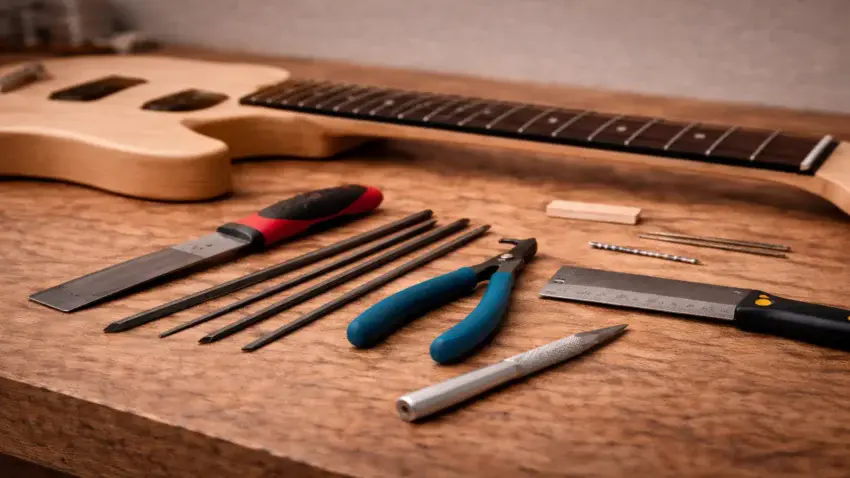
Hand Files (Flat, Round, and Needle Files)
Files are the most frequently used cutting tools in guitar kit builds.
They’re used to:
-
Shape nuts and saddles
-
Smooth fret ends
-
Adjust small wood or plastic parts
Files remove material slowly, which is exactly what you want for fitting work.
Flush Cutters
Flush cutters are designed to cut close without crushing material.
They’re commonly used for:
-
Trimming fretwire ends
-
Cutting small hardware leads
-
Removing excess wire or pins
Clean cuts reduce the amount of filing needed afterward.
Hobby Knife or Utility Knife
Knives are used for light trimming, not force.
Typical uses include:
-
Cleaning nut slots before filing
-
Trimming tape or shims
-
Scoring finish lines before sanding
Sharp blades matter more than pressure.
Small Saw or Razor Saw
Some kits require minor wood trimming.
Small saws are used for:
-
Cutting nut blanks
-
Trimming wooden shims
-
Adjusting small wooden parts
These cuts should always be shallow and controlled.
When Cutting Happens in the Build
Cutting usually happens before final fitting and before sanding or polishing.
Common moments include:
-
Initial nut and saddle sizing
-
Fret end preparation
-
Component fit checks before installation
Once material is removed, it can’t be put back —
which is why cutting tools are used slowly and deliberately.
Cutting vs Shaping vs Fitting
Cutting tools remove material.
Shaping tools refine the surface.
Fitting tools finalize comfort and alignment.
Understanding that distinction prevents over-cutting and unnecessary rework.
When fit issues start early, stepping back to the cutting tools used in the build process
is often what prevents small inaccuracies from carrying through the rest of the guitar.
Final Thoughts…
Good cutting tools don’t speed up a build — they prevent mistakes.
When cuts are clean and controlled, shaping and fitting become predictable instead of corrective.
That’s what keeps guitar kit builds comfortable, accurate, and frustration-free.
Ready to Start Adjusting Your Tone?
Check out our other guides:
 If you’re new to guitar kits:
Start with Step-by-Step Guide To Building Your First Electric Guitar Kit and Essential Tools Every Electric Guitar Kit Builder Should Have.
If you already own a kit guitar:
Jump into How To Properly Set Up Your Electric Guitar Kit For Intonation or Fixing Common Problems: Buzzing And Dead Frets.
If you’re chasing better tone:
Head to Understanding Humbucker Vs Single Coil Pickups In Kits or Playing With Tone Controls: Tips For Electric Guitar Kits and start experimenting.
Your Guitar, Your Build, Your Sound
You don’t need a custom shop or a tech on speed dial.
All you need is a little guidance, some patience, and a place to go that shows you what to do next.
Come on man… You got this.
GuitarCrafts is here to help you along the way.
 Craft it. Play it. Own it!
Ready to take your guitar passion beyond the workbench?
See how I built GuitarCrafts.com using the training at Wealthy Affiliate — you can do the same.
Build Your First Website With Wealthy Affiliate (Free)
