
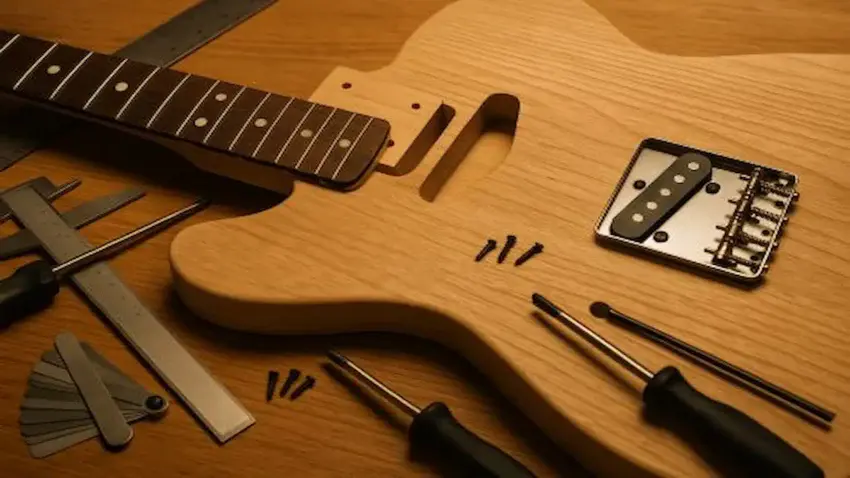
Setting up the bridge and neck is where your
electric guitar kit finally starts to feel like a real instrument.
This is the stage where everything lines up —
your action, your intonation, your neck angle,
and the overall playability of the entire build.
Get this part right, and your guitar will feel
smooth, stable, and ready for fine-tuning.
Rush it, and you’ll fight buzzing, tuning problems,
and a neck that never quite sits where it should.
This guide walks you through the exact steps to
mount the neck, align the bridge, dial in the action,
and make sure everything sits perfectly before you
move into wiring and final setup.
Let’s make this kit play like you built it with purpose.
👉 Quick Setup Fix (Start Here)
If your guitar doesn’t feel right after assembly,
check this first:
- Buzzing or high action?
Check neck angle and bridge height - Strings not lining up?
Recheck neck alignment in the pocket - Tuning feels unstable?
Make sure the bridge is seated and adjusted properly
Getting these basics right early will save you hours of frustration later.
👉 This adjustment is part of my Electric Guitar Neck & Setup Guide,
which covers the core setup tasks that affect how a guitar feels and plays.

🛠️ Tools & Gear You’ll Want For a Smooth Bridge and Neck Setup
Getting the bridge and neck aligned the right way is much easier
when you’ve got the proper tools on the bench.
These are the essentials that make measurements accurate,
adjustments smooth, and the whole setup process a lot more controlled.
🎯 MusicNomad Precision String Action Gauge Ruler
If you want low action without fret buzz,
this precision ruler is the tool that keeps your setup dialed in perfectly.
🌟 Amazon Product Suggestion:
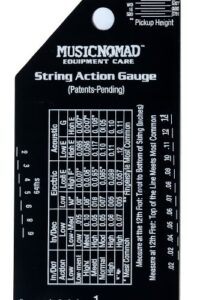
✔️MusicNomad Precision String Action Gauge Ruler
for String Height- Metric, SAE, 64ths
(MN602)
The MusicNomad MN602 String Action Gauge is a precision stainless-steel ruler
designed to help you dial in perfect string height on
electric, acoustic, and bass guitars.
With easy-to-read etched markings in metric, SAE, and 64ths,
it takes the guesswork out of action setup and
ensures repeatable, pro-level results every time.
Why It’s Great:
✔️ Ultra-precise etched measurements for accurate setups
✔️ Works for electric, acoustic, and bass guitars
✔️ High-contrast markings for easy reading in any lighting
✔️ Durable stainless steel design for long-term use
🧰 25Pcs Guitar Repairing Tools Kit Setup Kit
This all-in-one kit packs the essential files, wrenches,
and setup tools you’ll reach for over and over during your build.
🌟 Amazon Product Suggestion:
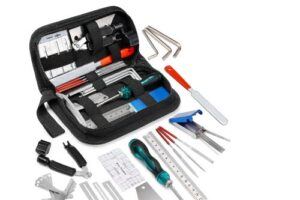
✔️25Pcs Guitar Repairing Tools Setup Kit
(with Carry Bag)
This 25-Piece Guitar Repair Tools Setup Kit gives you all the essential tools needed
for adjusting action, filing frets, setting intonation, and performing basic maintenance on
electric, acoustic, bass, or ukulele.
Compact, organized, and ideal for beginners
or experienced DIY guitar techs.
Why It’s Great:
✔️ All-in-one kit with essential setup tools
✔️ Ideal for pickup, nut, and bridge adjustments
✔️ Works for electric and acoustic guitar maintenance
✔️ Compact case with affordable, beginner-friendly value
📐 Jivarrry Digital Caliper
Accurate measurements matter,
and this digital caliper makes checking
thickness, spacing, and hardware fit effortless.
🌟 Amazon Product Suggestion:
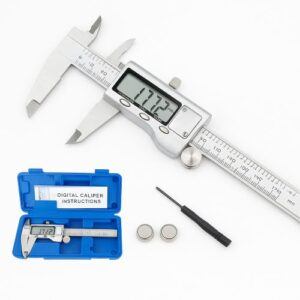
✔️ Jivarry Digital Caliper
(Stainless Steel, Large LCD, 6-Inch)
The Jivarry Digital Caliper is an affordable, accurate tool
every guitar builder should have for dialing in precise measurements.
With a smooth stainless-steel slide, a large easy-to-read LCD,
and quick switching between inches, millimeters, and fractions,
it makes setting pickup height, string action,
and hardware spacing fast and consistent.
Why it’s great:
✔️Large digital display for easy, precise measurements
✔️Switch between inch, mm, and fractions instantly
✔️ Measures pickup height, action, and hardware spacing
✔️ Durable, accurate tool for consistent guitar setups
⚡KAIWEETS 6000-Count Digital Multimeter
When it’s time to test continuity, diagnose wiring issues,
or check output, this multimeter has your back.
🌟 Amazon Product Suggestion:
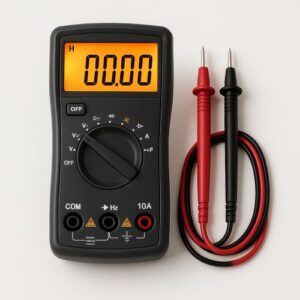
✔️ KAIWEETS 6000-Count Digital Multimeter
This KAIWEETS multimeter is one of the best budget-friendly meters for guitar electronics.
With accurate auto-ranging, fast continuity response,
and the ability to measure resistance down to fine increments,
it’s perfect for checking whether your shielding makes proper electrical contact —
and for diagnosing wiring issues inside your guitar kit.
Why It’s Great:
✔ Continuity check for fast wiring verification
✔ Accurate resistance readings for grounding and diagnostics
✔ Auto-ranging for quick, easy use
✔ Bright backlit display for work inside control cavities
🔥YIHUA 926 III Soldering Station
A stable soldering station makes every wiring job cleaner, safer,
and far more reliable — exactly what this unit delivers.
🌟 Amazon Product Suggestion:
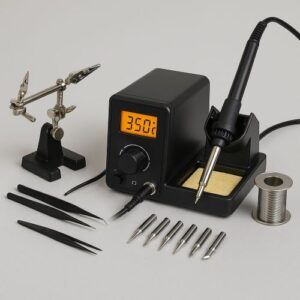
✔️ YIHUA 926 III Digital Soldering Station
Precision Temp Control + Full Accessory Kit
(60W)
This upgraded YIHUA Soldering Station delivers fast heating, stable temps,
and way more control than the cheap “best-seller” soldering kits.
It includes multiple tips, a solder sucker, tweezers, helping hands,
and a smooth temperature dial — everything you need for
clean shielding, wiring repairs, and pickup installs.
Why It’s Great:
✔ Digital temperature control for clean, strong solder joints
✔ Fast-heating 60W element for efficient work
✔ Precision tips ideal for tight cavities and wiring
✔ All-in-one kit with stand and safety features
🧰 Step-By-Step: Setting Up the Bridge and Neck on Your Guitar Kit
1. Test-Fit the Neck in the Pocket
Slide the neck into the pocket and make sure it
seats fully with no rocking, gaps, or twist.
A snug fit is ideal — too loose and you’ll fight alignment later.
Pro Tip 👉 If the neck rocks front-to-back,
sand ONLY the high spots in the pocket, not the neck.
2. Install the Neck Screws or Bolts
Clamp the neck lightly in place, flip the guitar over,
and drive the screws or bolts in straight.
Tighten them evenly so the neck doesn’t pull to one side.
Pro Tip 👉 If your kit uses inserts, thread them in slowly and keep everything perfectly perpendicular.
3. Line Up the Bridge to the Centerline
Use a straightedge running down the neck to the bridge area.
Set the bridge so the strings will run evenly over the fretboard,
not leaning toward one side.
Make sure the saddles are roughly halfway forward in their travel —
this gives you room to intonate later.
4. Mount the Bridge or Bridge Plate
Once you’re confident the alignment is correct,
mark your mounting holes.
Drill pilot holes, then screw the bridge or base plate down tight to the body.
Pro Tip 👉 Always drill pilots first.
Driving screws directly into hardwood can crack the finish
or pull the screw off-angle.
5. Check Scale Length Before Locking It In
Measure from the inside edge of the nut to the 12th fret.
Double that number —
that’s your exact scale length.
The bridge’s high E saddle should sit right at that distance.
Your low E saddle should be a little farther back to allow for proper intonation.
6. Install the Bridge Ground Wire
Feed the ground wire into the cavity so it contacts the
underside of the bridge plate or tremolo claw.
You’ll solder the other end later during wiring.
Press it down so the bridge fully touches it when mounted.
7. Restring the Guitar Lightly
Put on the strings, but only to partial tension.
This lets the neck settle and reveals any alignment or
action issues before you tighten everything down.
8. Check Neck Relief
Sight down the neck or use your feeler gauges.
A slight forward bow (about .010″ at the 8th fret)
is perfect for early setup.
Adjust the truss rod if needed — small turns only.
9. Rough-Set Your Action
Raise or lower the saddles so the strings clear the frets comfortably.
You can fine-tune this after intonation, but get it close now.
Pro Tip 👉 Aim for about 1.5–2.0mm on the
high E and 2.0–2.5mm on the low E for a solid starting point.
10. Final Neck Alignment Check
Make sure the strings sit evenly over each side of the fretboard.
If the spacing looks off, loosen the screws and nudge the neck into perfect position,
then retighten.
11. Lock Down All Hardware
Once everything is aligned and the action is close,
tighten all screws, nuts, and mounting hardware.
This locks the geometry in place before you move on to wiring or full setup.
🎸 Final Thoughts…
Getting the bridge and neck set up correctly is one of the
biggest steps in turning your guitar kit into a truly playable instrument.
With everything aligned, tightened down, and sitting where it’s supposed to,
the rest of the build becomes smoother —
Wiring, intonation, action, and final tweaks all fall into place.
Take your time here, make small adjustments, and let the guitar settle as you go.
The better this foundation is, the better your guitar will feel every time you pick it up.
Ready to Start Adjusting Your Tone?
Check out our other guides:
👉 If you’re new to guitar kits:
Start with Step-by-Step Guide To Building Your First Electric Guitar Kit
and Essential Tools Every Electric Guitar Kit Builder Should Have.
👉 If you already own a kit guitar:
Jump into How To Properly Set Up Your Electric Guitar Kit For Intonation
or Fixing Common Problems: Buzzing And Dead Frets.
👉 If you’re chasing better tone:
Head to Understanding Humbucker Vs Single Coil Pickups In Kits
or Playing With Tone Controls: Tips For Electric Guitar Kits and start experimenting.
Your Guitar, Your Build, Your Sound
You don’t need a custom shop or a tech on speed dial.
All you need is a little guidance, some patience,
and a place to go that shows you what to do next.
Come on man… You got this.
GuitarCrafts is here to help you along the way.
 Craft it. Play it. Own it!
This post is a fantastic deep dive into one of the trickiest parts of building an electric guitar kit—setting up the bridge and neck just right. I love how it breaks down the steps clearly and emphasizes how these adjustments impact playability and tone. It’s great to see detailed tips on intonation and neck relief, which can be intimidating for beginners but are so crucial for getting that perfect feel. A couple of questions: Do you have any favorite tools or gadgets that make neck and bridge setup easier or more precise for DIY builders? How often do you recommend checking and adjusting the setup once the guitar is in regular use?
Thanks for sharing such a thorough guide! ~Leahrae
Thanks so much, Leahrae! I’m really glad the post helped break things down… Neck and bridge setup can definitely feel overwhelming at first, but once you understand how it all works together, it gets a lot more approachable. Great questions, too! I’d say a good, notched straightedge and fret rocker are must-haves for precision, and I’m a big fan of digital string action gauges. They take the guesswork out of measurements. As for ongoing maintenance, I usually recommend checking the setup every few months, especially with seasonal humidity changes or after lots of playing. A small tweak here and there can keep everything feeling dialed in.
Thanks again!
What a great guide! Setting up the bridge and neck really is the heart of getting an electric guitar kit to feel like a real instrument instead of just parts bolted together. I like how you broke it down into approachable steps and emphasized patience — that’s key, since rushing adjustments usually leads to buzzing strings or awkward action. The way you compared setup to a dance party made it fun and relatable too. I also appreciate the reminder that a little relief in the neck is normal; so many beginners chase a perfectly straight neck without realizing it can make playability worse. Pairing the setup with amp exploration is a nice touch, since tone and feel go hand in hand. Overall, this makes the process less intimidating and encourages players to learn their instrument inside out. Inspiring stuff!
Thank you so much! I’m thrilled to hear the guide made the bridge and neck setup feel approachable. Patience really is everything, and rushing almost always leads to headaches. I’m glad the “dance party” analogy landed! It makes the process a little more fun, right? You’re spot-on about neck relief; a bit of natural bow is actually great for playability. Pairing setup with amp exploration is one of my favorite ways to connect feel and tone, so I’m glad that resonated.
I really appreciate you taking the time to share your thoughts!
~Wayne
Wow, this post is great for beginners. I never knew that setting the neck and bridge is so important. The way you explain string height and neck relief is easy to understand. Glad you talked about using small tools and being careful! Playing a chord should feel smooth, and your tips help with that. I also like the part about using an amp to find good sound. I feel ready to try building a guitar now.
Thanks so much for your kind words! I’m glad the explanations on neck and bridge setup, string height, and neck relief made things easier to understand. Taking it slow and using the right tools really does make a huge difference, especially when you’re just starting out. It’s awesome that you found the tip about testing with an amp helpful. Hearing how adjustments affect tone in real time is a game changer.
I’m excited for you to start building your guitar! Enjoy the process and have fun experimenting!
Thanks again!
~Wayne