
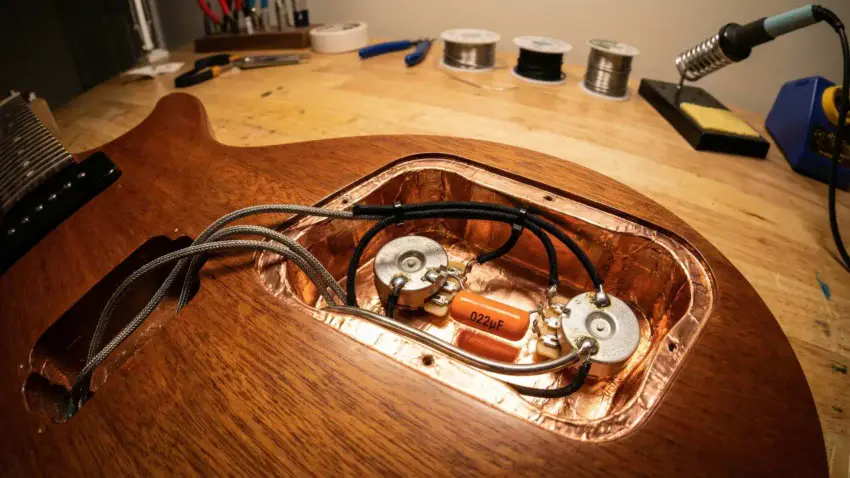
P90 pickups are raw, dynamic, and extremely responsive.
But wiring matters more than most builders realize.
The wrong pot values can make them muddy.
The wrong capacitor can dull the tone.
Poor shielding can turn that vintage growl into unwanted noise.
If you want your P90 build to sound clear, balanced, and powerful —
wiring setup is where tone control really begins.
Let’s break it down.
Looking for a broader comparison? See our full guide to the
Best Budget P90 Pickups Under $100 to compare all top options in one place.

Why Wiring Matters for P90 Pickups
Before we get into specific pot and capacitor values, it’s important to understand something:
P90 pickups are incredibly sensitive to the components around them.
Small changes in potentiometer values or capacitor size can noticeably affect brightness, clarity, and overall response.
The pickup itself is only part of the tone equation.
The wiring choices you make determine how that tone is shaped and controlled.
Let’s look at the most common and effective setup options for P90 builds.
Recommended Potentiometer Values for P90 Pickups
500k Pots (Most Common Choice)
• Brighter response
• Preserves clarity
• Keeps top-end detail
• Best for SG-style builds
Most modern P90 builds use 500k volume and tone pots.
They allow the pickup to breathe and prevent it from sounding dark.
300k Pots (Warmer Option)
• Slightly softer high end
• Tames brightness
• Good for bright amps
If your guitar already sounds sharp or thin, 300k can smooth things out.
Best Capacitor Values for P90 Tone Control
.022µF Capacitor (Standard Choice)
• Balanced roll-off
• Retains usable mids
• Most versatile
This is the safest and most common choice for P90 builds.
.047µF Capacitor (Darker Sweep)
• Stronger treble cut
• Warmer rolled-back tone
• Good for bright guitars
If your SG feels too aggressive, this cap value can help mellow things out.
Shielding: Why It Matters with P90s
P90s are single-coil pickups.
That means they naturally produce more hum than humbuckers.
Proper shielding helps reduce:
• 60-cycle hum
• Interference
• Noise under gain
Use:
✔ Copper foil shielding tape
✔ Conductive shielding paint
✔ Proper grounding connections
A clean cavity = cleaner signal.
Wiring Tips for Clean Installation
• Keep wire lengths tidy
• Avoid crossing signal and ground wires unnecessarily
• Use quality solder joints
• Double-check grounding to bridge
Small wiring mistakes can cause:
-
Volume loss
-
Excess hum
-
Weak output
Take your time.
👉 If you’re upgrading a Les Paul Special build, see our recommendations for
Best Budget P90 Pickups for Les Paul Special Builds.
👉 Working on an SG project? Check out
Best Budget P90 Pickups for SG Builds (Under $100).
Final Thoughts…
Great P90 tone doesn’t stop at the pickup itself.
The right pots, the right capacitor, and proper shielding
can transform your build from average to professional.
If you wire it right, your P90s will deliver clarity, punch,
and vintage character without unnecessary noise.
And that’s the difference between “installed” and “dialed in.”
Ready to Start Adjusting Your Tone?
Check out our other guides:
If you’re new to guitar kits:
Start with Step-by-Step Guide To Building Your First Electric Guitar Kit and
Essential Tools Every Electric Guitar Kit Builder Should Have.
If you already own a kit guitar:
Jump into How To Properly Set Up Your Electric Guitar Kit For Intonation or
Fixing Common Problems: Buzzing And Dead Frets.
If you’re chasing better tone:
Head to Understanding Humbucker Vs Single Coil Pickups In Kits or
Playing With Tone Controls: Tips For Electric Guitar Kits and start experimenting.
Your Guitar, Your Build, Your Sound
You don’t need a custom shop or a tech on speed dial.
All you need is a little guidance, some patience, and a place to go that shows you what to do next.
Come on man… You got this.
 Craft it. Play it. Own it!