
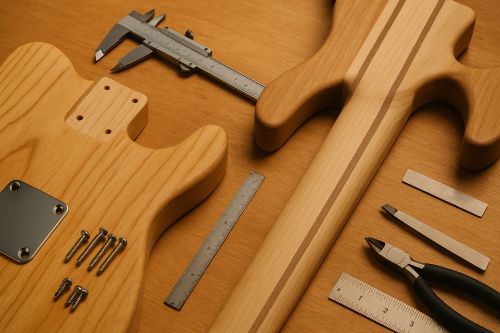
Choosing between a neck-through and a bolt-on neck is one of the biggest decisions you’ll make when building an electric guitar kit. Both styles bring their own attitude, tone, sustain, and feel —
But they also change how your guitar plays, how it survives long-term, and how easy it is to repair or upgrade down the road.
This guide breaks down the real differences in plain English so you can pick the neck style that fits your playing style, skill level, and goals for your next kit build.
Whether you want maximum sustain and sleek lines, or simple maintenance and fast adjustments, we’re about to make this choice stupid-easy.

Tools You’ll Want on the Bench
Before you start comparing bolt-on vs neck-through designs, it helps to have a few solid tools nearby. These make it easier to check neck angles, test alignment, measure pocket depth, and spot any fit issues while you’re deciding which style suits your build.
👉Guitar Neck Notched Straight Edge
A notched straightedge and string action ruler are essential for checking neck relief, measuring action, and dialing in pro-level playability on any guitar kit. This setup combo keeps your measurements accurate and your build on track.
🌟 Amazon Product Suggestion:

✔️ Guitar Neck Notched Straight Edge Luthiers Tool
(with String Action Ruler Gauge)
This tool is perfect for any neck-related work — truss rod adjustments, checking relief, aligning bolt-on necks, and making sure your fretboard is truly straight before you set action or intonation.
It gives you an accurate read of the neck wood itself, not the frets, so your setup stays precise from the start.
Why It’s Great:
✔️ Measures neck straightness using the fretboard, not the frets
✔️ Fits both Fender 25.5″ and Gibson 24.75″ scale lengths
✔️ Ideal for truss rod, neck alignment, and action setup
✔️ Includes a handy string action ruler for quick measurements
👉 Jivarrry Digital Caliper (Stainless Steel, Large LCD, 6-Inch)
A digital caliper gives you ultra-precise pickup-height measurements down to fractions of a millimeter — far more accurate than a standard ruler. It delivers repeatable, consistent results across all your guitars and makes it easy to return to your exact settings after any setup changes.
🌟 Amazon Product Suggestion:
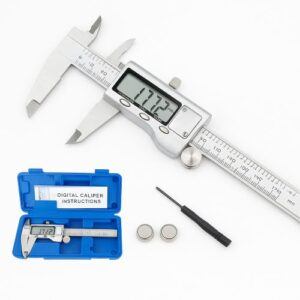
✔️ Jivarry Digital Caliper
(Stainless Steel, Large LCD, 6-Inch)
The Jivarry Digital Caliper is an affordable, accurate measuring tool every woodworker should have. Its smooth stainless-steel slide and large LCD make precise measurements quick and frustration-free, with instant switching between inches, millimeters, and fractions. Ideal for checking thickness, dimensions, hardware sizing, and fine joinery adjustments.
Why it’s great:
✔️Large, clear digital display
✔️Switch between inch/mm/fractions instantly
✔️ Stainless steel body for smooth, accurate travel
✔️ Measures inside, outside, depth & step values
✔️Perfect for tight-tolerance woodworking and tool setup
✔️Comes with case, batteries & mini screwdriver
👉 MusicNomad Premium Guitar Work Mat
A solid work surface makes every part of your build easier, from testing neck alignment to checking pocket fit. This mat gives you a clean, stable place to work without risking scratches or dents on your guitar body.
🌟 Amazon Product Suggestion:
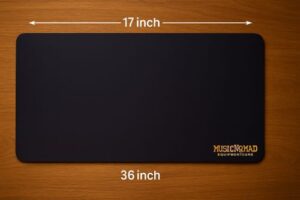
✔️ MusicNomad Premium Guitar Work Mat
(Pad for Repair)
A good work surface is non-negotiable when you’re building or setting up a guitar, and the MusicNomad Work Mat is one of the most reliable options out there. Its soft, anti-slip surface protects your guitar’s finish while giving you a stable, clean area to work on everything from wiring to neck adjustments.
Why It’s Great:
✔️Safe, non-marring material won’t scratch guitar finishes
✔️Large 17″ × 36″ size gives plenty of room for full-body tasks
✔️Anti-slip surface keeps parts and tools from sliding around
✔️Easy to roll, store, and keep dust-free on your bench
🎸Step-By-Step: How To Choose the Right Neck Style for Your Guitar Kit
👉 Step 1 — Decide What Matters Most: Sustain or Serviceability
Neck-through gives you maximum sustain and resonance because the neck runs straight through the body.
Bolt-on gives you easy maintenance, simple upgrades, and quick neck adjustments.
Ask yourself what’s more important for your build:
-
Long, rich sustain and a sleek look
-
Or simple setup, easier repairs, and long-term flexibility
👉 Step 2 — Consider Your Experience Level
If this is your first or second kit, a bolt-on design is usually easier. Pocket fit, alignment, and setup are more forgiving.
Neck-through kits require more precision and offer less room to fix mistakes once the glue is set.
👉 Step 3 — Think About the Tone You Want
-
Neck-through: smoother transitions between neck/body, more consistent vibration transfer, warmer sustain
-
Bolt-on: snappier attack, brighter tone, more “Strat/Tele” style personality
Choose what fits the style of music you’ll play most.
👉 Step 4 — Review How Comfortable You Are With Future Upgrades
Bolt-on necks are easy to swap, shim, or replace entirely.
If you love modding, experimenting, or tweaking your action over time, bolt-on gives you way more freedom.
Neck-through builds are more “what you build is what it stays.”
👉 Step 5 — Check Your Workspace and Tools
Neck-through kits often require:
-
More precise measurements
-
Cleaner fitting
-
Better alignment checks during glue-up
If you don’t have the space or clamps for a tight glue-up, bolt-on will be smoother and faster.
👉 Step 6 — Match the Neck Style to Your Build Goals
-
Building a shredder, modern metal, or smooth lead machine?
Neck-through is a killer choice. -
Building a classic, bright, punchy rock or blues guitar?
Bolt-on nails that vibe every time.
👉 Step 7 — Confirm the Kit’s Hardware and Specifications
Different kits come with different pocket depths, neck angles, and hardware layouts. Make sure your kit includes:
-
Proper neck screws or mounting plate (bolt-on)
-
Solid center laminate (neck-through)
-
A straight neck with clean truss channel
-
A pocket that isn’t sloppy or uneven
This saves headaches later.
👉 Step 8 — Make Your Final Call With Your Playing Style in Mind
If you prioritize:
-
feel
-
upper fret access
-
smooth heel shape
Neck-through will feel more natural.
If you prioritize:
-
punch
-
easy adjustments
-
friendly maintenance
Bolt-on is the winner.
🔥 FINAL THOUGHTS…
Choosing between a neck-through and a bolt-on neck comes down to what you value most in your build — long, singing sustain and a seamless feel, or easy adjustments and simple maintenance.
Both designs can deliver amazing tone and playability when the kit is built right.
Take a moment to match the neck style with your skill level, workspace, and the kind of music you want this guitar to excel at. Once you understand how each neck behaves, you’ll know exactly which style belongs on your next build —
And you’ll end up with a guitar that feels like it was made just for you.
Ready to Start Adjusting Your Tone?
Check out our other guides:
👉 If you’re new to guitar kits:
Start with Step-by-Step Guide To Building Your First Electric Guitar Kit and Essential Tools Every Electric Guitar Kit Builder Should Have.
👉 If you already own a kit guitar:
Jump into How To Properly Set Up Your Electric Guitar Kit For Intonation or Fixing Common Problems: Buzzing And Dead Frets.
👉 If you’re chasing better tone:
Head to Understanding Humbucker Vs Single Coil Pickups In Kits or Playing With Tone Controls: Tips For Electric Guitar Kits and start experimenting.
Your Guitar, Your Build, Your Sound
You don’t need a custom shop or a tech on speed dial.
All you need is a little guidance, some patience, and a place to go that shows you what to do next.
Come on man… You got this.
GuitarCrafts is here to help you along the way.
 Craft it. Play it. Own it!
Ready to take your guitar passion beyond the workbench?
See how I built GuitarCrafts.com using the training at Wealthy Affiliate — you can do the same.
 Build Your First Website With Wealthy Affiliate (Free)

This guide does an excellent job of laying out the benefits and trade-offs between neck-through and bolt-on necks in build-your-own guitar kits. I especially appreciate how you clearly highlight the tonal differences—neck-through designs offering extended sustain and seamless access to upper frets, while bolt-ons bring a brighter attack, easier repairs, and modular flexibility. It’s refreshing to see you stress that neither is inherently “better” but rather suited to different priorities, whether that’s sustain, tone character, ease of customization, or budget.
Your inclusion of real-world pros like John Petrucci favoring neck-throughs for sustain and Eric Clapton sticking with bolt-on Strats for that snappy response brings the debate into perspective. The guide empowers readers to match build style to musical goals—not just follow a myth about which construction is superior.
Thank you so much! I’m glad the guide resonated with you. That’s exactly the approach I try to take. Helping builders see that neck-through and bolt-on designs each have their strengths, and the “best” choice really depends on what you value in tone, playability, and maintenance.
I love hearing that the real-world examples helped put things in perspective. Highlighting how pros make their choices is a great way to show that even legendary players prioritize different aspects depending on their style and goals.
It’s rewarding to know the guide helps builders make informed decisions rather than relying on myths, and I hope it encourages them to pick the neck style that best fits their own musical vision!
Thanks again,
~Wayne
This comparison was great. I’ve always admired the look of a neck-through electric guitar kit, because it just feels sleek and custom. I never realized how much the neck style changes the whole building experience of an electric guitar kit. The history part was cool, too — it’s wild how Fender made bolt-ons so popular while others pushed neck-through for sustain.
Glad you enjoyed the comparison! Neck-through kits definitely have that sleek, high-end vibe—you’re right, they look and feel really custom. And you nailed it: the neck style doesn’t just affect tone and sustain, it totally changes how the building process feels too. Fender’s bolt-on approach made guitars way more accessible and easier to service, while neck-through designs became the go-to for players chasing smooth access and long sustain.
It’s pretty cool how both approaches shaped guitar history in their own ways.
Thank you!
~Wayne