

If you want to add smooth vibrato, expressive pitch bends, or full-on dive bombs to your next guitar build, a tremolo system is the way to go. You don’t need to be a pro luthier to install one — just the right hardware, a plan, and a careful setup.
In this guide, we’ll break down the most common tremolo options, what to look for before installing one, and the exact steps to get your system mounted, balanced, and playing great.
👉 This upgrade is part of my Electric Guitar Customization & Mods Guide,
which covers popular guitar modifications and personalization options.

🛠️ Tremolo Systems & Hardware Options
Whether you’re upgrading a kit that already has a trem cavity or adding a brand-new system to your build, the hardware you choose will shape the feel, stability, and tone of your guitar. There are a lot of tremolo systems out there, but for this guide we’re focusing on three solid, reliable options:
-
Floyd Rose FR Special Series Tremolo
-
Gotoh Floyd Rose Licensed Tremolo
-
Gotoh GE101TS Vintage-Style Tremolo
Floyd Rose FR Special Series Tremolo
This Floyd Rose Special Series tremolo gives you classic double-locking stability, smooth action, and all the hardware you need for a reliable upgrade on any DIY guitar build.
 Amazon Product Suggestion:
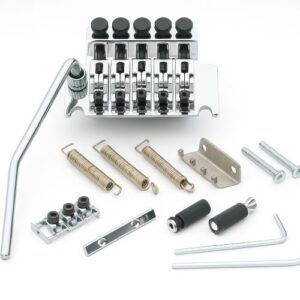
✔️ Floyd Rose FR Special Series Tremolo
(Chrome)
The FR Special Series gives you classic Floyd Rose performance at a budget-friendly price. Made in Korea to official specs, it delivers solid tuning stability, smooth action, and everything you need for a high-performance trem upgrade. Includes bridge, trem arm, locking nut, studs, claw, springs, and install hardware.
Why It’s Great:
✔️ Authentic Floyd Rose design — Reliable double-locking stability
✔️ Smooth action — Great for dives, flutters, and expressive trem work
✔️ Complete kit included — Bridge, nut, arm, studs, claw, springs
✔️ Cost-effective build — Zinc saddles & block keep price down
✔️ Perfect for kit builders — Proven, easy-to-install upgrade
Gotoh Floyd Rose Licensed Tremolo
This Gotoh-licensed Floyd Rose offers smooth performance, solid tuning stability,
and high-quality hardware — a dependable upgrade for any blacked-out, modern guitar build.
Amazon Product Suggestion:
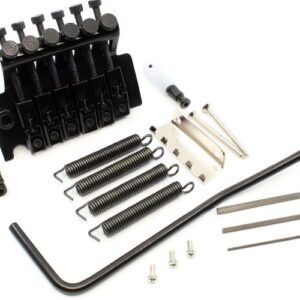
✔️Gotoh Floyd Rose Licensed Tremolo
(Black)
This Gotoh Floyd Rose–licensed tremolo gives your build rock-solid tuning stability and smooth vibrato action. It’s Gotoh’s most refined version yet, with tighter machining, better return-to-zero, and pro-grade durability — perfect for heavy trem users and anyone wanting a reliable floating bridge for a DIY kit.
Why It’s Great:
✔️Fully licensed Floyd — smooth action & precise control
✔️Includes studs, springs, claw, screws, and tools
✔️Standard 2-7/8″ stud spacing fits most kits
✔️40mm trem block (33mm & 36mm optional)
✔️Known Gotoh reliability & tight tolerances
✔️ Ideal upgrade for stable, high-performance builds
Gotoh GE101TS Vintage Style Tremolo Guitar Bridge
This Gotoh GE101TS delivers smooth vintage-style tremolo action with rock-solid tuning and premium gold hardware — a classy upgrade for any Strat-style build.
Amazon Product Suggestion:
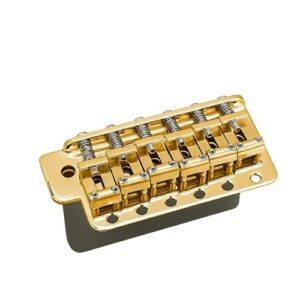
✔️Gotoh GE101TS Vintage Style Tremolo Guitar Bridge
(Gold)
The Gotoh GE101TS is a high-quality vintage-style tremolo designed for players who want smooth vibrato action, stable tuning, and rock-solid hardware. With precision-cut steel saddles, a robust trem block, and Gotoh’s famously consistent machining, this bridge is a serious upgrade over stock kit tremolos. The gold finish adds a true custom-shop look to any build, making it perfect for premium DIY kits or high-end replacement projects.
Why It’s Great:
✔️Premium quality — smooth action + long-term reliability
✔️Stable tuning — saddles + hardware return to pitch cleanly
✔️Better tone — solid block adds sustain and resonance
✔️Easy fit — standard 6-screw Strat-style compatibility
✔️Gold finish — clean, custom look for any build
Step-By-Step: How to Install a Tremolo System
Before you drill any holes or mount your bridge, it’s important to understand how the tremolo interacts with your body, neck, and setup. The steps below walk you through the cleanest and safest way to install and dial in your tremolo system.
Dry-Fit the Neck & Bridge
Mount the neck and place the tremolo in its route without screws. Run two strings to check alignment with the fretboard edges.
Mark & Drill the Mounting Holes
Use masking tape as a depth stop. Drill straight and slow. Clean holes mean stable posts and smooth trem operation.
Install the Tremolo Posts or Mounting Screws
Set them to the correct height so the bridge can pivot freely.
Install Springs, Claw & Trem Block
In the back cavity, mount the claw, attach springs, and balance the trem so it sits level when tuned.
String the Guitar & Balance the Trem
Tune to pitch, adjust spring tension, tune again — repeat until the bridge floats or decks exactly where you want it.
Set Action, Relief & Intonation
Adjust saddle height, neck relief, and intonation like a normal setup, checking trem position as you go.
Final Tuning Stability Check
Test vibrato, light dives, and returns to pitch. Fix any issues at the nut, saddles, or pivot points.
🎵 Final Thoughts…
Adding a tremolo system opens up a whole world of expressive playing. Whether you want subtle vibrato or full-on dive bombs, the right bridge and setup will make your guitar feel alive. Take your time, test as you go, and your kit will reward you with smooth action and stable tuning.
Ready to Start Adjusting Your Tone?
Check out our other guides:
 If you’re new to guitar kits:
Start with Step-by-Step Guide To Building Your First Electric Guitar Kit and Essential Tools Every Electric Guitar Kit Builder Should Have.
If you already own a kit guitar:
Jump into How To Properly Set Up Your Electric Guitar Kit For Intonation or Fixing Common Problems: Buzzing And Dead Frets.
If you’re chasing better tone:
Head to Understanding Humbucker Vs Single Coil Pickups In Kits or Playing With Tone Controls: Tips For Electric Guitar Kits and start experimenting.
Your Guitar, Your Build, Your Sound
You don’t need a custom shop or a tech on speed dial.
All you need is a little guidance, some patience, and a place to go that shows you what to do next.
Come on man… You got this.
GuitarCrafts is here to help you along the way.
 Craft it. Play it. Own it!
Ready to take your guitar passion beyond the workbench?
See how I built GuitarCrafts.com using the training at Wealthy Affiliate — you can do the same.
Build Your First Website With Wealthy Affiliate (Free)

What an inspiring and practical guide! You’ve really shown how adding a tremolo system isn’t just a cosmetic upgrade, but a way to unlock whole new layers of expression and tonal creativity in a guitar build. The way you frame it—as a tool for smooth pitch bends, shimmering sustain, dive bombs, or ambient flutters—captures just how versatile a trem can be across genres like surf, metal, blues, and prog. I especially appreciate that you don’t gloss over the challenges. Discussing system types, fit considerations, and maintenance shows that this mod demands precision but pays off in spades. For builders who aren’t ready to commit to routing, your alternative suggestions help keep the dream accessible without risking the instrument. This guide strikes the perfect balance: inspiring enough to want to install a trem, and grounded enough to know exactly what to plan for and how to make it work.
Thank you so much! I’m thrilled to hear the guide resonated with you. Tremolo systems really do open up a whole new world of expression, but I’ve found it’s just as important to highlight the planning and precision needed to get the best results. Especially for builders tackling it for the first time.
It’s great to hear that the alternatives and fit considerations came through clearly. I always want builders to feel empowered to experiment without worrying about damaging their instrument. Knowing what to plan for ahead of time makes the whole process much more enjoyable and rewarding.
I really appreciate your kind words, and I hope this guide inspires lots of builders to explore new creative possibilities with their guitars!
Thanks again,
~Wayne
Great article! I love how clearly you break down the different tremolo systems and the installation process—it makes a pretty intimidating upgrade feel doable.
Quick question: for someone with a beginner-level kit and limited routing experience, would you recommend starting with a Strat-style tremolo, or is it worth trying a Bigsby for the aesthetic and subtle vibrato even if it’s a bit trickier to install?
Thanks so much! I’m glad the guide made tremolo systems feel more approachable. For a beginner kit with limited routing experience, a Strat-style tremolo is usually the safer bet. It’s easier to install, adjust, and maintain, and it still gives you plenty of expressive options. A Bigsby looks fantastic and has that subtle vibrato, but the installation can be more involved and sometimes requires extra routing or reinforcement. If your priority is a smooth learning curve and reliable performance, starting with a Strat-style setup is a solid choice.
You can always experiment with a Bigsby later once you’re comfortable.
Thanks again,
~Wayne