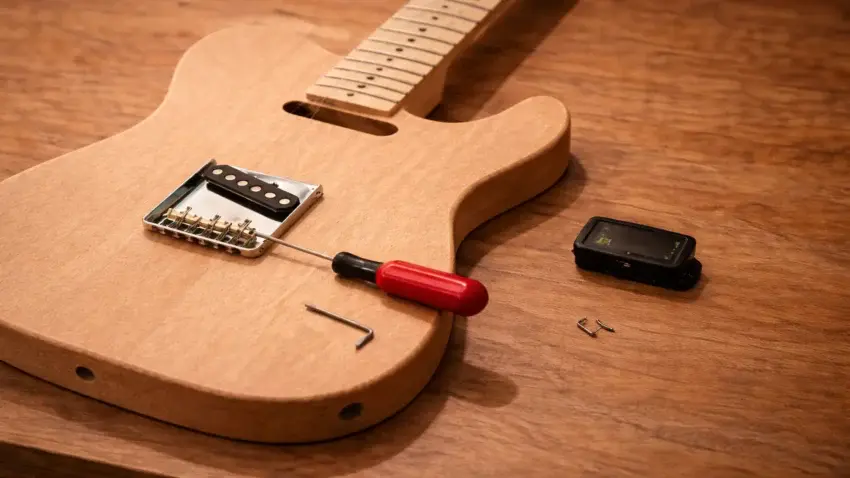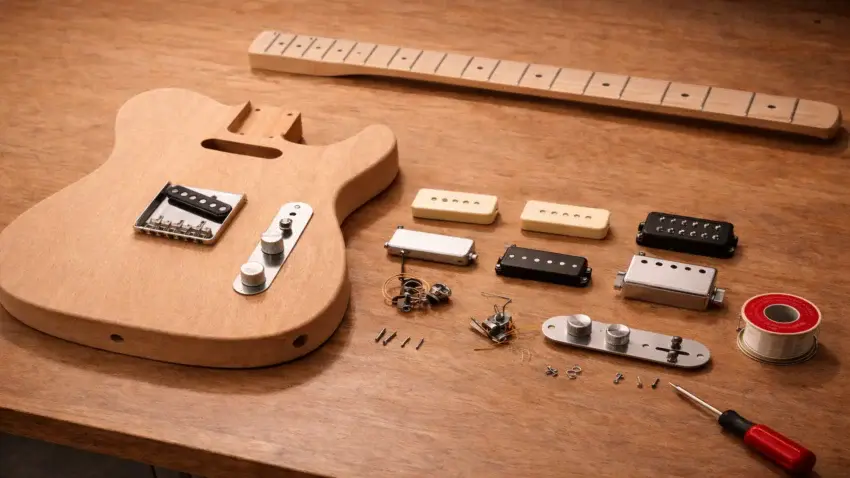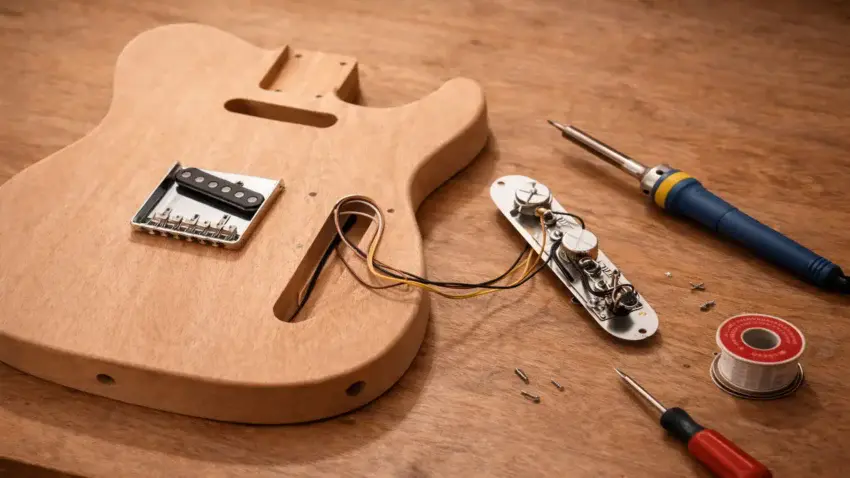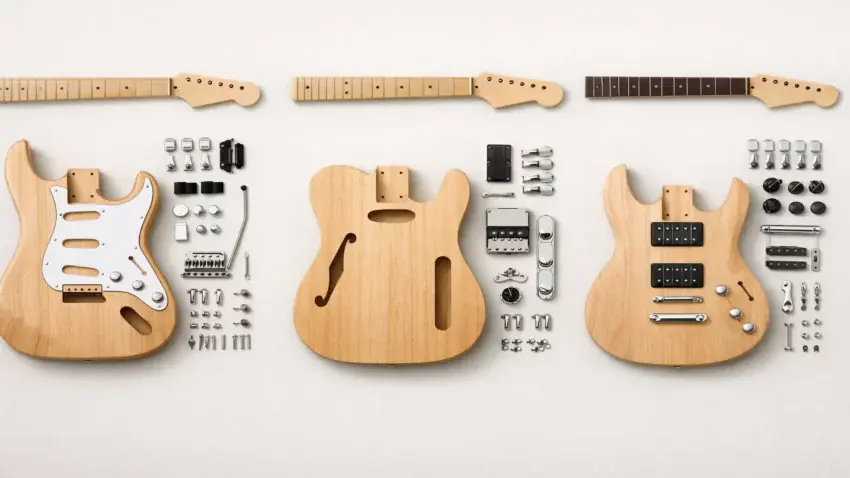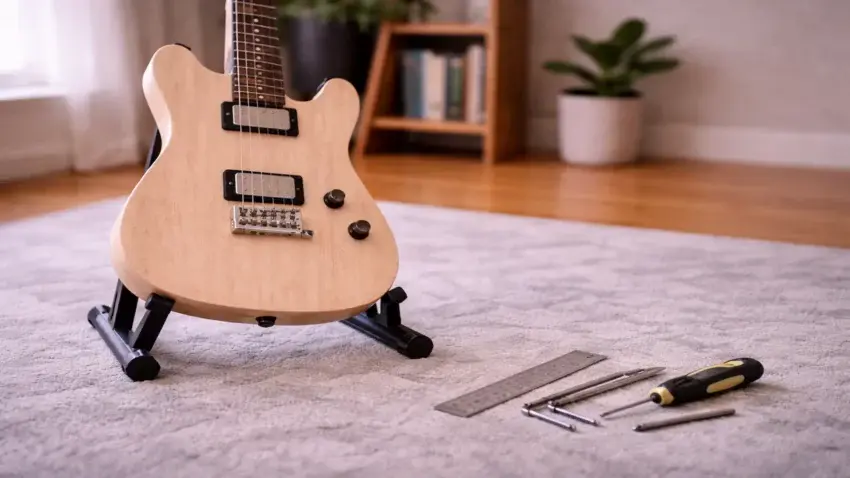
After solder joints are made, wiring and routing tools are what keep signals quiet, stable, and reliable inside the guitar. Good wiring isn’t just about electrical connections — it’s about how wires are cut, routed, secured, and protected once those connections exist. Sloppy routing often leads to noise, intermittent signals, or components that fail over…
Author: Wayne
Soldering Tools Used During Electric Guitar Kit Wiring
Wiring an electric guitar kit is less about electronics theory and more about making clean, reliable connections. That reliability comes almost entirely from using the right soldering tools. Poor tools create cold joints, excess heat, and unreliable signals — even if the wiring diagram is correct. This guide focuses specifically on soldering tools used during…
Fitting and Finishing Tools Used During Electric Guitar Kit Builds
Once parts are cut and shaped, fitting and finishing tools are what make everything sit correctly, feel comfortable, and look intentional. This stage isn’t about changing dimensions — it’s about final alignment and readiness. Small issues left unaddressed here often show up later as discomfort, cosmetic flaws, or parts that never quite feel “right.” This…
Shaping and Sanding Tools Used During Electric Guitar Kit Builds
After parts are cut to size, shaping and sanding tools are what turn rough components into pieces that fit comfortably and look intentional. This stage isn’t about removing a lot of material — it’s about control. Small changes here affect neck feel, fret comfort, and how cleanly parts come together later in the build. This…
Cutting Tools Used During Electric Guitar Kit Builds
Building an electric guitar kit isn’t always a bolt-together process.In many builds, parts need to be trimmed, shortened, or adjusted before they’ll fit correctly. That’s where cutting tools come in. This guide focuses specifically on cutting tools used during electric guitar kit builds, what each one is used for, and where they fit in the…
Common Setup Mistakes During Electric Guitar Kit Builds
Most setup problems don’t come from bad parts — they come from doing the right things in the wrong order, or adjusting without understanding what the numbers are telling you. When building an electric guitar kit, it’s easy to chase buzz, tuning issues, or playability problems by constantly tweaking hardware. Unfortunately, that usually creates new…
Setup & Adjustment Tools for Electric Guitar Kits
Once you’ve measured everything correctly, setup and adjustment tools are what let you make the changes that matter. These tools don’t tell you what’s wrong — they let you fix it.Action height, neck relief, intonation, and tuning stability all depend on having the right tools to make small, controlled adjustments without damaging parts or chasing…
Measuring Tools Used During Electric Guitar Kit Setup
If you’re building an electric guitar kit, measuring tools are what turn guesswork into consistency. You don’t need a full luthier shop — but you do need a few reliable tools that let you check alignment, spacing, and clearances instead of guessing and hoping everything lines up later. This guide focuses specifically on measuring tools…
Electronics And Wiring Tools For Electric Guitar Kits
Electronics are the control center of an electric guitar. Pickups, pots, switches, and jacks all rely on clean connections to work correctly and consistently. Electronics and wiring tools are used to install, connect, and test these components so the guitar functions quietly, reliably, and predictably. Many beginner frustrations — crackling pots, intermittent signal loss, excessive…
Cutting, Shaping, And Fitting Tools For Electric Guitar Kits
Building an electric guitar kit involves more than bolting parts together. Many steps require shaping, fitting, or refining components so everything seats correctly and feels comfortable to play. Cutting, shaping, and fitting tools are used during these moments — when parts are made to fit the guitar, not the other way around. These tools don’t…