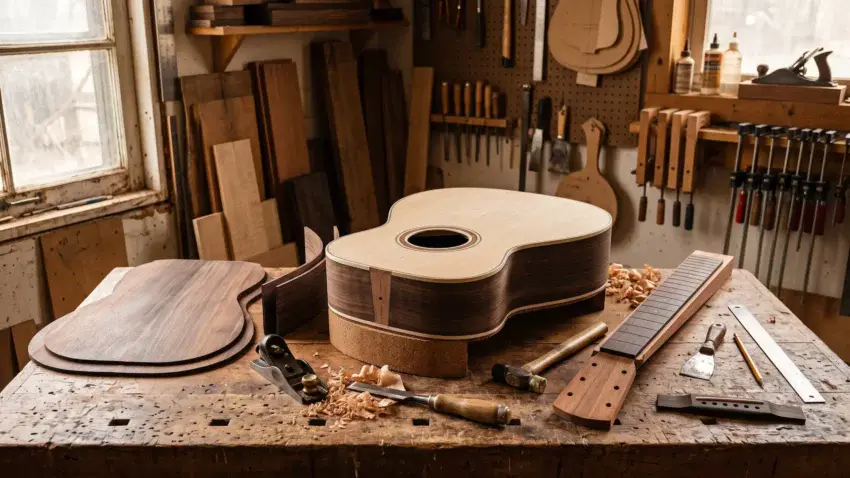
The wood you choose for an acoustic guitar does more than make it look good.
- The top has to move.
- The back and sides help shape the sound.
- The neck needs strength and stability.
- The fingerboard and bridge have their own jobs to do.
That’s why acoustic guitars aren’t usually built from one kind of wood.
Spruce, cedar, mahogany, rosewood, maple, and other tonewoods all bring something different to the build.
Some choices are traditional.
Others come down to the sound, look, and feel you want from the finished guitar.
You don’t need to become a tonewood expert before your first build.
But once you understand what each piece of wood is being asked to do, choosing it starts to make a lot more sense.
Let’s start with the most important piece of wood on the guitar.
👉 Before you start choosing tonewoods, make sure your workshop is ready.
See What Tools Do You Need to Build an Acoustic Guitar? and start with the tools that matter most.

🌲 The Top Does Most of the Talking
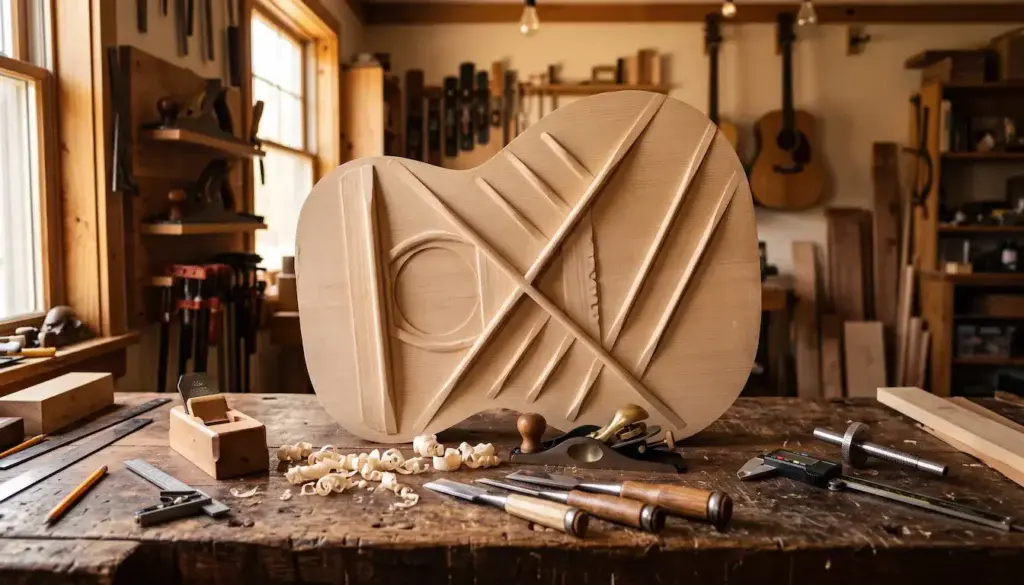
The soundboard is the large, thin piece of wood on the front of the guitar.
When the strings vibrate, the bridge transfers that energy into the top.
The top moves, pushes air, and helps turn those vibrating strings into the sound you hear.
That’s why the wood used for the top matters so much.
It needs to be light enough to respond but strong enough to handle the pull of the strings.
Spruce is the traditional choice, while cedar offers a different kind of response and character.
There are other options too.
But no matter which wood you choose, the top is doing more than almost any other piece on the guitar.
If an acoustic guitar has a voice, the top is where much of that voice begins.
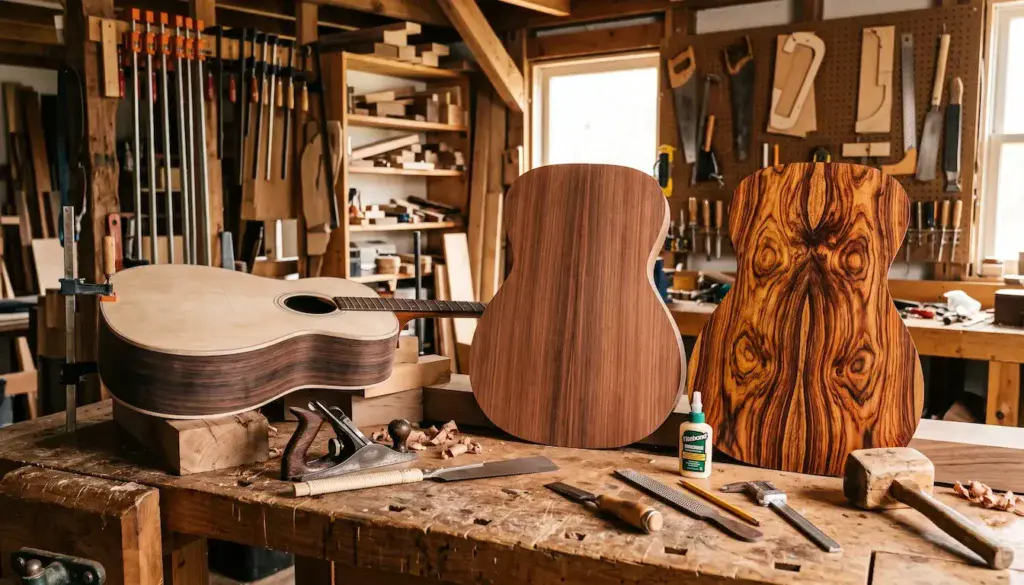
🪵 The Back and Sides Shape the Character
The back and sides don’t move as freely as the top, but they still play an important part in the way the guitar sounds.
- Rosewood is known for a rich, complex sound.
- Mahogany often brings a warmer, more direct character.
- Maple can sound clear and focused while showing off some beautiful grain.
But sound isn’t the only thing to think about.
The wood also needs to bend into shape, hold that shape, and work well with the way you plan to build the guitar.
For your first build, the most exotic wood isn’t always the best choice.
Sometimes the best tonewood is the one you can actually work with.
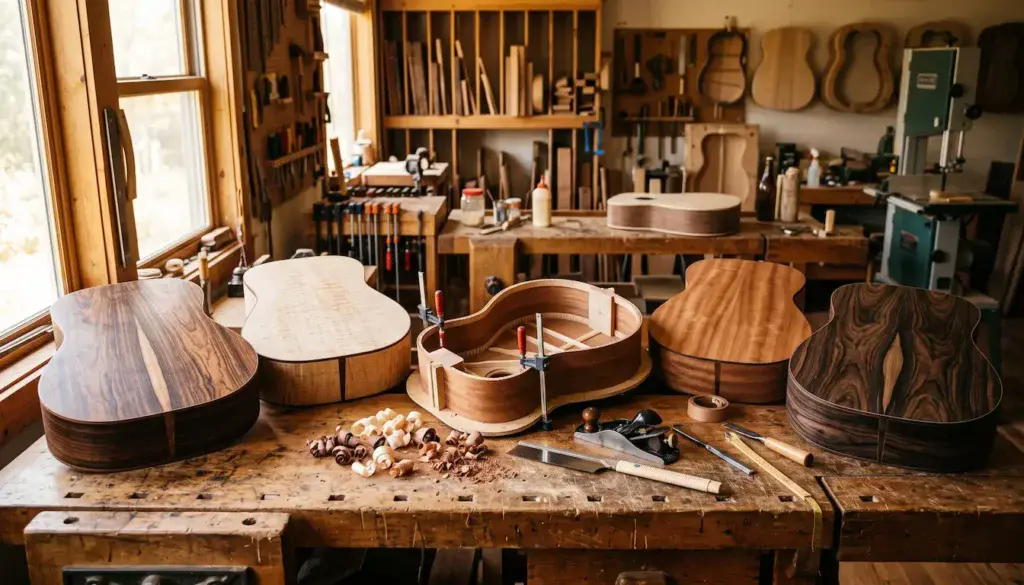
🎸 Every Piece of Wood Brings Its Own Character
🎸 The Wood You Don’t See Still Matters
 Amazon Product Suggestion: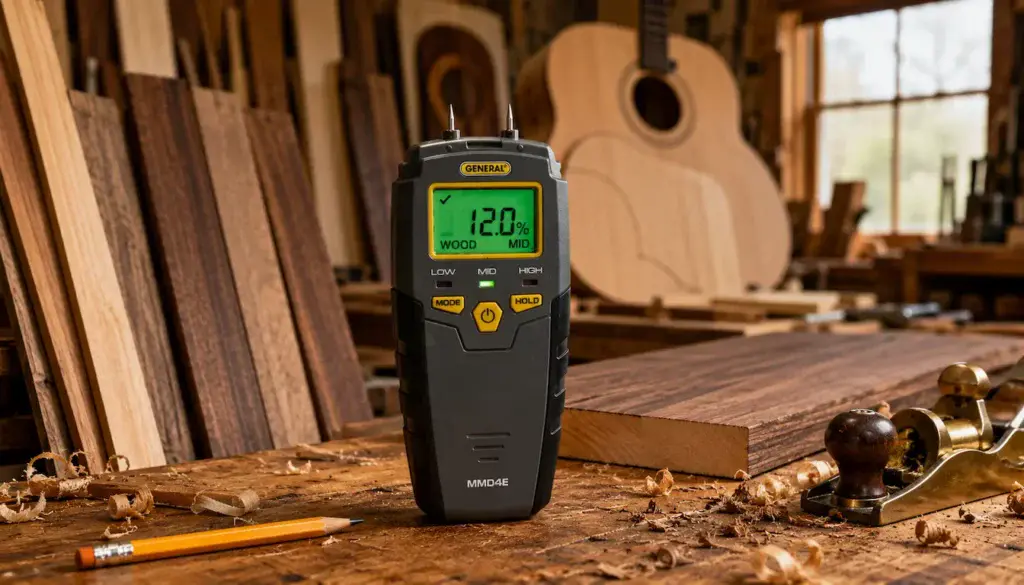
 General Tools MMD4E Digital Moisture Meter
The General Tools MMD4E Digital Moisture Meter uses
two pins to check moisture levels in tonewood, neck blanks, braces,
and other wooden parts before the build begins. I
ts backlit digital display makes readings easy to see,
helping you avoid building with wood that
may still shrink, swell, or move.
 Your Guitar, Your Build, Your Sound