
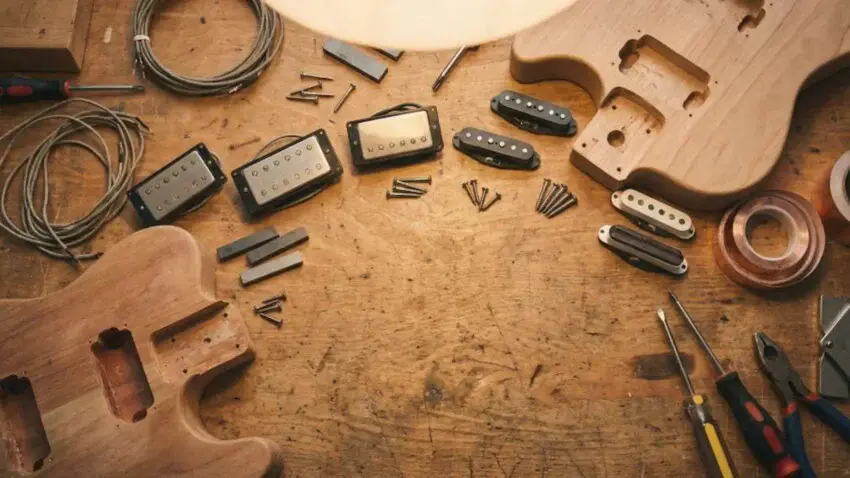
When you’re building an electric guitar kit,
pickups have the biggest impact on your final tone.
Humbuckers deliver thick,
powerful sound with less noise.
Single coils give you brighter,
sharper tone with more bite.
In this guide,
you’ll learn how each pickup type works,
how they sound, and which one fits your build.
👉 Not sure which pickup sounds right?
Check out my guide on
Mastering Tone Controls on
Your Electric Guitar Kit.

🔍 Choosing the Right Pickups
for Your DIY Kit
Before you start your build,
it helps to understand how pickups
shape your tone.
Below are four standout options —
two humbuckers and two single coils —
so you can hear the difference and
decide what fits your style.
These will set the tone for your entire build.
Seymour Duncan SH-4 JB Model
Bridge Humbucker
If your kit needs more power and punch,
the JB is a go-to upgrade.
It delivers strong output with clear, defined tone.
 Amazon Product Suggestion:
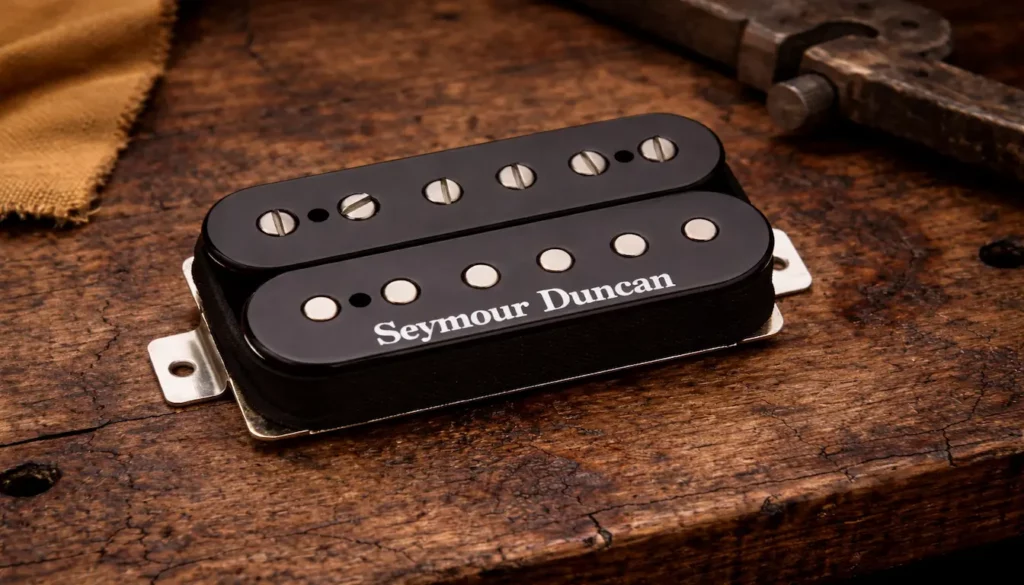
 Seymour Duncan SH-4 JB Model
Bridge Humbucker
Known for its balanced sound,
it works well for both rhythm and lead playing.
A great choice if you want more output
without losing clarity.
Why It’s Great:
Strong, high-output tone
Clear and defined sound
Great for rock and heavier styles
Trusted, proven upgrade
Seymour Duncan SH-1b ’59 Model
Neck Pickup
A warm, smooth pickup with
classic vintage tone.
It delivers clear highs and full,
expressive sound.
Amazon Product Suggestion:
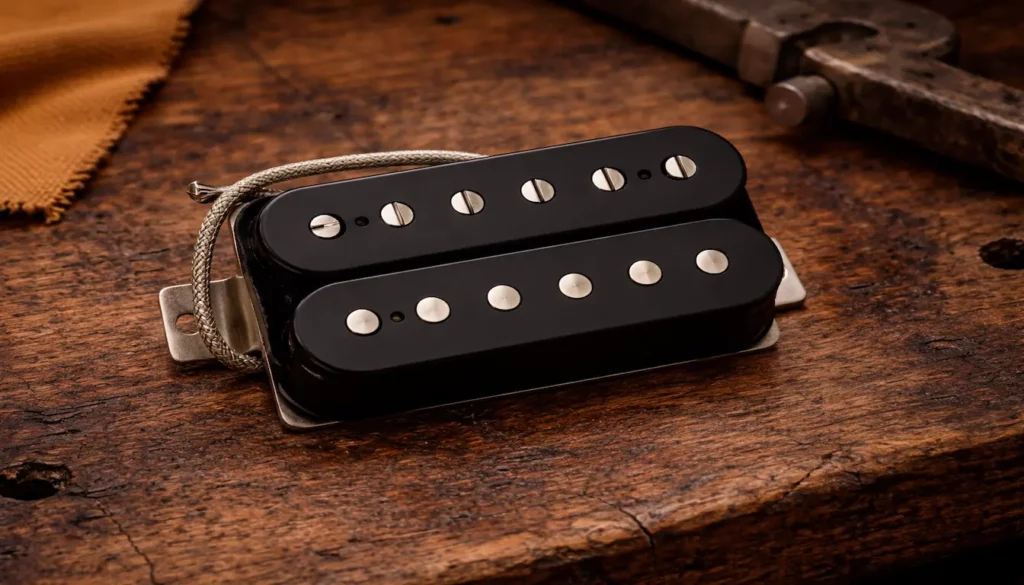
Seymour Duncan SH-1b ’59 Model
Neck Pickup
Inspired by vintage PAF pickups,
it offers balanced tone with great clarity.
A strong choice for clean playing, leads,
and classic styles.
Why It’s Great:
Warm, vintage-style tone
Clear and articulate sound
Great for clean and lead playing
Pairs well with bridge humbuckers
Fender Tex-Mex
Stratocaster Pickups
Bright and bold single-coil pickups with extra bite.
They add more punch while keeping
classic Strat tone.
Amazon Product Suggestion:

Fender Tex-Mex
Stratocaster Pickups
Designed for higher output,
they deliver stronger mids and sharper attack.
A great upgrade if you want more edge
without losing clarity.
Why They’re Great:
Bright, punchy single-coil tone
Higher output for more bite
Great for Strat-style guitars
Strong upgrade over stock pickups
Fender Vintage Noiseless
Stratocaster Pickup Set
Classic Strat tone without the hum.
These pickups deliver clear, smooth sound
with reduced noise.
Amazon Product Suggestion:
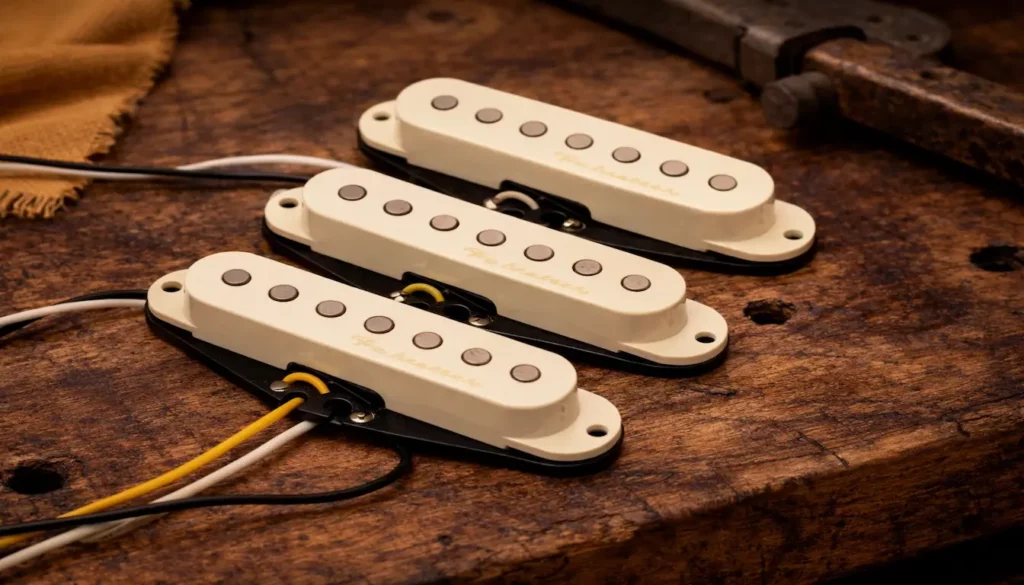
Fender Vintage Noiseless
Stratocaster Pickup Set
Designed for quiet performance,
they keep your tone clean and consistent.
A great choice if you want vintage sound
with modern reliability.
Why They’re Great:
Classic Strat tone with less noise
Clear, smooth sound
Great for clean and low-gain styles
Premium upgrade over stock pickups
🛠️ Time to Build:
Your 10-Step Process
Now that you understand how pickups
shape your tone, it’s time to start building.
The steps below walk you through the process
in a clear, beginner-friendly way so you can
assemble, wire, and dial in your kit
with confidence.
Let’s get to work.
🔧 10-Step Build Process
1. Unbox and Verify Components
Lay everything out and check all parts.
Make sure nothing is missing
before you begin.
2. Dry-Fit the Neck and Body
Test the neck fit in the pocket.
It should be snug, not forced.
3. Install Tuners and
Prep the Headstock
Mount the tuners and secure the bushings.
Proper alignment helps keep tuning stable.
4. Mount the Bridge and
Check Scale Length
Position the bridge without fully tightening it.
Make small adjustments to set your scale length.
5. Drop In the Pickups
Mount the pickups with springs and screws.
Center them under the strings for balanced tone.
6. Route and Organize Wiring
Follow your wiring diagram and keep leads tidy.
Clean routing helps reduce noise and confusion.
7. Solder and Test Electronics
Complete your solder joints and test everything.
Check switching, volume, and tone before closing up.
8. Attach the Neck and Check Action
Secure the neck and take your first measurement.
Adjust the truss rod slightly if needed.
9. String Up and Rough-Tune
Install strings and tune to pitch.
This sets the neck and prepares for final setup.
10. Fine-Tune and Final Setup
Adjust intonation, pickup height, and action.
Dial in your guitar for your playing style.
🤘 Pro Tips (Rock On)
👉 Heat + Speed =
Better Solder Joints
Work quickly with solid heat and pre-tin your wires.
Clean joints mean better signal and fewer problems.
👉 Match Pickup Height to Pole Pieces
Adjust pole pieces to follow your string radius.
This helps balance volume across all strings.
👉 Grounding and Shielding Matter
Good grounding reduces hum.
Adding shielding helps eliminate noise even further.
👉 Set Neck Relief Before Action
Adjust neck relief first, then dial in action.
This keeps your setup stable and consistent.
👉 Stretch Strings and Lube the Nut
Stretch new strings and add a little nut lubricant.
This improves tuning stability and smooth bends.
👉 Lock In Your Intonation
Always check tuning after adjustments.
Small shifts can throw things off over time.
👉 Keep Wiring Clean and Clear
Route wires neatly and avoid tight contact points.
Clean wiring prevents noise and damage.
👉 Test Electronics Before Closing Up
Check pickups and output before sealing the cavity.
Fixing issues now saves time later.
👉 Polish Frets and Condition the Board
Smooth frets improve playability.
Conditioning keeps the neck feeling great.
👉 Final Setup and Play Test
Dial in your setup, then actually play the guitar.
Make small tweaks based on feel.
👉 Many Telecaster-style guitars use
single-coil pickups for their bright,
articulate tone. Learn more in my
Telecaster Style Guitar Guide For DIY Builders.
👉 Still deciding between pickup styles?
Check out my P90 vs Humbucker pickups
to hear the difference.
🎸 Final Thoughts…
Choosing between humbuckers and single coils
is one of the biggest decisions in your build.
Humbuckers bring power, warmth,
and noise-free clarity.
Single coils deliver
brightness, snap, and classic bite.
The right choice comes down to your
playing style and the tone you want.
Whether you prefer the punch of the
JB/’59 combo or the sparkle of
Tex-Mex and Vintage Noiseless pickups,
each option can bring your build to life.
Trust your ears.
Trust your hands.
Build the guitar that
makes you want to pick it up and play.
 Ready to Start?
Here’s your next step —
pick one and go:
 New to guitar kits?
Start with
Step-by-Step Guide To Building
Your First Electric Guitar Kit
and
Essential Tools Every Electric Guitar Kit
Builder Should Have.
Already built a kit?
Jump into
How To Properly Set Up Your
Electric Guitar Kit For Intonation
or
Fixing Common Problems:
Buzzing And Dead Frets.
Chasing better tone?
Head to
Playing With Tone Controls:
Tips For Electric Guitar Kits
and start experimenting.
 Your Guitar, Your Build,
Your Sound
You don’t need a custom shop or a tech on speed dial.
All you need is a little guidance, some patience,
and a place to go that shows you what to do next.
Come on man… You got this.
GuitarCrafts
is here to help you along the way.
Craft it. Play it. Own it!
Great breakdown of the differences between humbuckers and single coils—this really helps DIY builders understand how pickups shape their sound! I love the suggestion of hybrid setups for versatility.
A couple of questions:
For someone new to building guitars, how challenging is it to wire an HSS or HSH configuration compared to a single type?
Do you have any favorite pickup brands or models you’d recommend for beginners aiming for that classic rock or blues tone?
Thanks so much! I’m glad the post helped clarify the humbucker vs. single coil differences. It’s such a foundational piece of shaping your guitar’s voice. Great questions! Wiring an HSS or HSH setup is definitely a bit more involved than sticking to one pickup type, mostly because of the added switching options and balancing output levels, but it’s totally doable with a good diagram and a bit of patience. As for pickup recommendations, for that classic rock/blues tone, I’m a big fan of Seymour Duncan’s JB/Jazz set or the SSL-1s for vintage single coil flavor. DiMarzio and Tonerider also have solid beginner-friendly options that don’t break the bank but still sound great!
Thank you again!
This article provides a solid foundation for understanding guitar pickups, but you could explore the nuances that go beyond a simple “either/or” choice. For instance, while it mentions hybrid setups, a more in-depth look at how the different pickup types interact in a single guitar—such as the tonal possibilities when combining a single coil in the middle position with a humbucker at the bridge—could be valuable.
Furthermore, you could be initiated on the role of other components, such as potentiometers (pots) and capacitors, in shaping the final sound of a guitar with a specific pickup type. A humbucker, for example, can sound different depending on the resistance value of the volume pot. Exploring these additional factors would give the reader a more complete understanding of how to achieve their desired tone, moving beyond just the pickup and into the entire electronic circuit.
Thank you for the thoughtful feedback! You’re absolutely right! There’s a lot more nuance once you start combining pickup types and exploring how electronics shape tone. Hybrid setups, like a middle single coil paired with a bridge humbucker, open up a ton of sonic possibilities, and the role of pots and capacitors can significantly affect how each pickup responds. I really appreciate your suggestions; diving deeper into these interactions is definitely something I can expand on to give builders a more complete understanding of tone shaping beyond just the pickups themselves.
Thanks again,
~Wayne
Really helpful breakdown of pickup differences! You explained the humbucker vs. single-coil comparison in a way that’s easy to understand without oversimplifying, and the audio examples are really useful for hearing the actual tonal differences!
As someone considering a first build, I’m curious – would you recommend starting with a standard single-coil or humbucker configuration before trying more advanced wiring options? Also, how much difference does pickup height really make in the final sound?
Great job making what could be a technical topic so approachable. The side-by-side comparisons of different music styles really drove the points home!
Thank you! I’m glad the humbucker vs. single-coil breakdown and audio examples helped make things clear. It’s always easier to understand tone when you can actually hear it. For a first build, I usually recommend starting with a standard single-coil or humbucker setup before diving into more advanced wiring. It keeps things simpler while you get comfortable with assembly and basic tone shaping.
As for pickup height, it really can make a noticeable difference in output and balance between strings, so it’s worth experimenting once your guitar is fully set up. Small adjustments can change the overall dynamics and feel of your tone, especially when switching between clean and driven sounds.
I’m thrilled to hear the side-by-side style comparisons helped…
Getting hands-on and listening is really the best way to learn about tone!
Thanks again!
~Wayne