
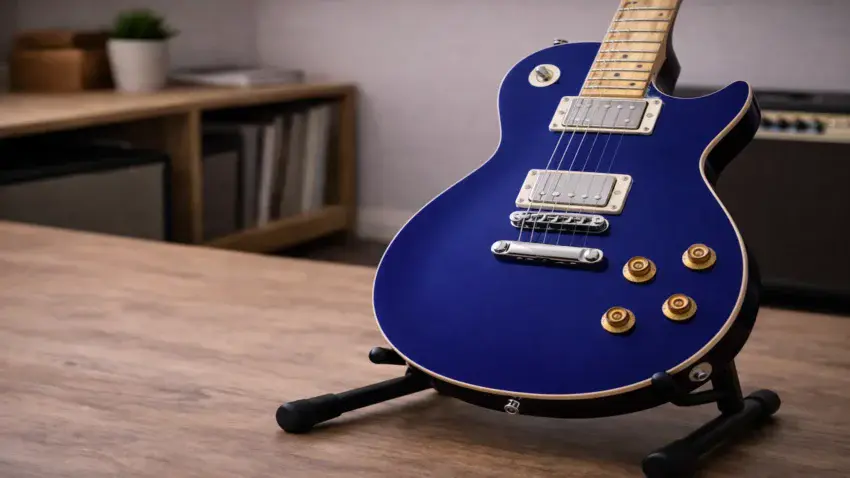
One of the most common ways players describe pickups is by how they sound when clean or distorted.
But underneath those tone labels is something more practical and useful:
How does the pickup respond when the signal is simple versus when it’s pushed harder?
Clean and distorted playing place very different demands on a pickup’s response, feel, and control.
Understanding those demands makes it much easier to choose pickups that feel right in real playing situations — without chasing tone myths or specs.
This guide focuses on signal behavior and playing feel, not gear or settings.
🎸 The real question isn’t clean vs distortion — it’s how you use your guitar most of the time.
🎯 How You Play Matters More Than Labels
Clean and distorted tones don’t just sound different — they react differently to your hands.
-
Clean playing exposes dynamics, touch, and articulation
-
Distorted playing compresses dynamics and emphasizes sustain
Because of this, a pickup that feels perfect in one context can feel awkward or limiting in the other.
Pickup choice isn’t about choosing “clean pickups” or “distortion pickups.”
It’s about choosing how much response, control, and forgiveness you want.
✨ What Pickups Reveal in Clean Playing
Clean tones are honest. There’s very little hiding.
In clean contexts, players often notice:
-
How clearly notes separate in chords
-
How strongly picking dynamics come through
-
How responsive the guitar feels to light touch
-
Whether the sound stays controlled at low intensity
Pickups that respond quickly and accurately tend to feel rewarding for clean playing — especially for players who rely on nuance and touch.
At the same time, that honesty can feel demanding.
Small inconsistencies in technique are more noticeable when the signal isn’t compressed.
🔥 What Pickups Do Under Distortion
Distortion changes the relationship between your hands and the pickup.
With more signal push, players often notice:
-
Increased sustain
-
Smoother response to aggressive picking
-
Less emphasis on tiny dynamic changes
-
A more consistent feel across techniques
Pickups that feel stable and controlled often shine here.
They help maintain clarity and focus even when the signal is heavily driven.
For many players, this makes distorted playing feel easier and more forgiving.
⚖️ Why Some Pickups Feel Versatile
Players often describe certain pickups as versatile because they don’t lean too far in either direction.
These pickups tend to:
-
Stay articulate when clean
-
Avoid feeling stiff or dull under distortion
-
Transition smoothly between playing contexts
That balance is especially valuable for players who move between clean and distorted tones during the same session or song.
Versatility isn’t about doing everything perfectly — it’s about never feeling out of place.
🎸 Clean vs Distorted Is About Feel — Not Rules
A common mistake is assuming certain pickups are “meant” for clean playing and others are “meant” for distortion.
In reality, playing style matters more than signal state.
Two players using the same pickup can have completely different experiences depending on:
-
How hard they pick
-
How much dynamic control they use
-
Whether they prefer sensitivity or stability
Instead of asking which pickup is “best” for clean or distorted tones, a better question is:
Which pickup feels better when I play the way I play?
🧭 How This Page Fits Into the Bigger Picture
This page is part of the larger guide on choosing pickups based on playing style.
If you haven’t already, the main framework is outlined here:
That guide explains how role, environment, and technique influence pickup decisions beyond clean versus distorted playing.
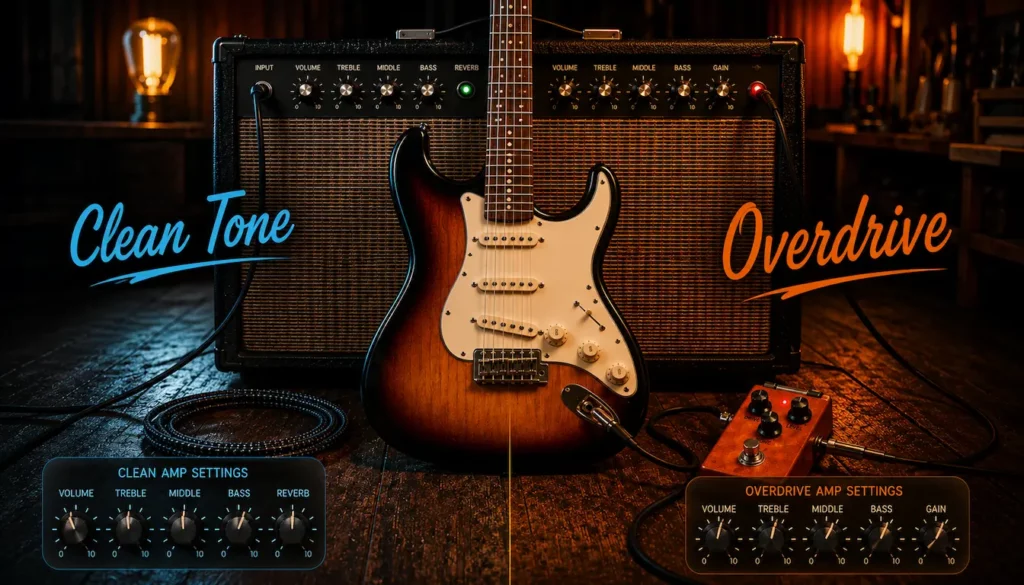
🎸 Where clean vs driven changes your pickup choice
🏁 Final Thoughts…
Clean and distorted tones reveal different aspects of a pickup’s behavior.
Clean playing highlights touch and articulation.
Distorted playing emphasizes control and sustain.
Neither context is more important than the other — what matters is how the pickup feels in your hands when you play most naturally.
Once you understand how clean and distorted playing change pickup response, choosing pickups becomes less about labels and more about comfort, confidence, and control.
 Ready to Start?
Here’s your next step —
pick one and go:
 New to guitar kits?
Start with
Step-by-Step Guide To Building
Your First Electric Guitar Kit
and
Essential Tools Every Electric Guitar Kit
Builder Should Have.
Already built a kit?
Jump into
How To Properly Set Up Your
Electric Guitar Kit For Intonation
or
Fixing Common Problems:
Buzzing And Dead Frets.
Chasing better tone?
Head to
Understanding Humbucker
Vs Single Coil Pickups In Kits
or
Playing With Tone Controls:
Tips For Electric Guitar Kits
and start experimenting.
 Your Guitar, Your Build,
Your Sound
You don’t need a custom shop or a tech on speed dial.
All you need is a little guidance, some patience,
and a place to go that shows you what to do next.
Come on man… You got this.
GuitarCrafts
is here to help you along the way.
Craft it. Play it. Own it!