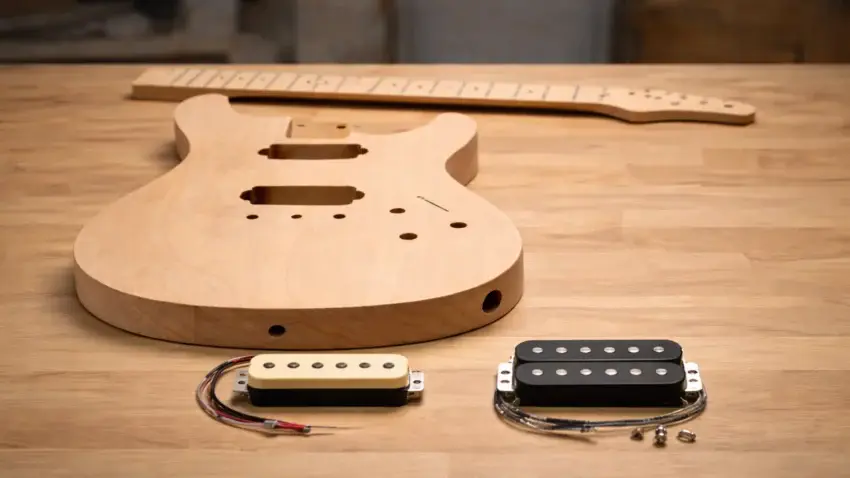
If you’re building an electric guitar kit,
one of the first questions that comes up is:
“What pickups should I use for
the kind of music I play?”
The problem is that most answers online are
either overly technical, brand-focused,
or filled with strong opinions that
don’t help beginners make a clear decision.
The truth is simpler.
You don’t need the “perfect” pickup for a style —
you just need a pickup type that fits how you
play and what you enjoy hearing.
This guide explains how
different pickup types tend to pair
with different music styles,
without rules, hype, or brand pressure.
🎸 Pickups don’t define your style —
they shape how your style feels.
⚡ Quick Answer
Pickup choice is about
feel, noise control, and output,
not rigid genre rules.
-
Many styles overlap
-
Plenty of players use
“non-traditional” pickups successfully -
Your playing style and setup matter
as much as the pickup itself
Use music style as a starting point,
not a restriction.
🎸 Clean, Blues, and
Touch-Sensitive Styles
Styles that rely on dynamics, clarity,
and touch response often benefit from
pickups that emphasize detail.
Common examples include:
-
Clean playing
-
Blues
-
Jazz-influenced styles
-
Light breakup tones
What usually works well
-
Pickups with lower to moderate output
-
Clear note separation
-
Good response to picking dynamics
Why
These styles often reward:
-
Subtle changes in touch
-
Volume control adjustments
-
Nuanced phrasing
That said,
plenty of players use higher-output
pickups for blues or clean styles —
it’s about preference, not rules.
🔥 Classic Rock, Indie,
and General-Purpose Styles
This is where versatility matters most.
Common examples include:
-
Classic rock
-
Indie
-
Alternative
-
Pop-rock
-
Cover-band style playing
What usually works well
-
Balanced output pickups
-
Moderate noise control
-
Flexibility across clean and driven tones
Why
These styles often move between:
-
Clean passages
-
Crunchy rhythm tones
-
Light lead work
Pickups that handle a wide range of gain levels
tend to feel more forgiving in these genres.
⚡ Hard Rock and
High-Gain Styles
Higher-gain styles place different demands on pickups.
Common examples include:
-
Hard rock
-
Metal
-
Modern high-gain music
What usually works well
-
Pickups with stronger output
-
Better noise rejection
-
Tight low-end response
Why
High gain amplifies:
-
Hum
-
Feedback
-
Loose low frequencies
Pickups that handle gain cleanly tend to feel
more controlled and predictable in these styles.
🎯 Mixed Styles
and Versatile Players
Many players don’t fit neatly into one genre
— and that’s normal.
If you play:
-
Multiple styles
-
Clean and high-gain tones
-
Rhythm and lead interchangeably
Practical approaches include
-
Using different pickup types
in neck and bridge positions -
Choosing moderate-output pickups
-
Keeping flexibility in mind
rather than chasing extremes
This approach often prevents regret later.
🚫 What Music Style
Doesn’t Decide
This is important.
Pickup choice does not determine everything.
Other factors matter just as much:
-
Setup quality
-
Pickup height adjustment
-
Amp settings
-
Pedals and signal chain
-
Playing technique
Many tone problems blamed on pickups
are actually setup or amplification issues.
🧠 How to Choose
Without Overthinking
A practical way to decide:
-
Start with the style you play most
-
Choose a pickup type that generally fits that style
-
Avoid extreme specs as a beginner
-
Let setup and playing time guide future changes
Once you understand how
different pickup types compare —
and what those differences actually mean —
it becomes much easier to choose confidently.
If you want a deeper breakdown of
how humbuckers and single-coil pickups compare overall,
this guide on comparing pickup types for electric guitar kits
walks through the differences step by step.
⚠️ Most players overthink pickups —
but comfort and control matter
more than genre labels.
🎸 This is where simple builds
turn into something special.
🏁 Final Thoughts…
There’s no single “correct” pickup
for any style of music.
What matters most is:
-
Comfort
-
Consistency
-
Enjoyment
Start simple, learn what you like,
and adjust as your playing evolves.
That approach leads to better results
than chasing someone else’s perfect tone.
 Ready to Start?
Here’s your next step —
pick one and go:
 New to guitar kits?
Start with
Step-by-Step Guide To Building
Your First Electric Guitar Kit
and
Essential Tools Every Electric Guitar Kit
Builder Should Have.
Already built a kit?
Jump into
How To Properly Set Up Your
Electric Guitar Kit For Intonation
or
Fixing Common Problems:
Buzzing And Dead Frets.
Chasing better tone?
Head to
Understanding Humbucker
Vs Single Coil Pickups In Kits
or
Playing With Tone Controls:
Tips For Electric Guitar Kits
and start experimenting.
 Your Guitar, Your Build,
Your Sound
You don’t need a custom shop or a tech on speed dial.
All you need is a little guidance, some patience,
and a place to go that shows you what to do next.
Come on man… You got this.
GuitarCrafts
is here to help you along the way.
Craft it. Play it. Own it!