
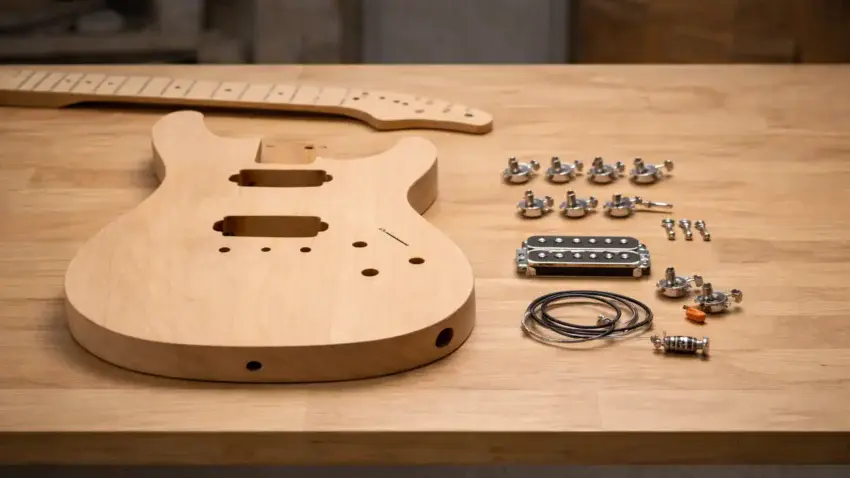
When people talk about upgrading a budget
electric guitar kit, the conversation usually
jumps straight to pickups.
And while pickups do matter, they’re not
the only upgrades that can improve
how a guitar feels, stays in tune,
and holds up over time.
The problem is that not all hardware
upgrades deliver the same return.
Some upgrades noticeably improve
reliability and playability.
Others look impressive but
don’t change much at all.
This guide breaks down which hardware
upgrades actually matter for budget guitar kits
— and which ones you can safely skip.
🎸 You don’t need expensive upgrades —
you need the right upgrades in the right order.
⚡ Quick Answer
The most meaningful hardware upgrades
for budget guitar kits improve
tuning stability, intonation,
and reliability, not volume or tone.
In most cases:
-
Tuners matter more than bridges
-
Nuts matter more than cosmetic parts
-
Electronics reliability matters more than specs
Upgrade function first, not appearance.
🎯 Tuners:
Why Stability Comes First
If there’s one hardware upgrade that consistently
delivers real-world improvement,
it’s tuners.
Why tuners matter
-
They affect tuning stability every time you play
-
Slipping or rough tuners make setup frustrating
-
Poor tuning masks other improvements
When upgrading tuners helps
-
The guitar won’t stay in tune
-
Tuners feel gritty or inconsistent
-
Fine adjustments are difficult
-
Strings drift after bends or tuning changes
When stock tuners are “good enough”
-
The guitar holds tuning during normal playing
-
Adjustments feel smooth
-
No slipping or binding
Tuners don’t change tone —
but they dramatically change the experience
of playing and setting up the guitar.
🎸 Bridge and Saddles:
Feel, Intonation, and Consistency
Bridge upgrades are often overhyped,
but they do matter in specific situations.
What bridge upgrades actually affect
-
Intonation accuracy
-
String alignment
-
Playing feel
-
Setup consistency
When a bridge upgrade makes sense
-
Saddles won’t adjust properly
-
Intonation can’t be dialed in
-
Strings don’t seat cleanly
-
Hardware feels loose or inconsistent
When a bridge upgrade doesn’t matter much
-
The stock bridge adjusts correctly
-
Intonation is stable
-
Strings sit properly
-
You’re chasing “sustain” improvements
Most sustain differences come from setup, not hardware swaps.
🧩 Nut and Contact Points
(High-Level)
The nut is a small part with an
outsized impact on tuning stability.
Why the nut matters
-
Strings pass through it constantly
-
Binding causes tuning issues
-
Poor slot depth affects feel and intonation
Common budget kit nut issues
-
Slots cut too shallow
-
Slots cut too narrow
-
Rough contact surfaces
When replacing the nut helps
-
Strings bind while tuning
-
The guitar won’t return to pitch
-
Setup adjustments don’t stick
In many cases, careful setup fixes
nut problems without replacement —
but when the nut is poorly cut,
upgrading it can make a noticeable difference.
🔥 Electronics Beyond Pickups
(Brief but Important)
Electronics upgrades often don’t
change sound dramatically —
but they improve reliability.
What matters most
-
Pots that turn smoothly
-
Switches that don’t crackle
-
Output jacks that hold cables securely
Why this matters
-
Failing electronics cause noise and dropouts
-
Problems often appear months later
-
Fixing them early prevents frustration
These upgrades are invisible when they work
— and very noticeable when they don’t.
🚫 What Usually
Doesn’t Matter Much
This is where many beginners waste money.
Low-impact upgrades include
-
Cosmetic hardware swaps
-
Decorative knobs and plates
-
Overbuilt parts on beginner kits
-
Upgrades that mask setup issues
These parts can wait until after
the guitar plays well and stays in tune.
📊 Upgrade Priority:
What to Do First
If you’re upgrading a budget guitar kit,
order matters more than price.
A practical approach:
-
Fix tuning stability
(tuners, nut issues) -
Ensure reliable intonation
(bridge setup or replacement if needed) -
Address reliability
(electronics) -
Upgrade tone-related parts later
If you want a complete breakdown of which
upgrades make the biggest difference overall
— and how to prioritize them — this guide on
the best upgrades for budget guitar kits
walks through the process step by step.
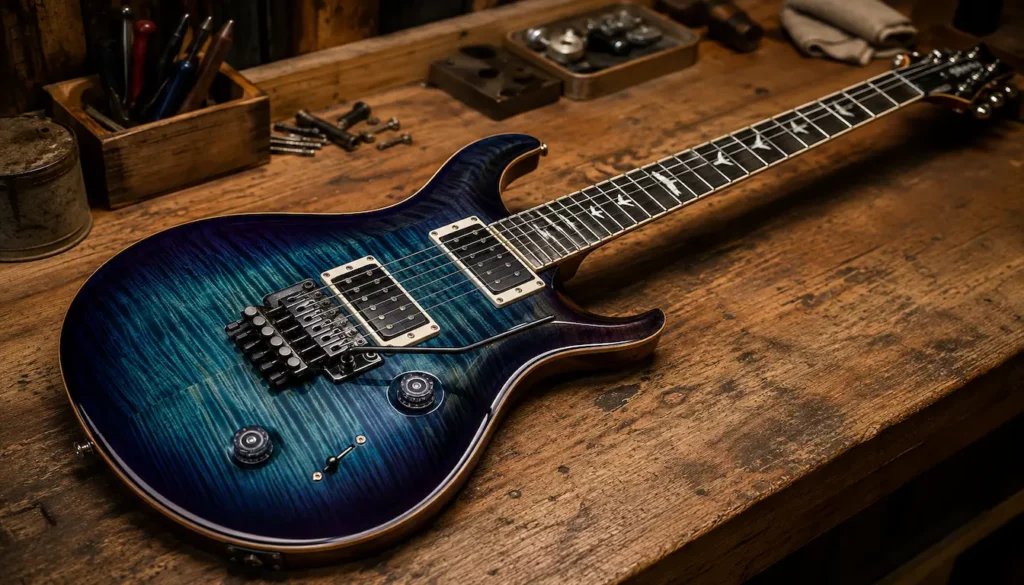
🎸 This is what smart upgrades actually lead to.
🏁 Final Thoughts…
Smart upgrades solve problems —
expensive upgrades don’t always do that.
For budget guitar kits,
the biggest improvements usually come from:
-
Stability
-
Reliability
-
Proper setup
Once those are handled,
everything else becomes optional instead of necessary.
And that’s when upgrading actually feels rewarding.
 Ready to Start?
Here’s your next step —
pick one and go:
 New to guitar kits?
Start with
Step-by-Step Guide To Building
Your First Electric Guitar Kit
and
Essential Tools Every Electric Guitar Kit
Builder Should Have.
Already built a kit?
Jump into
How To Properly Set Up Your
Electric Guitar Kit For Intonation
or
Fixing Common Problems:
Buzzing And Dead Frets.
Chasing better tone?
Head to
Understanding Humbucker
Vs Single Coil Pickups In Kits
or
Playing With Tone Controls:
Tips For Electric Guitar Kits
and start experimenting.
 Your Guitar, Your Build,
Your Sound
You don’t need a custom shop or a tech on speed dial.
All you need is a little guidance, some patience,
and a place to go that shows you what to do next.
Come on man… You got this.