

When distortion is added to an electric guitar signal,
pickup design plays a major role in how the sound responds.
For builders using an electric guitar kit,
understanding how humbuckers and single-coil pickups
behave under gain helps set realistic expectations
before touching pedals or amp settings.
This page focuses specifically on
distorted tone differences between humbuckers
and single-coil pickups.
It explains how each pickup type responds when
gain is introduced, without discussing
noise issues, music genres, or modification advice.
🎸 Distortion doesn’t hide pickup differences —
it often exposes them even more.
🎛️ What Distortion
Reveals About Pickups
Distortion doesn’t create tone from nothing —
it amplifies what’s already there.
When a signal is pushed harder,
the natural characteristics of a pickup
become more noticeable.
Under distortion, pickups influence:
-
Thickness versus definition
-
Sustain and note decay
-
How tightly notes stay separated
-
How smooth or aggressive the sound feels
Because humbuckers and single coils are built differently,
distortion highlights those differences very clearly.
🔊 Single-Coil Pickup
Behavior With Distortion
Single coils react quickly under gain
and feel very touch sensitive.
Common distorted-tone traits include:
-
Sharper attack
-
Clear note definition
-
More pronounced high-frequency bite
-
Less natural compression
When playing with distortion,
single coils often allow individual notes to stand out more clearly,
especially in lighter to moderate gain settings.
This can make distorted sounds feel raw and aggressive,
but sometimes less smooth or forgiving.
For some players, that edge feels exciting and responsive.
For others, it can feel harsh or exposed depending on
how hard the signal is driven.
🔥 Humbucker Pickup
Behavior With Distortion
Humbuckers typically produce a
thicker and more compressed sound
under distortion.
Common distorted-tone traits include:
-
Stronger midrange presence
-
Increased sustain
-
Smoother high frequencies
-
Notes that blend together more easily
When distortion is added, humbuckers tend to
create a denser sound where notes connect smoothly.
This often makes distorted playing feel more
controlled and consistent, especially during
heavier passages.
Many beginners describe humbuckers as feeling
easier to manage under gain because the sound
stays full without requiring as much precision in picking.
🎸 High Gain Changes Everything
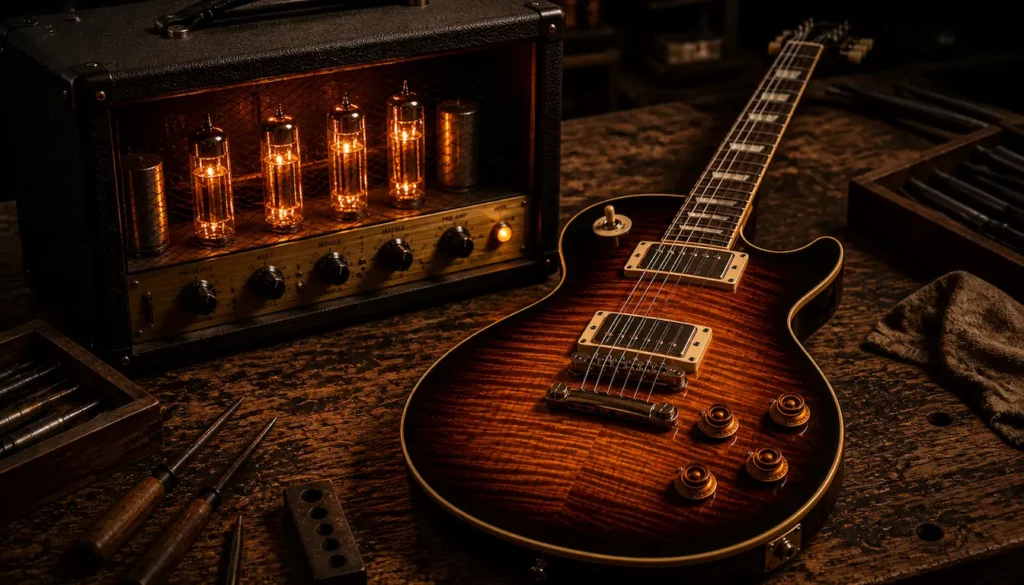
🎚️ Note Separation
vs Saturation
One of the clearest differences under
distortion is how notes interact.
-
Single coils emphasize
separation and edge -
Humbuckers emphasize
saturation and fullness
Neither approach is better.
They simply shape distorted tones in different ways,
which affects how riffs, chords,
and lead lines feel during play.
⚡ How Playing Feel
Changes Under Gain
Distortion also changes how
pickups respond to your hands.
Single coils tend to react quickly to changes in
picking strength, even with distortion applied.
Humbuckers smooth those changes,
producing a more even response across
different picking intensities.
This difference can affect how confident
or controlled distorted playing feels,
especially for newer builders.
🎸 Tone Is More Than Just Output
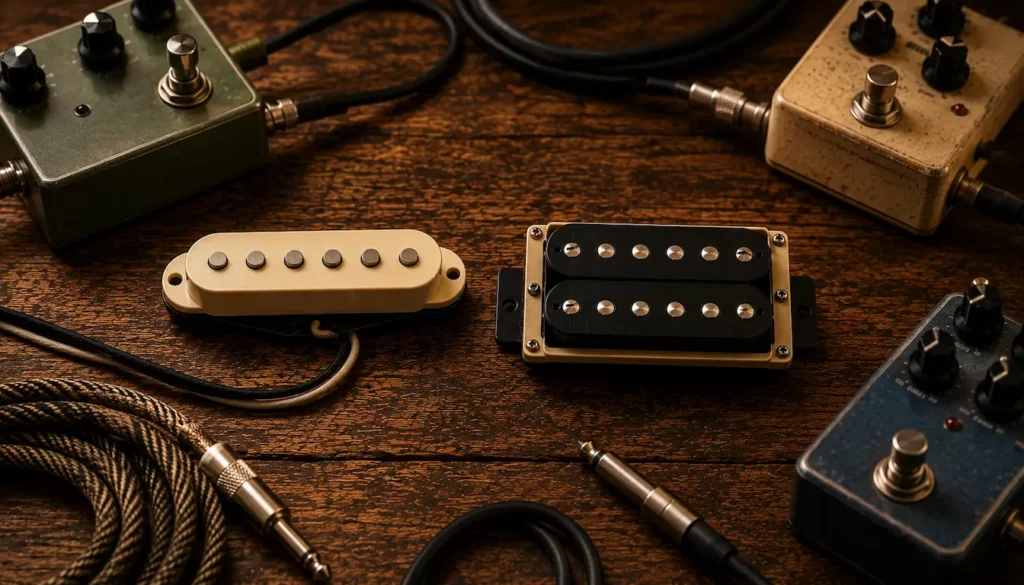
🎸 The Distorted-Tone
Difference, Simplified
At a high level:
-
Single coils emphasize
edge, clarity, and attack
under distortion -
Humbuckers emphasize
thickness, sustain, and
smoothness under distortion
👉 Understanding humbucker vs single coil tone differences
makes it easier to recognize why distorted tones feel so
different even before adjusting any settings.
🔥 The best distorted tone isn’t always the heaviest
— it’s the one that feels right when you play.
🏁 Final Thoughts…
Distortion magnifies pickup characteristics
rather than hiding them.
By understanding how humbuckers and
single-coil pickups behave under gain,
builders can better interpret what they’re hearing
instead of assuming something is wrong.
This page focuses on distorted tone only —
one specific part of a larger pickup conversation.
 Ready to Start?
Here’s your next step —
pick one and go:
 New to guitar kits?
Start with
Step-by-Step Guide To Building
Your First Electric Guitar Kit
and
Essential Tools Every Electric Guitar Kit
Builder Should Have.
Already built a kit?
Jump into
How To Properly Set Up Your
Electric Guitar Kit For Intonation
or
Fixing Common Problems:
Buzzing And Dead Frets.
Chasing better tone?
Head to
Understanding Humbucker
Vs Single Coil Pickups In Kits
or
Playing With Tone Controls:
Tips For Electric Guitar Kits
and start experimenting.
 Your Guitar, Your Build,
Your Sound
You don’t need a custom shop or a tech on speed dial.
All you need is a little guidance, some patience,
and a place to go that shows you what to do next.
Come on man… You got this.
GuitarCrafts
is here to help you along the way.
Craft it. Play it. Own it!